Most productivity advice focuses on mornings. Wake up early. Cold shower. Meditate. Workout. Journal. All before 7am. But here's what that advice misses: how your morning goes is almost entirely determined by how your evening ended. A chaotic, unintentional night leads to a chaotic, reactive morning. A calm, deliberate evening creates space for a focused, purposeful day. And the best part? You don't need an elaborate wind-down ritual to get there. You just need 10 minutes. Here's a simple evening reset that works — even on your worst days.
Why an Evening Routine Matters More Than You Think
Before we get into the steps, it's worth understanding what's actually happening in your brain at the end of the day. By evening, your prefrontal cortex — the part responsible for decision-making, focus, and self-control — is fatigued. This is called decision fatigue, and it's why you're more likely to scroll mindlessly, eat poorly, or stay up later than you planned at night. A structured evening routine takes the decision-making out of the equation. Instead of having to choose what to do next, you follow a familiar sequence. This signals to your brain that the active part of the day is over, making it easier to genuinely rest — and genuinely prepare for what's ahead.
The 10-Minute Evening Reset: Step by Step
Minute 1–2: The Brain Dump (Write It Down)
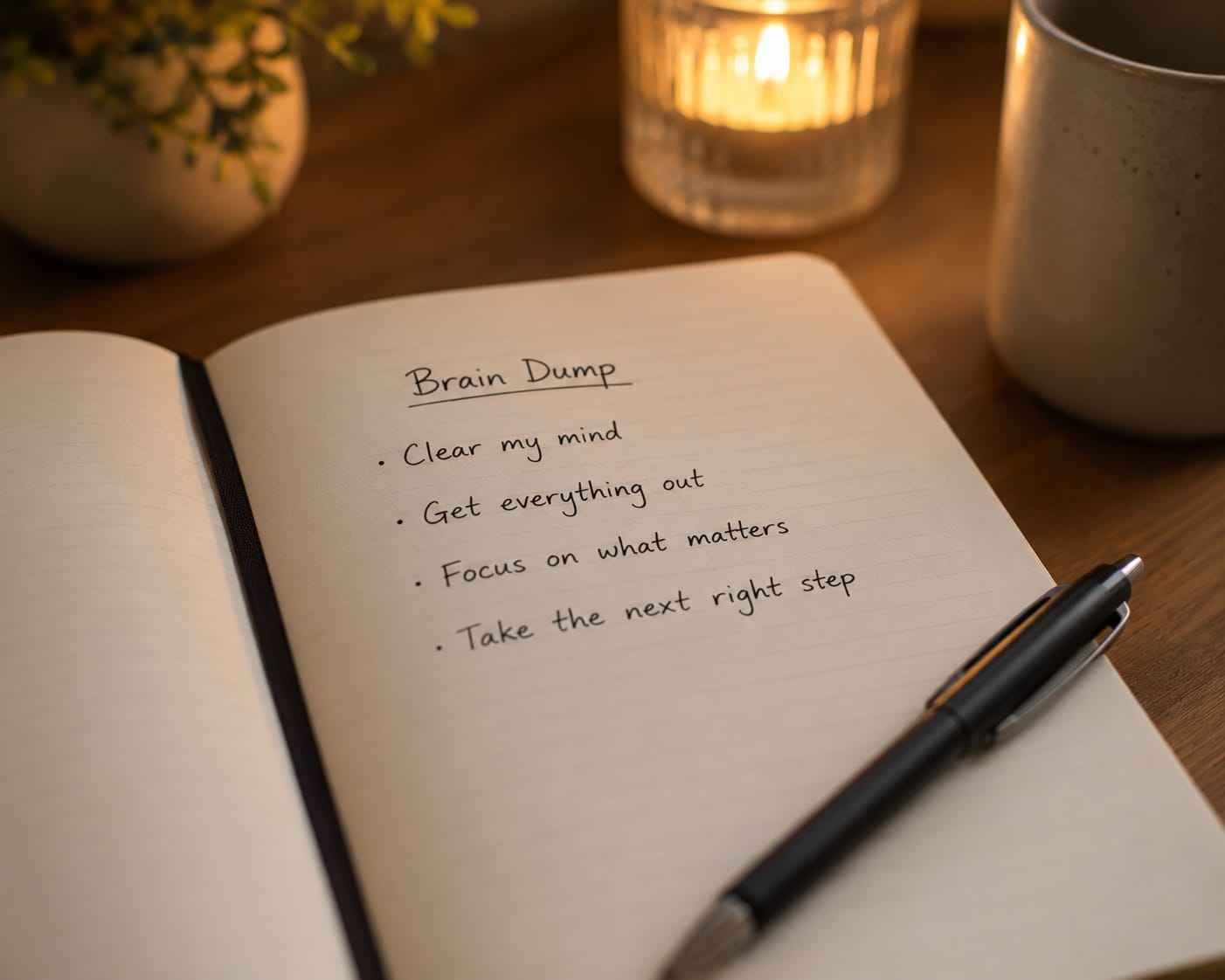
Open a notebook or notes app and spend two minutes writing down everything that's still floating in your head. Unfinished tasks. Tomorrow's priorities. Things you're worried about. Random to-dos. This isn't journaling. It's not reflective writing. It's simply clearing mental RAM — transferring everything from your head to paper so your brain can stop holding onto it. Research consistently shows that writing down unfinished tasks reduces the mental load associated with them. Your brain can let go of things it knows are recorded. What to write:
- 3 things you need to do tomorrow
- Anything you're worried about forgetting
- One thing that went well today (optional but powerful)
That's it. Don't overthink it.
Minute 3–5: Prepare for Tomorrow (The 2-Minute Prep)

Spend two to three minutes doing one physical act of preparation for the next day. This creates what psychologists call an implementation intention — a concrete plan that makes you dramatically more likely to follow through. Options — pick one or two:
- Lay out your clothes for tomorrow (yes, this matters — read our guide on what to wear)
- Pack your bag or set up your workspace
- Prep your breakfast or set out what you need to make it (see what a good breakfast looks like)
- Write your top 3 priorities on a sticky note for your desk
These small acts eliminate morning friction. When you wake up, the decisions are already made. You move forward instead of scrambling.
Minute 6–8: Digital Sunset (Put the Phone Down)

This is the hardest step for most people — and the most important one. For at least the last 30–60 minutes before bed (even just 10 minutes to start), put your phone on charge somewhere other than your bedside table. The goal isn't to be anti-technology. The goal is to give your brain a genuine transition signal. Screens — particularly social media and news — keep your nervous system in a state of low-level alertness. Your brain can't tell the difference between a stressful headline and actual danger. Both activate your stress response, making restful sleep harder to achieve. What to do instead for these 2 minutes:
- Stretch or do a few minutes of gentle movement
- Make a herbal tea
- Read a physical book or magazine
- Simply sit quietly
You don't have to do anything productive. The point is to not be reactive.
Minute 9–10: Set One Clear Intention for Tomorrow

Spend two to three minutes doing one physical act of preparation for the next day. This creates what psychologists call an implementation intention — a concrete plan that makes you dramatically more likely to follow through. Options — pick one or two:
- Lay out your clothes for tomorrow (yes, this matters — read our guide on what to wear)
- Pack your bag or set up your workspace
- Prep your breakfast or set out what you need to make it (see what a good breakfast looks like)
- Write your top 3 priorities on a sticky note for your desk
These small acts eliminate morning friction. When you wake up, the decisions are already made. You move forward instead of scrambling.
Minute 6–8: Digital Sunset (Put the Phone Down)
This is the hardest step for most people — and the most important one. For at least the last 30–60 minutes before bed (even just 10 minutes to start), put your phone on charge somewhere other than your bedside table. The goal isn't to be anti-technology. The goal is to give your brain a genuine transition signal. Screens — particularly social media and news — keep your nervous system in a state of low-level alertness. Your brain can't tell the difference between a stressful headline and actual danger. Both activate your stress response, making restful sleep harder to achieve. What to do instead for these 2 minutes:
- Stretch or do a few minutes of gentle movement
- Make a herbal tea
- Read a physical book or magazine
- Simply sit quietly
You don't have to do anything productive. The point is to not be reactive.
Minute 9–10: Set One Clear Intention for Tomorrow

End the reset with a single sentence. Write it down or say it out loud: "Tomorrow, the most important thing I will do is ___________." Just one thing. Not a to-do list — one clear intention that anchors your morning before it's even begun. This works because it primes your brain overnight. Your subconscious continues processing while you sleep, and waking up with a clear intention already set gives you immediate direction instead of the usual fog of "what do I even need to do today?"
What Happens When You Do This Consistently
After one week of a consistent 10-minute evening reset, most people notice:
- Faster sleep onset — because the mental chatter reduces significantly
- Calmer mornings — because decisions are already made
- Higher follow-through on priorities — because the intention was set the night before
- Less low-grade anxiety — because worries and tasks are externalised onto paper
After one month, it starts to feel automatic. The sequence itself becomes the signal that the day is done and rest is coming.
Adapting This to Your Life
The beauty of a 10-minute reset is its flexibility. You can do it at 9pm or midnight. You can do it in your kitchen or your bedroom. You can expand each step if you have more time, or compress it into 5 minutes on a hard night. What matters isn't perfection — it's consistency. A simple reset done imperfectly every night is infinitely more valuable than an elaborate routine done occasionally. Start smaller if needed:
- Week 1: Just do the brain dump
- Week 2: Add the 2-minute prep
- Week 3: Add the digital sunset
- Week 4: Add the clear intention
Build the habit in layers, and it will stick.
The Bigger Picture
An evening routine is really about one thing: treating tomorrow like it matters. Most people plan their meals, plan their workouts, plan their holidays — but never plan their days. The evening reset is a quiet act of intentionality that says: my time and energy matter enough to protect. You don't have to overhaul your life. You don't need a 90-minute wind-down ritual or blackout curtains or a specific pillow. You just need 10 minutes, a pen, and the decision to end your day on your own terms.
Your Evening Reset — Quick Reference
“Disclaimer: This content was created with AI assistance and reviewed before publication. It is for informational purposes only and not professional medical, nutritional, legal, or financial advice.”