For most of human history, Indian men's clothing was not a fashion statement. It was a functional, climate-intelligent, culturally rich practice that evolved over centuries in response to specific conditions — the heat, the monsoon, the physical demands of daily life, and the social contexts of a complex civilisation.
The Dhoti and Its Genius
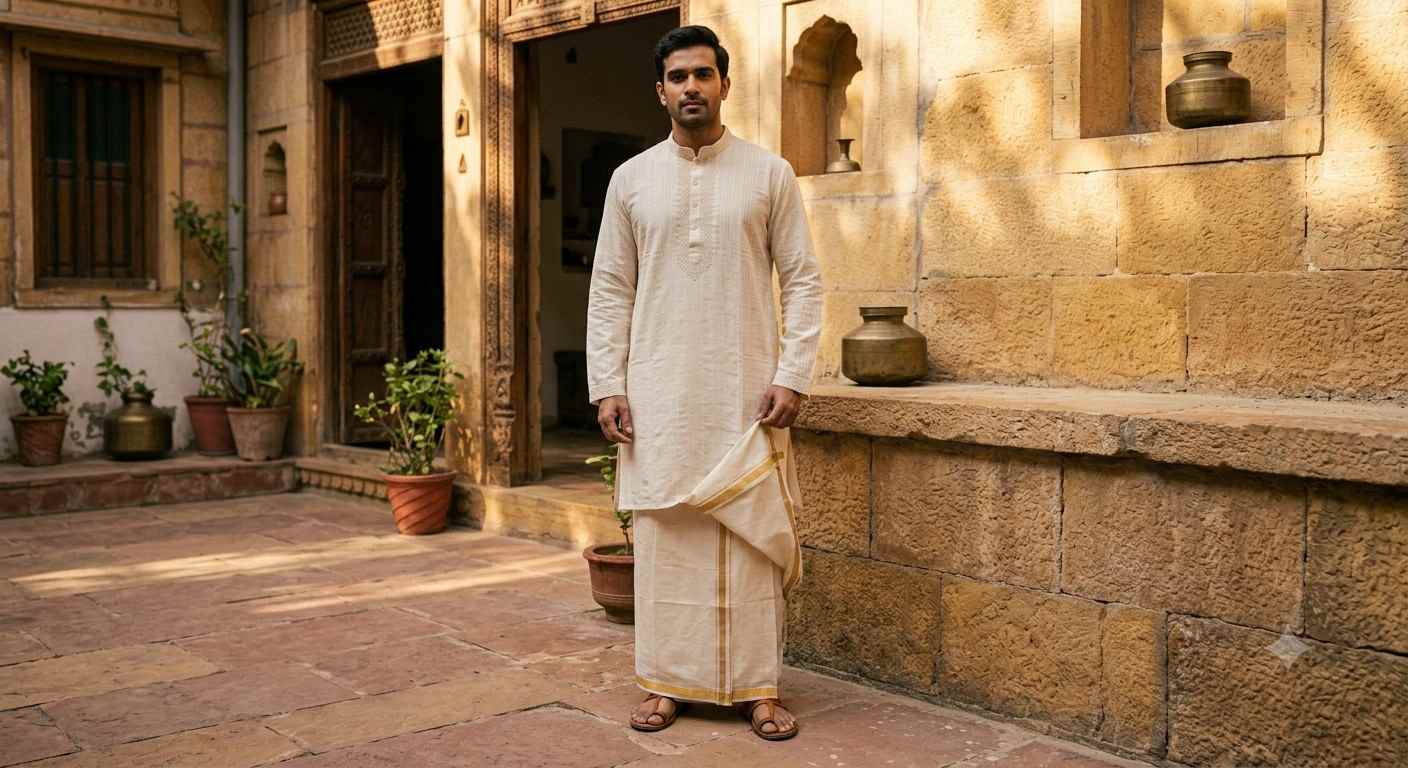
The dhoti — a length of unsewn cloth wrapped and tucked around the lower body — was the default lower garment for men across much of India for thousands of years, in variations that differed by region, community, and occasion.
Its genius is structural. A single length of fabric, uncut and unsewn, fits every body without tailoring. It can be adjusted for different activities — tucked shorter for physical work, worn longer for formal occasions. When one area wears out, the fabric can be rewrapped to distribute wear differently. When the garment is finished with, the cloth can be repurposed entirely.
The dhoti also breathes exceptionally well. Wrapped rather than sewn, it allows maximum airflow in India's heat. There is no waistband to constrict. No synthetic fibre to trap heat. Just fabric — cotton or silk — moving with the body.
The Kurta — A Garment of Extraordinary Intelligence
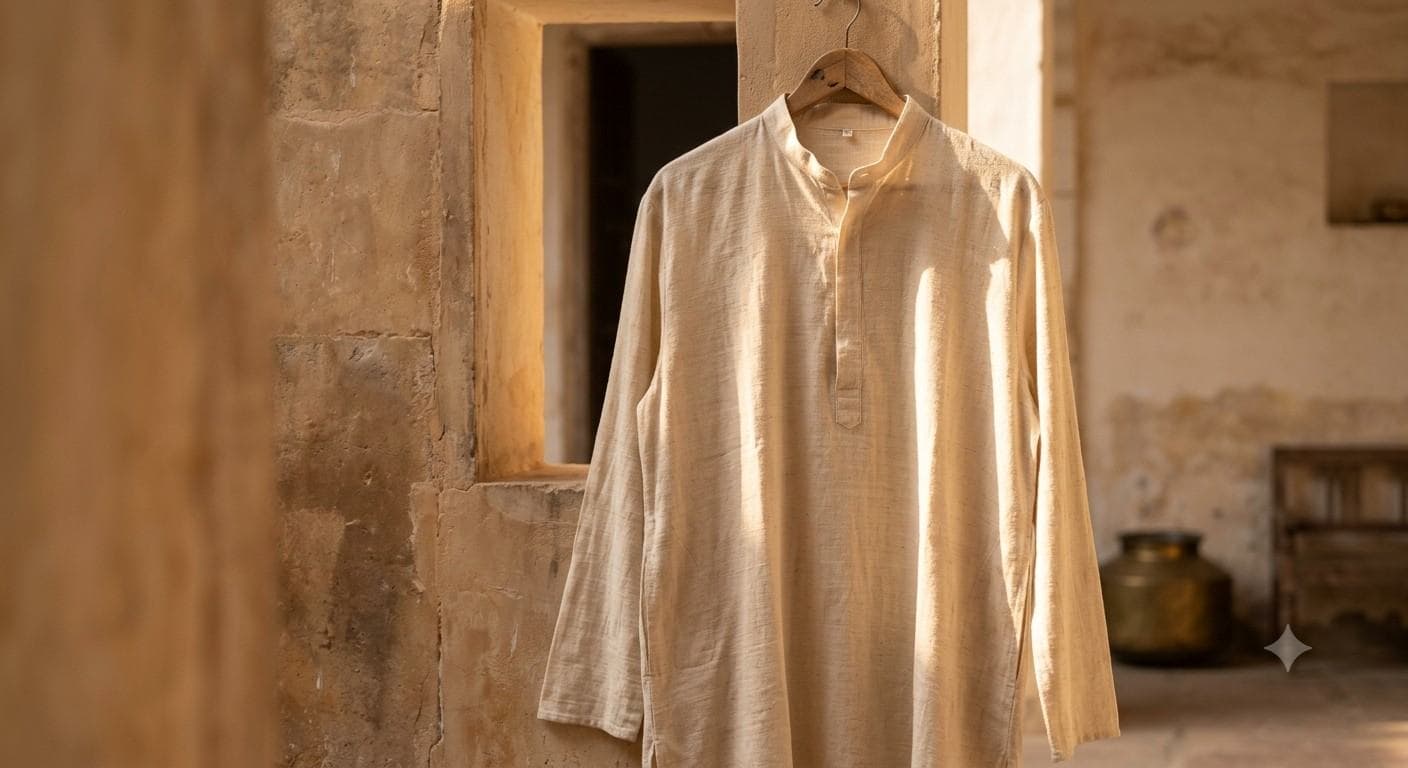
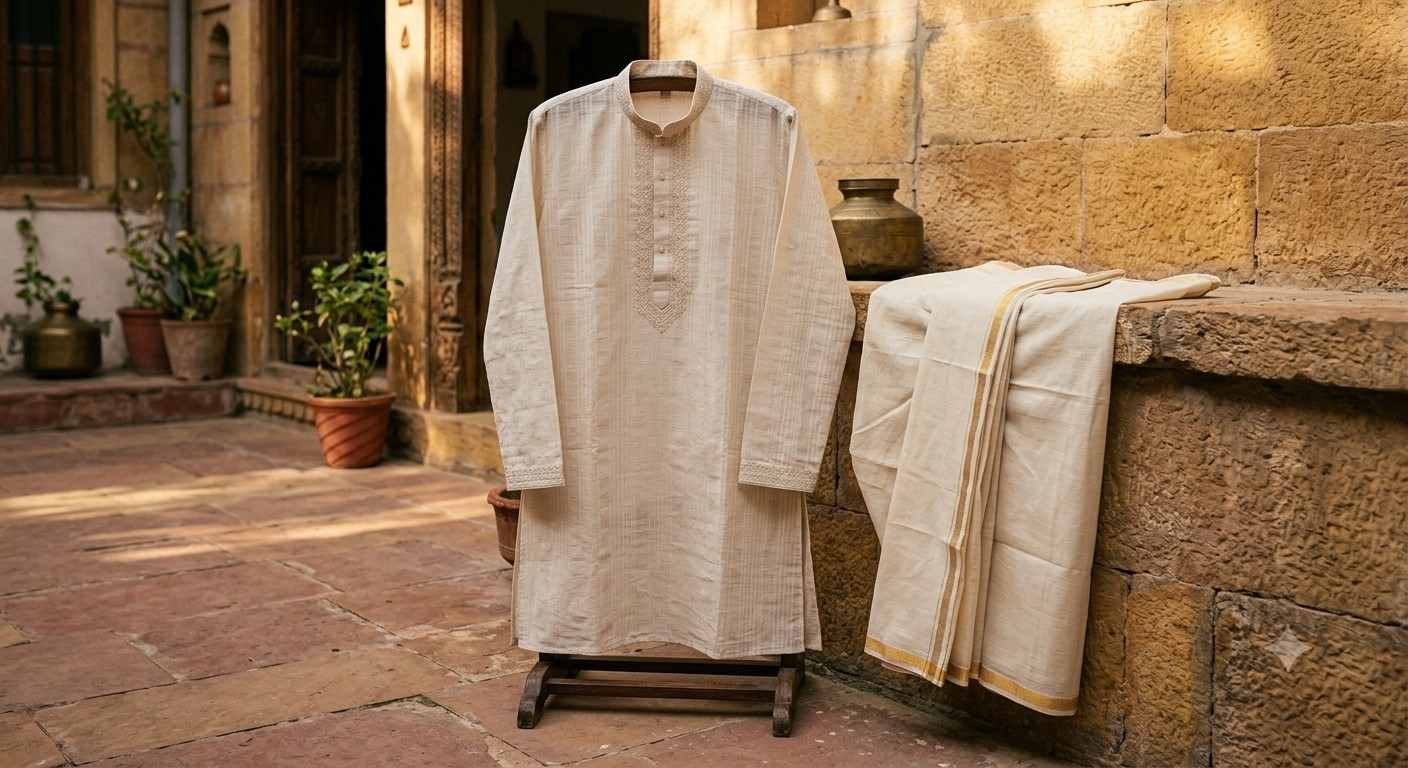
The traditional kurta was not simply a long shirt. It was a garment designed with deep understanding of body, climate, and culture.
- The length: Long enough to provide coverage and sun protection for the upper legs without the restriction of trousers.
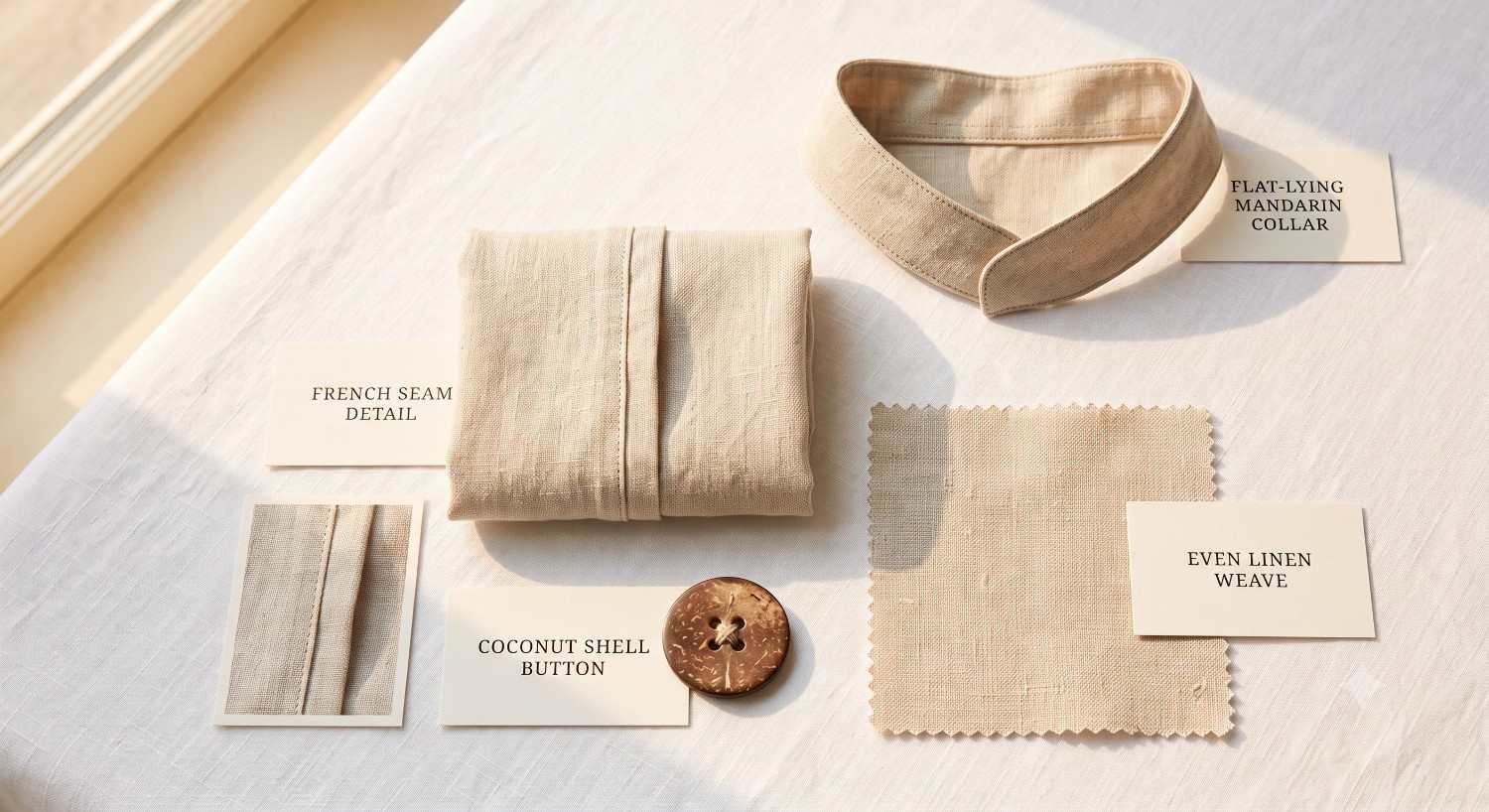
- The collar: Typically minimal — a simple band collar or a small standing collar that kept the neckline clean without the excess fabric of a Western collar that traps heat around the neck.
- The silhouette: Loose and straight, allowing air to circulate freely around the body. Not fitted to the chest and waist in the European manner — which works for temperate climates but makes no sense in heat.
- The fabric: Cotton or silk — always natural, always chosen for the season and the occasion.
- The sleeve: Often elbow length or three-quarter length for hot weather — providing sun protection while allowing airflow at the wrist.
This was not primitive design. It was sophisticated design, arrived at through generations of refinement for specific conditions.
Regional Intelligence
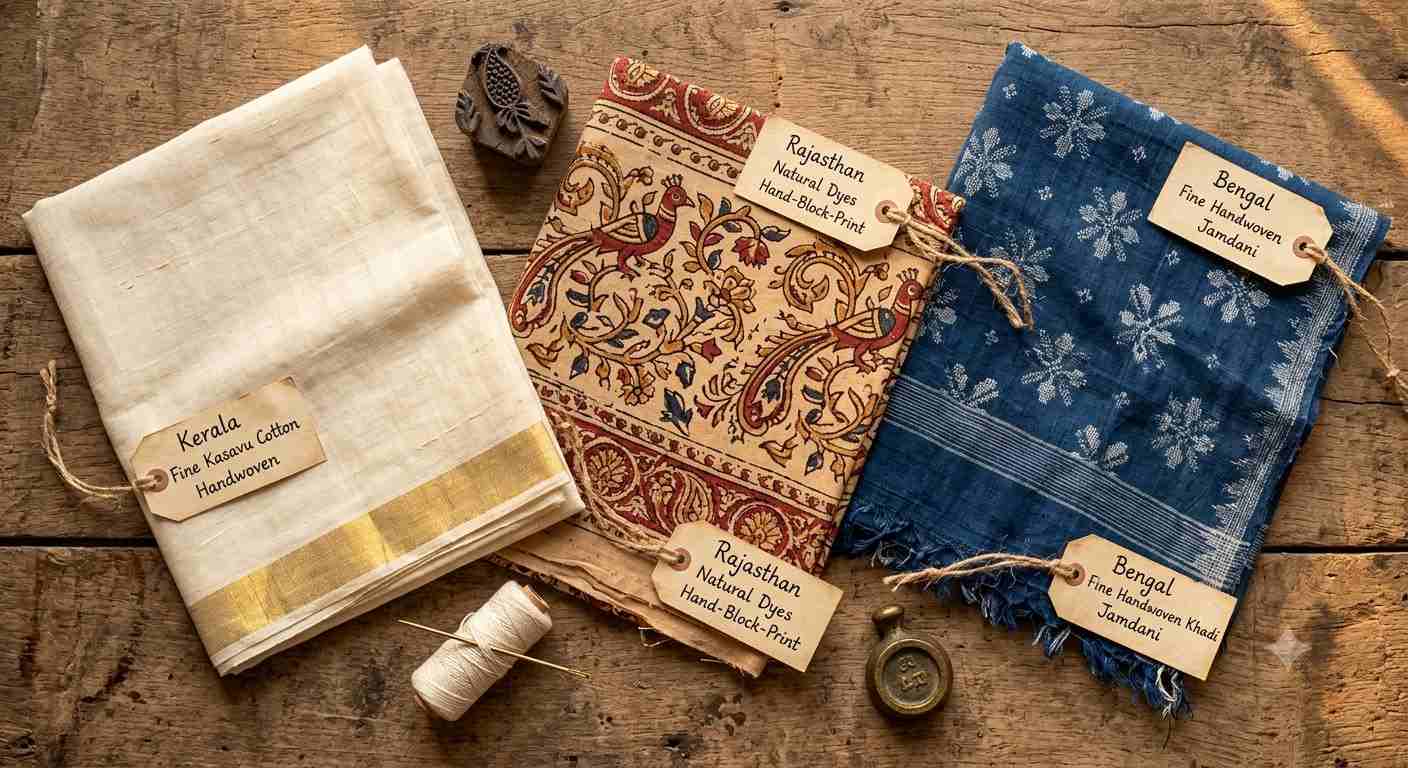
Different regions of India developed distinct men's clothing traditions, each adapted to local climate and culture.
- Rajasthan and the desert regions: Men wore a dhoti, a kurta, and a voluminous turban — the turban providing sun protection for the head and neck, insulating against both heat and the cold desert nights, and serving as a practical tool (it could be used as a rope, a water carrier, or a shelter in emergencies). Colours were often bright — not for fashion but because certain natural dyes were locally available and also functioned as insect repellents.
- Kerala and coastal South India: The mundu — a single length of white cotton worn around the waist — was the traditional lower garment, often paired with an angavastram (a cloth draped over the shoulder and chest). White reflects heat. Cotton breathes. The minimal construction meant minimal heat retention.
- Bengal: The dhuti (the Bengali variation of the dhoti) in white or off-white fine cotton, often with a coloured border, was worn with a thin kurta or simply a cloth draped over the upper body. The fineness of Bengali cotton - including the legendary Dhaka muslin - allowed clothing of extraordinary delicacy in high heat.
- Punjab: The kurta and pajama - a drawstring trouser in cotton - provided coverage and ease of movement suited to the active agricultural life of the region. The salwar's loose fit and the kurta's length together provided excellent climate performance.
What Changed - And What Was Lost
The arrival of British colonial rule brought, among many other things, the introduction of Western dress codes — the suit, the collar, the trouser — as markers of modernity and respectability. Indian men who wished to be taken seriously in colonial institutions adopted Western dress, often in wool and cotton blends suited to the British climate and completely unsuited to the Indian one.
After independence, the association of Western dress with modernity persisted. Synthetic fabric arrived in the 1970s and was embraced for its cheapness and convenience. The traditional kurta and dhoti retreated to religious occasions, festivals, and older generations.
What was lost was not just a style. It was accumulated knowledge about how to dress for this climate, in these conditions, with these fibres.
What We Can Learn
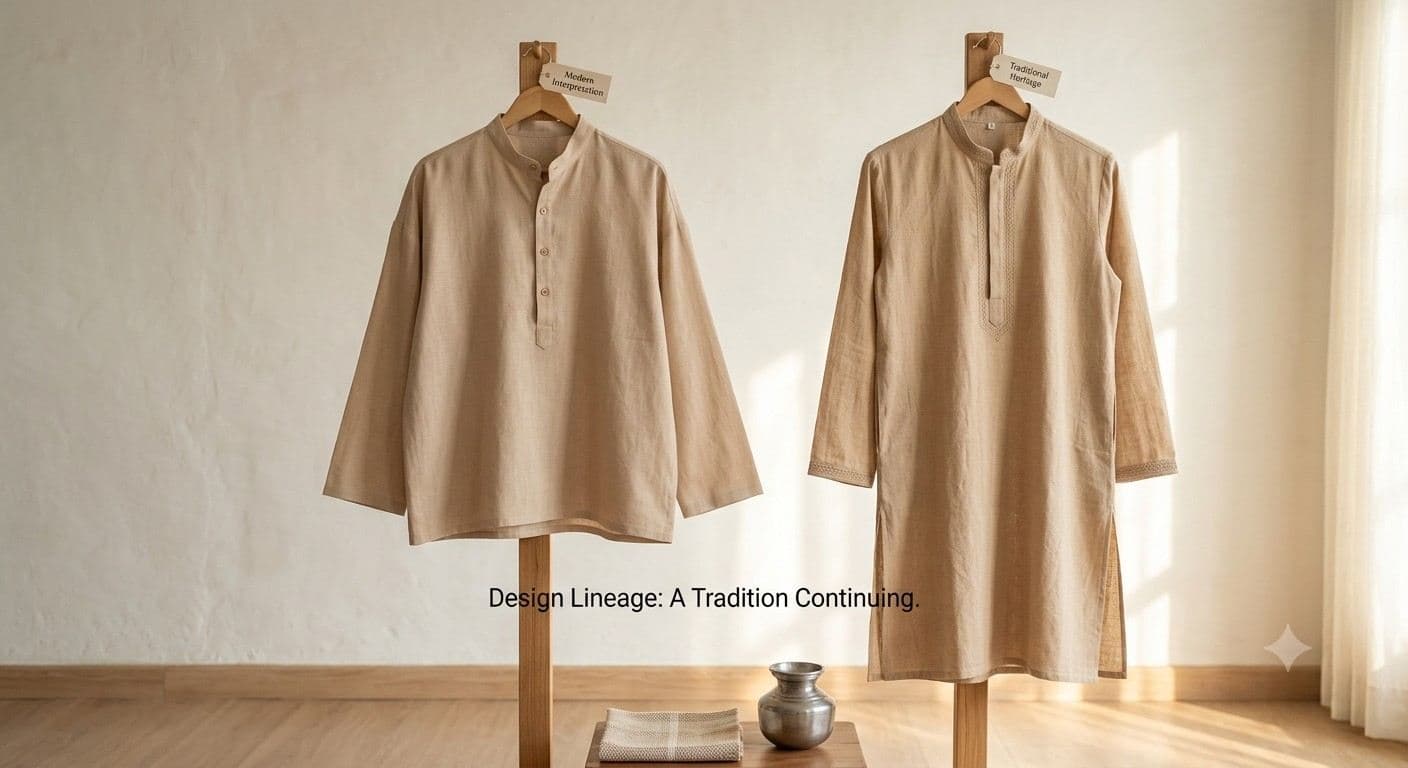
The lessons from traditional Indian men's clothing are not that we should all wear dhotis. They are design principles that remain as relevant today as they were centuries ago.
- Loose silhouette beats fitted for heat. Clothes that allow air to move around the body cool better than clothes that fit close to it.
- Natural fibre breathes. Cotton, linen, and hemp in a hot climate are not heritage affectations — they are the correct technical choice.
- Simple construction lasts. The fewer the seams, the fewer the points of failure. Traditional Indian garments that were simply constructed lasted longer than complex Western tailoring.
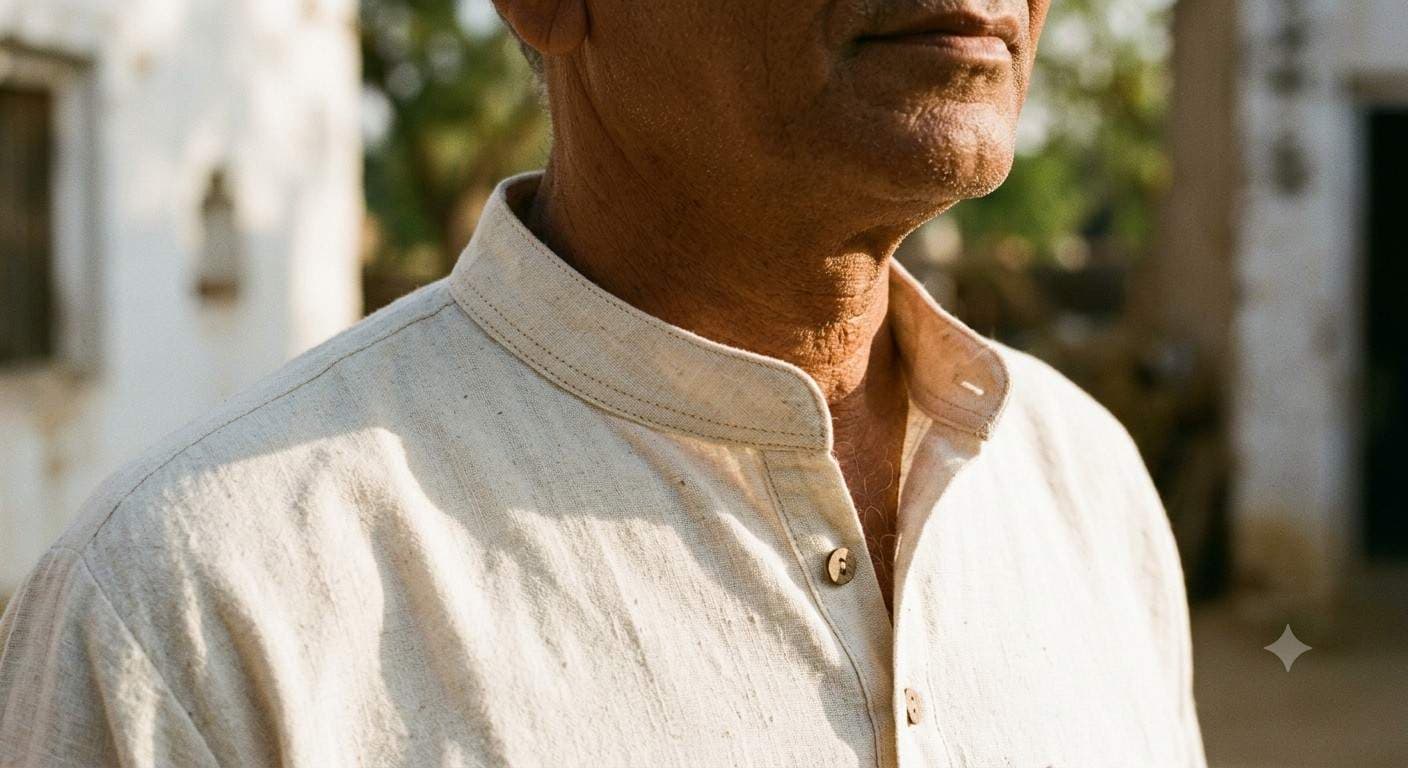
Minimal collar serves the climate. The band collar and mandarin collar of traditional Indian garments kept the neck — the body's primary heat escape point — free. The full Western collar traps heat. In India's climate, the traditional solution is better.
Clothing should move with the body. Traditional Indian garments were designed for active bodies in a warm climate. They allowed the full range of human movement without restriction. Clothing should move with the body. Traditional Indian garments were designed for active bodies in a warm climate. They allowed the full range of human movement without restriction.
At Arohm, we design from these principles — natural fabric, minimal collar, relaxed silhouette, made for this climate. Read the history of natural fabric in India and how natural living connects to what you eat.
“Disclaimer: This content was created with AI assistance and reviewed before publication. It is for informational purposes only and not professional medical, nutritional, legal, or financial advice”