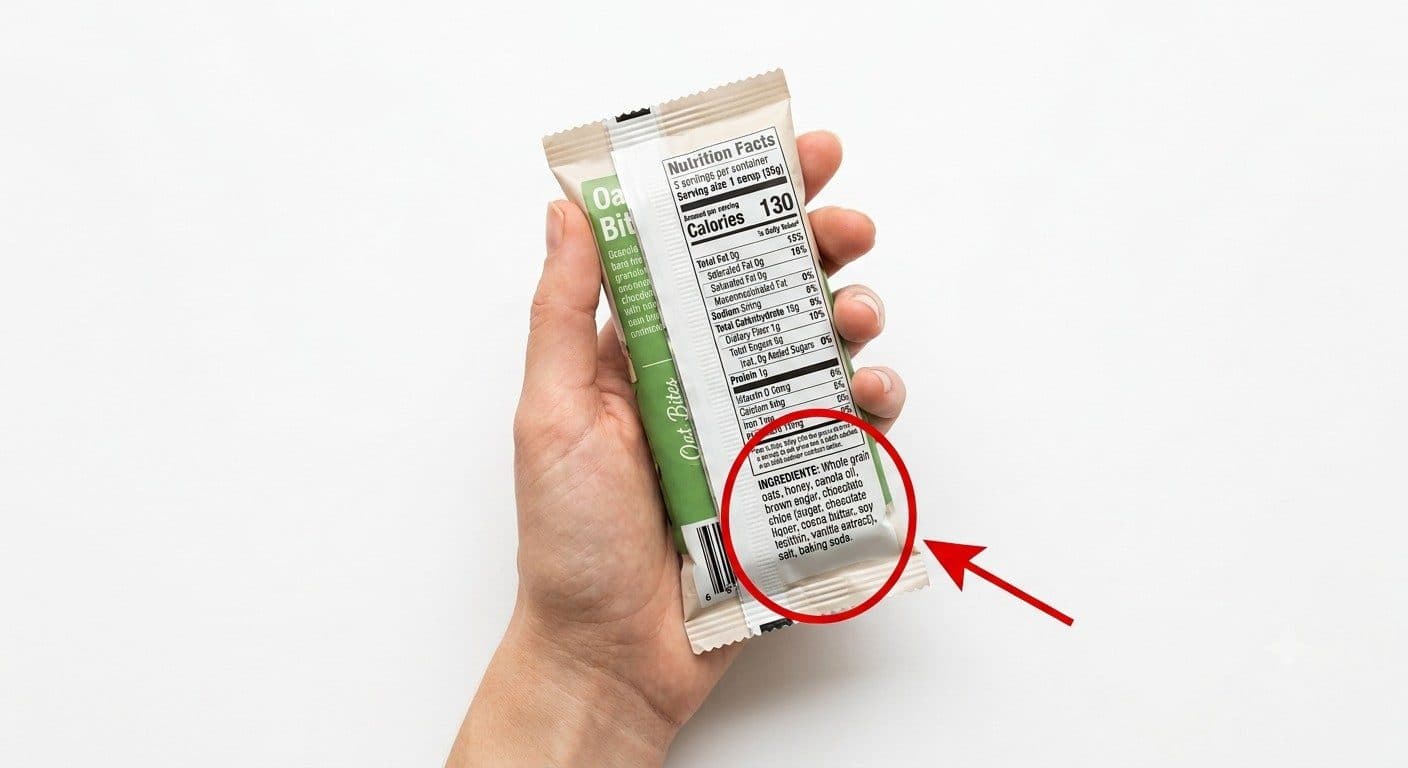
The nutrition label on packaged food exists, in theory, to help you make informed decisions. In practice, it is also a marketing document designed by food companies who understand exactly which numbers people look at and which they ignore, and who arrange the information accordingly.
Start With the Ingredients List Not the Nutrition Panel
Most people look at the nutrition numbers first. Start with the ingredients list instead. The ingredients list tells you what is actually in the product. The nutrition panel tells you the quantities of certain nutrients - but quantities mean nothing without knowing what the ingredients are.
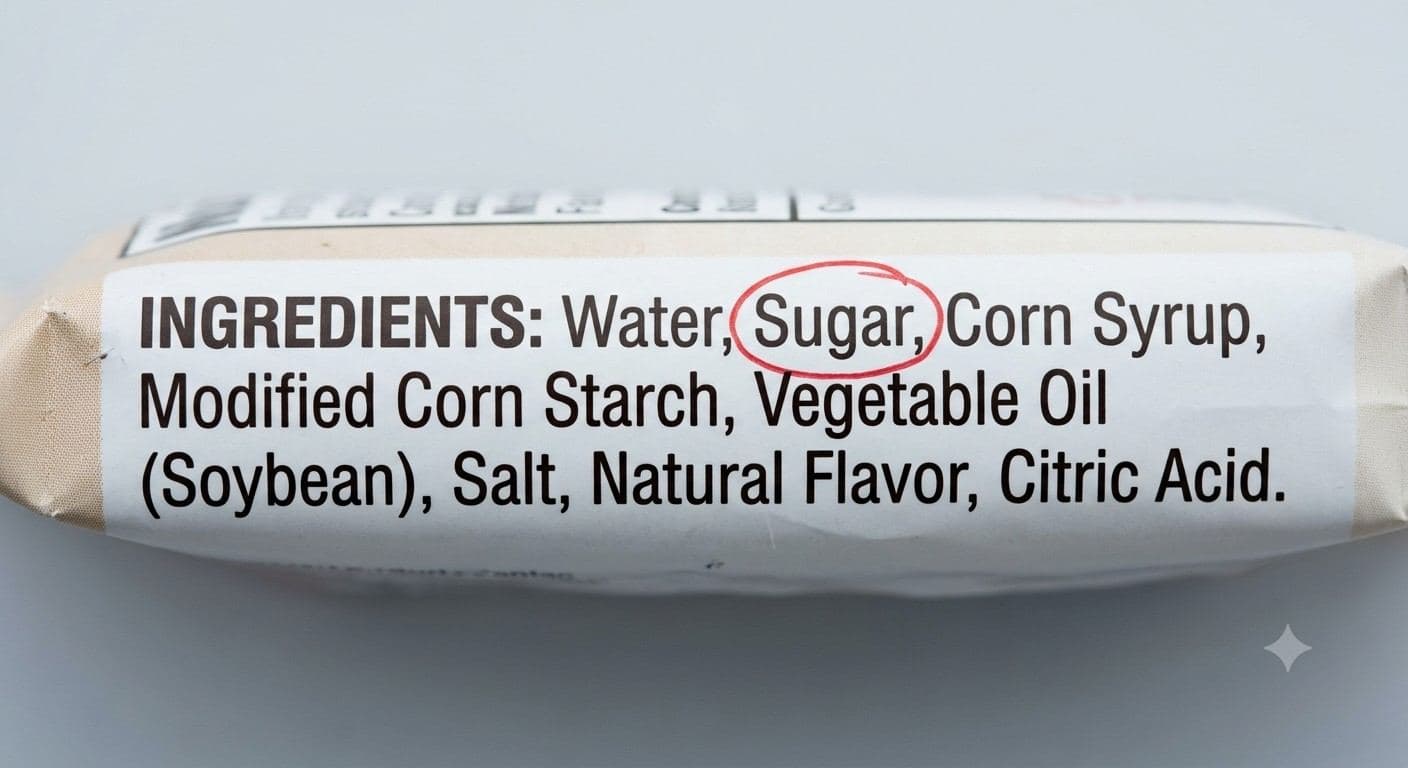
The most important rule: Ingredients are listed in descending order by weight. The first ingredient is present in the largest quantity. The last ingredient is present in the smallest quantity.
If sugar — under any of its names — appears in the first three ingredients of a product that is not a dessert, the product is primarily a sugar delivery vehicle, regardless of what the front of the pack says.
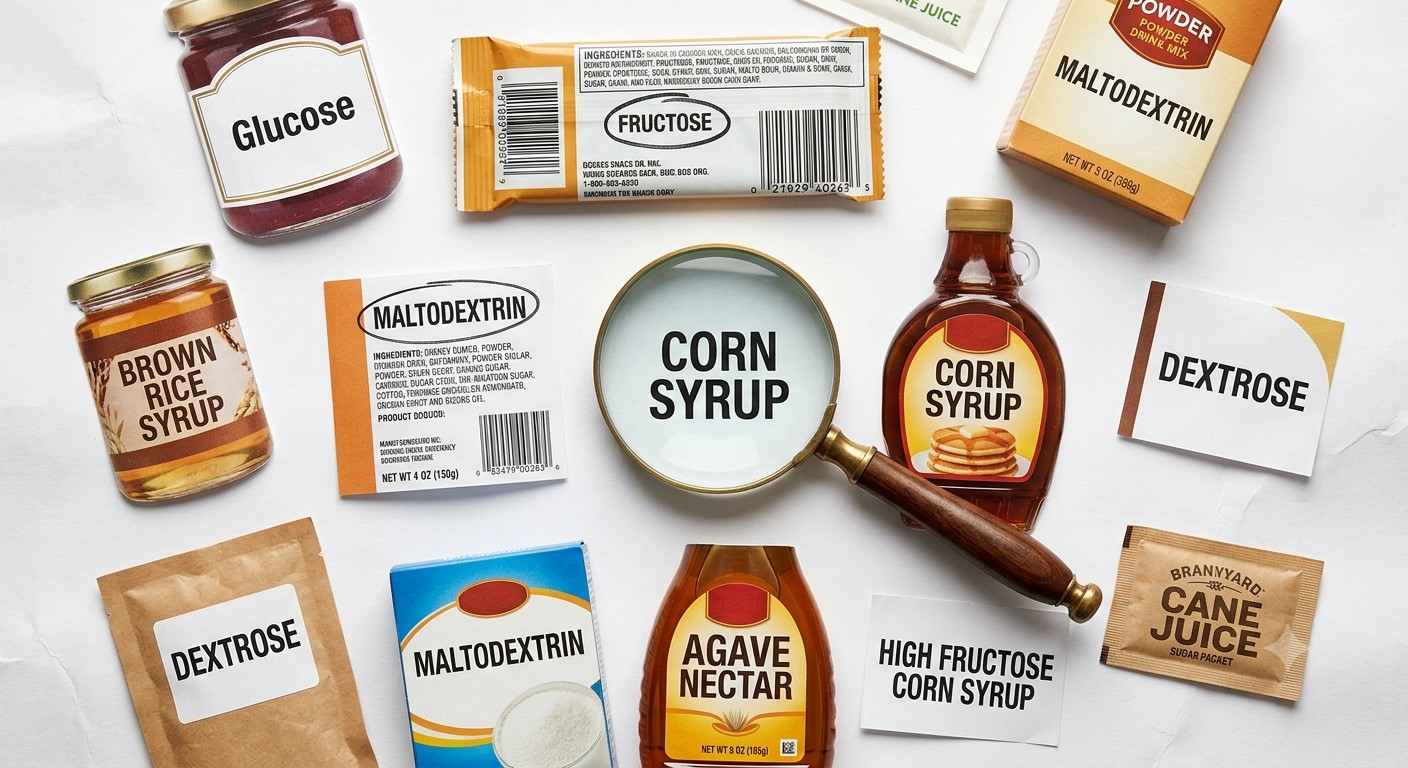
he many names of sugar: Glucose, fructose, sucrose, maltose, dextrose, corn syrup, high-fructose corn syrup, cane juice, fruit juice concentrate, maltodextrin, honey, agave nectar, coconut sugar, jaggery (in large quantities). Any of these in the first three ingredients is a red flag. The short list rule: A product with five or fewer recognisable ingredients is almost always better than one with fifteen ingredients, several of which require a chemistry degree to identify.
The Serving Size Deception
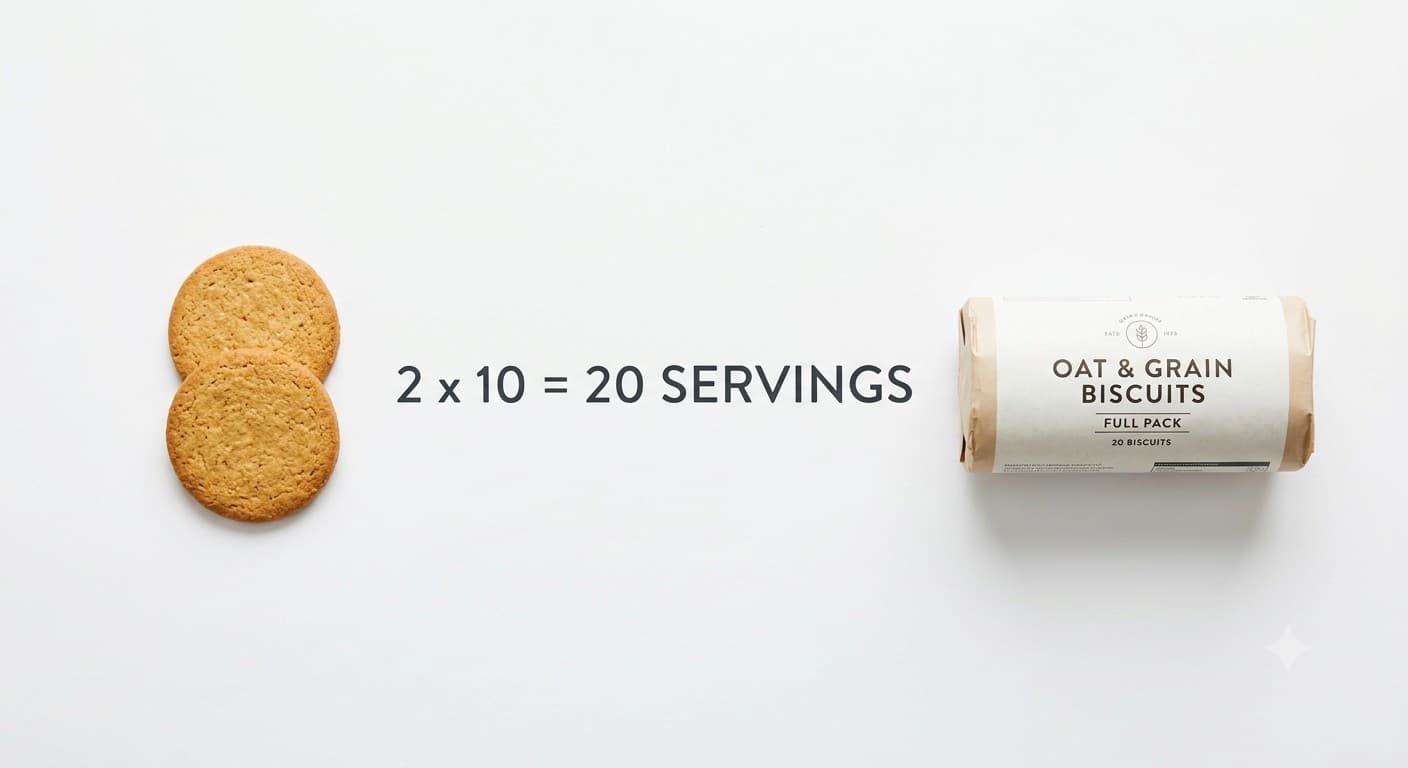
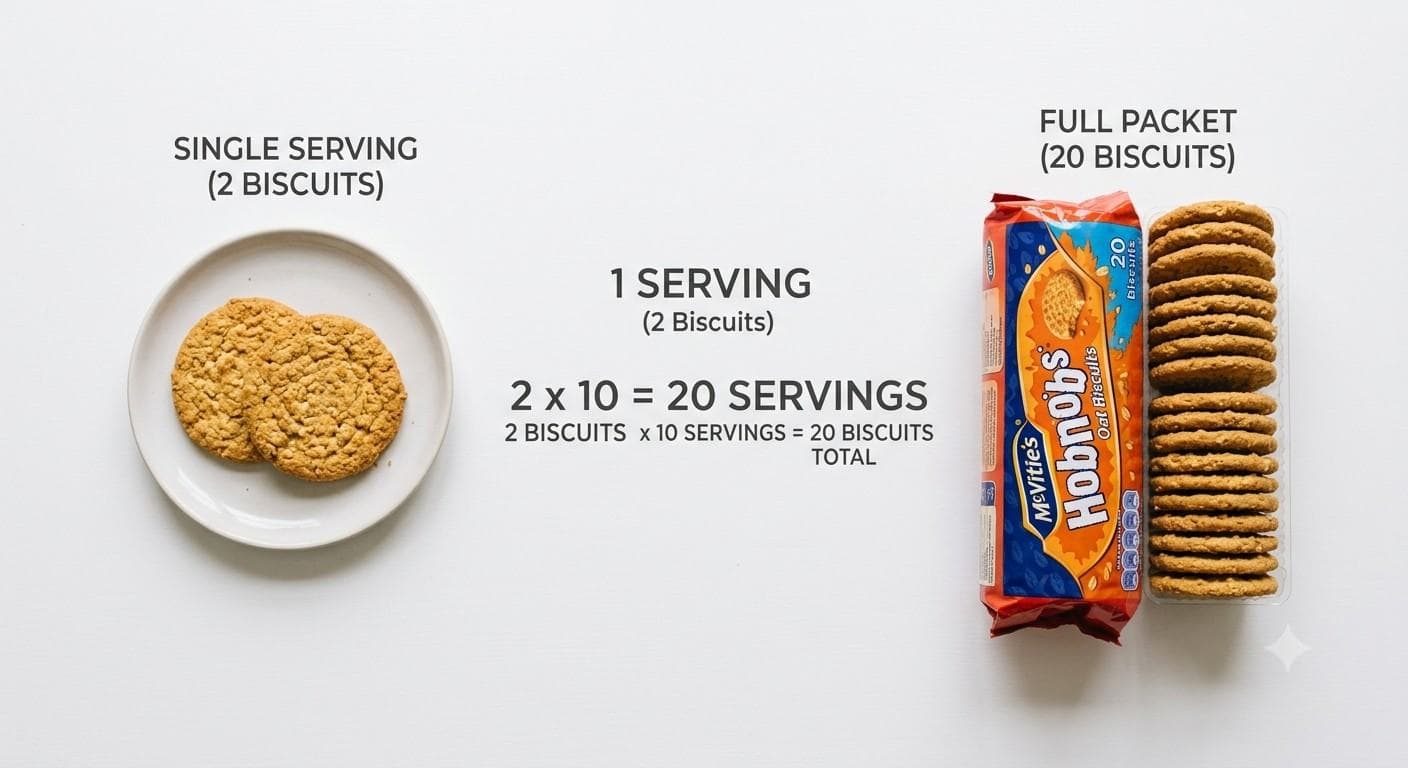
Before reading any number on the nutrition panel, find the serving size. Everything that follows is per serving — not per packet. Food companies routinely set serving sizes far smaller than anyone would actually consume, making the numbers appear more favourable.
A packet of biscuits might list a serving size of 2 biscuits. The packet contains 20 biscuits. If the label says 120 calories per serving, the packet contains 1,200 calories — but most people read 120. Always multiply the per-serving numbers by the number of servings you will actually consume. This is the accurate nutritional picture of what you're eating.
What the Nutrition Numbers Actually Mean
Calories: A measure of energy. Neither good nor bad in isolation. Context matters — 200 calories of dal and rice is nutritionally different from 200 calories of biscuits.
Total Fat: Fat is not the enemy it was portrayed as in the 1990s. What matters is the type of fat, not the total quantity. Look further:
- Saturated fat: Present in animal products and some plant oils (coconut, palm). Moderate consumption is fine for most people. High consumption from poor quality sources (hydrogenated oils, processed meat) is linked to cardiovascular issues.
- Trans fat: This is the fat to avoid. Produced by hydrogenating vegetable oils (called vanaspati or partially hydrogenated vegetable oil in India). Linked clearly to cardiovascular disease. Any product listing trans fat greater than 0 should be avoided or consumed very rarely.
Total Carbohydrates: Like fat, carbohydrates are not the problem. The type matters:
- Dietary fibre: This is a carbohydrate that the body cannot digest — it feeds gut bacteria, slows glucose absorption, and contributes to satiety. More fibre is almost always better. Look for at least 3g per serving in any grain-based product.
- Total sugars: The amount of sugar — natural and added — in the product. Natural sugars from whole fruit and dairy come with fibre and nutrients. Added sugars contribute only calories.
- Added sugars: Some labels now distinguish added sugars from total sugars. If this is listed, it is the most important sugar number. The WHO recommends less than 25g of added sugar per day for adults.
Protein: The number of grams of protein per serving. For a product to meaningfully contribute to your daily protein intake, look for at least 5g per serving.
Sodium: Perhaps the most underestimated number on the label. Most Indians consume significantly more sodium than the recommended 2,000mg per day - primarily from processed and restaurant food. Check sodium per serving and multiply by the servings you'll actually eat. Any single-serve product with more than 600mg of sodium is high-sodium.
The Front of Pack What to Ignore
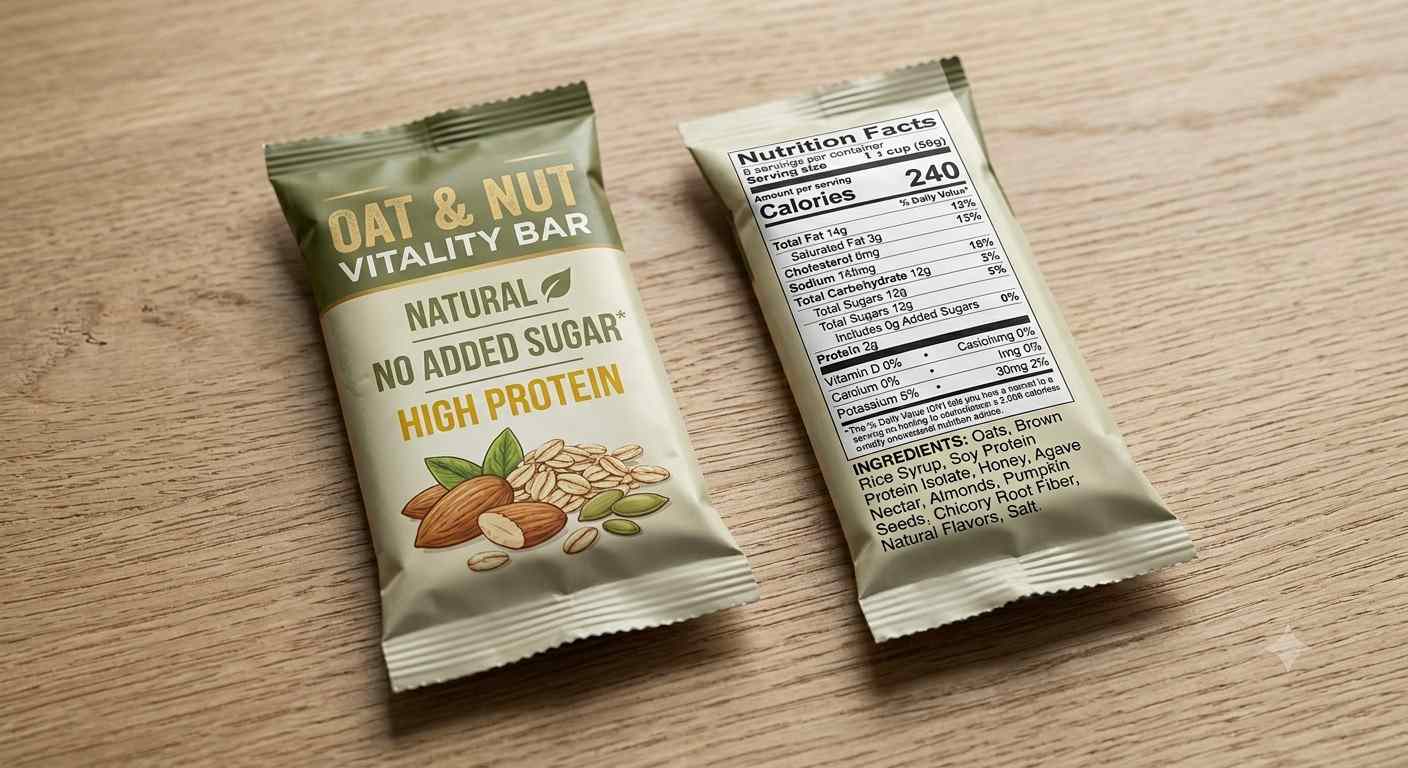
The front of a food pack is a marketing space. Almost nothing on it is regulated in the way that the ingredients list and nutrition panel are. "Natural": In Indian food labelling, this term has no legal definition. It means whatever the company wants it to mean.
"No added sugar": Can mean the product is sweetened with fruit juice concentrate, honey, or other caloric sweeteners that are nutritionally similar to sugar. Check the ingredients list.
"Low fat": Often means higher sugar. When fat is removed from processed food, it typically needs to be replaced with sugar or starch to maintain palatability. Low-fat yoghurt is a classic example — often higher in sugar than full-fat versions.
"High protein": Check the actual grams per serving. A product with 4g of protein per serving is not meaningfully high protein.
"Multigrain": Means the product contains multiple grains — not that those grains are whole grains. Multigrain white bread is still primarily refined flour.
A 30-Second Label Reading Protocol
- Serving size: How many servings are in this packet? Will I eat one or more?
- Ingredients list: What's in the first three ingredients? Is there sugar in a non-dessert product? Are the ingredients recognisable?
- Trans fat: Is it zero?
- Sodium: How much per serving I'll actually eat?
- Fibre: Is it present in meaningful quantities?
- Added sugar: How much, and does it fit into my day?
Thirty seconds. That's what it takes to know what you're actually eating. Eating with awareness is eating with intention. Read our guide on why cooking at home changes everything — and how living intentionally extends to every part of the day.
“Disclaimer: This content was created with AI assistance and reviewed before publication. It is for informational purposes only and not professional medical, nutritional, legal, or financial advice”