What they do instead is simpler and more sustainable: they identify a small number of ingredients that they actually enjoy, that are nutritionally complete, and that combine in enough ways to prevent monotony and they build most of their eating around those.
Why Five Ingredients Works
Five anchor ingredients, chosen well, produce more variety than most people expect. The variation comes not from different ingredients but from different preparations different spices, different cooking methods, different combinations of the same base ingredients producing genuinely different meals.
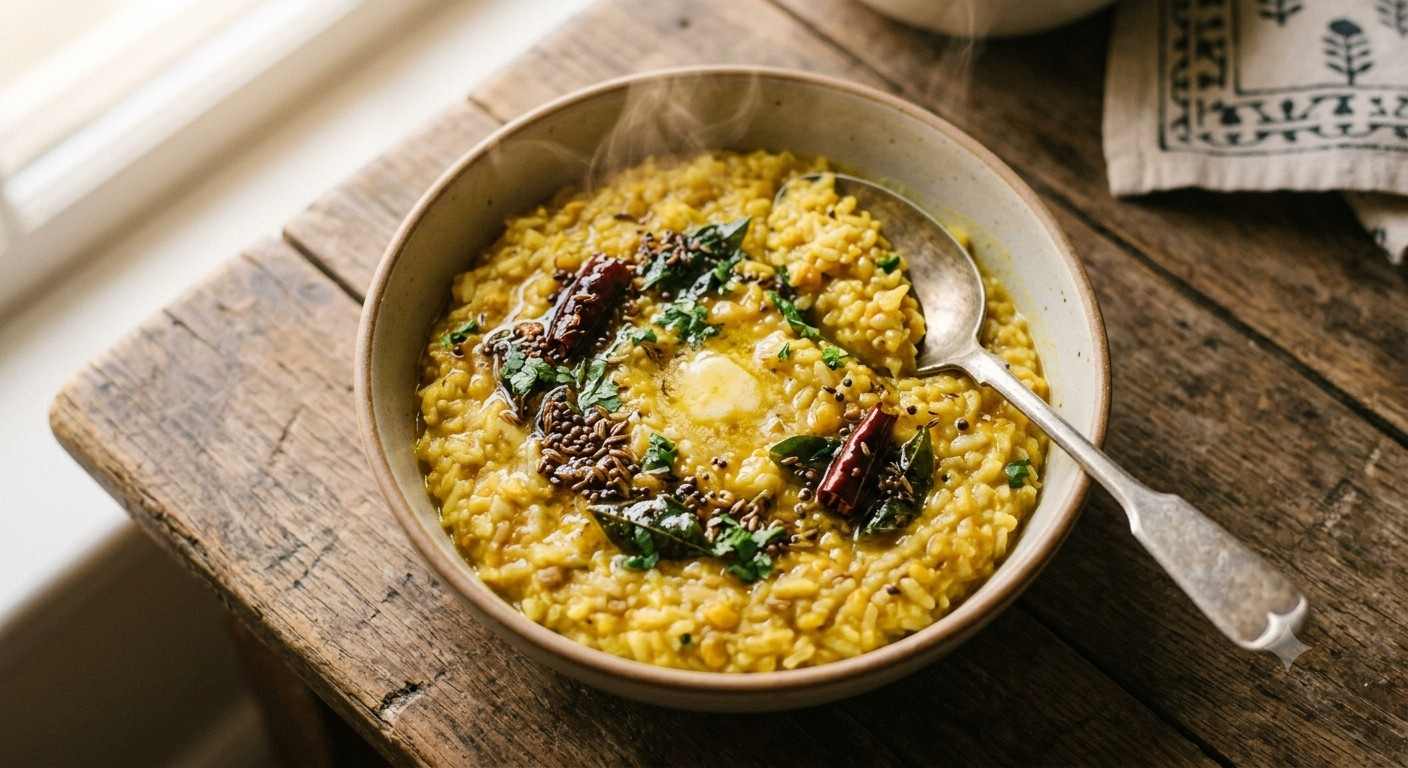
Indian cooking has understood this for millennia. The same dal appears in a thin soup, a thick curry, a dry preparation, and a khichdi - four different dishes from one ingredient, differentiated by water, temperature, and spice. The same rice appears steamed, fried, in a pulao, and in a dal-rice combination.
The variety comes from the cook's knowledge, not from the ingredient list. Five good ingredients, known well, are worth fifty ingredients barely understood.
Choosing Your Five
The five ingredients should cover the primary nutritional requirements of a day's eating. A practical framework:
- The five ingredients should cover the primary nutritional requirements of a day's eating. A practical framework:
- One grain (complex carbohydrate): Rice, whole wheat (as roti), oats, or quinoa. This is the base that carries and extends the other ingredients.
- One versatile vegetable (fibre + micronutrients): Choose something that works cooked, raw, and in multiple preparations - spinach, sweet potato, zucchini, or a seasonal green. The vegetable should be available fresh and should work with your dal.
- One protein supplement (for variety): Eggs or paneer. These add variety to the dal-grain-vegetable base and can appear at any meal breakfast, lunch, or dinner in different forms.
- One fat and flavour base: Ghee or cold-pressed oil, combined with your basic spice set (cumin, mustard seeds, turmeric, coriander, chilli). This is what transforms the same ingredients into different meals.
A Full Week From Five Ingredients
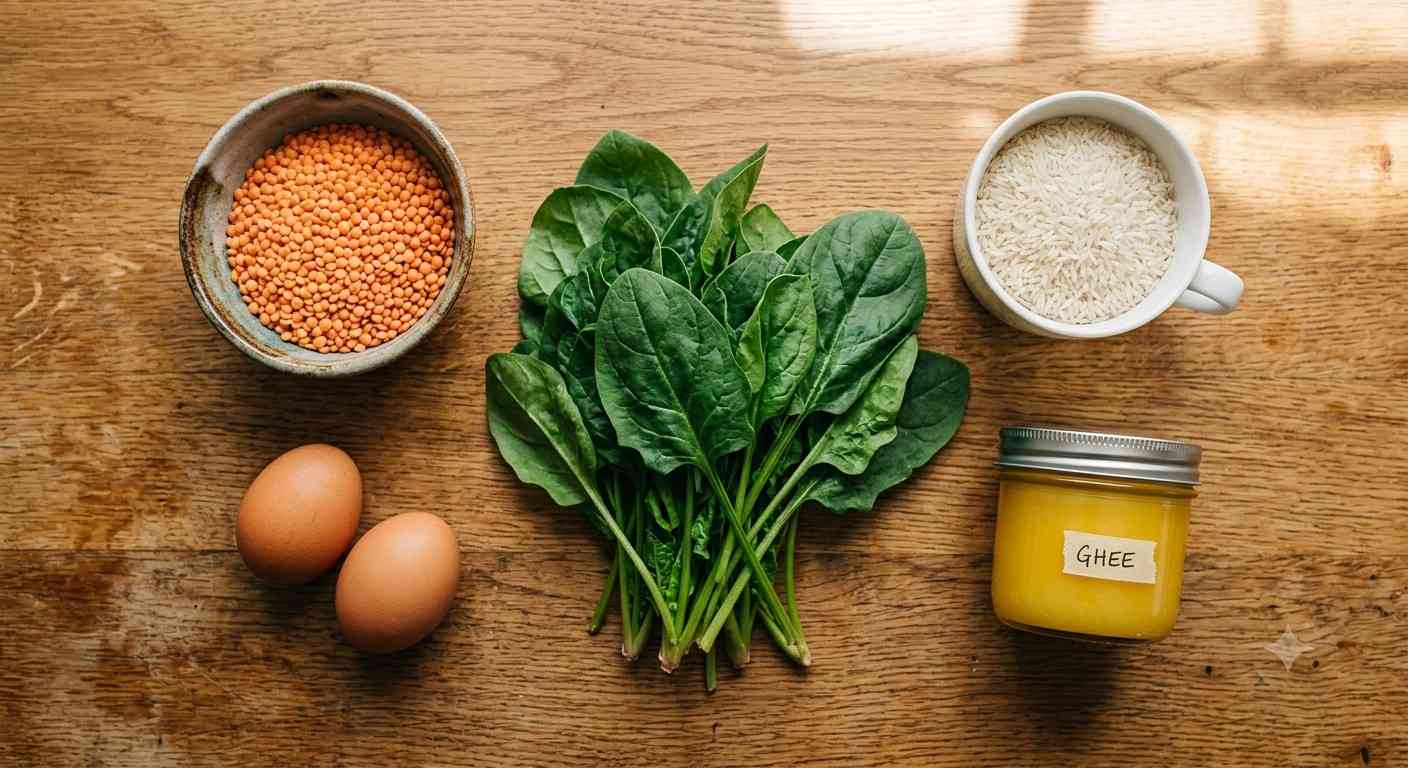
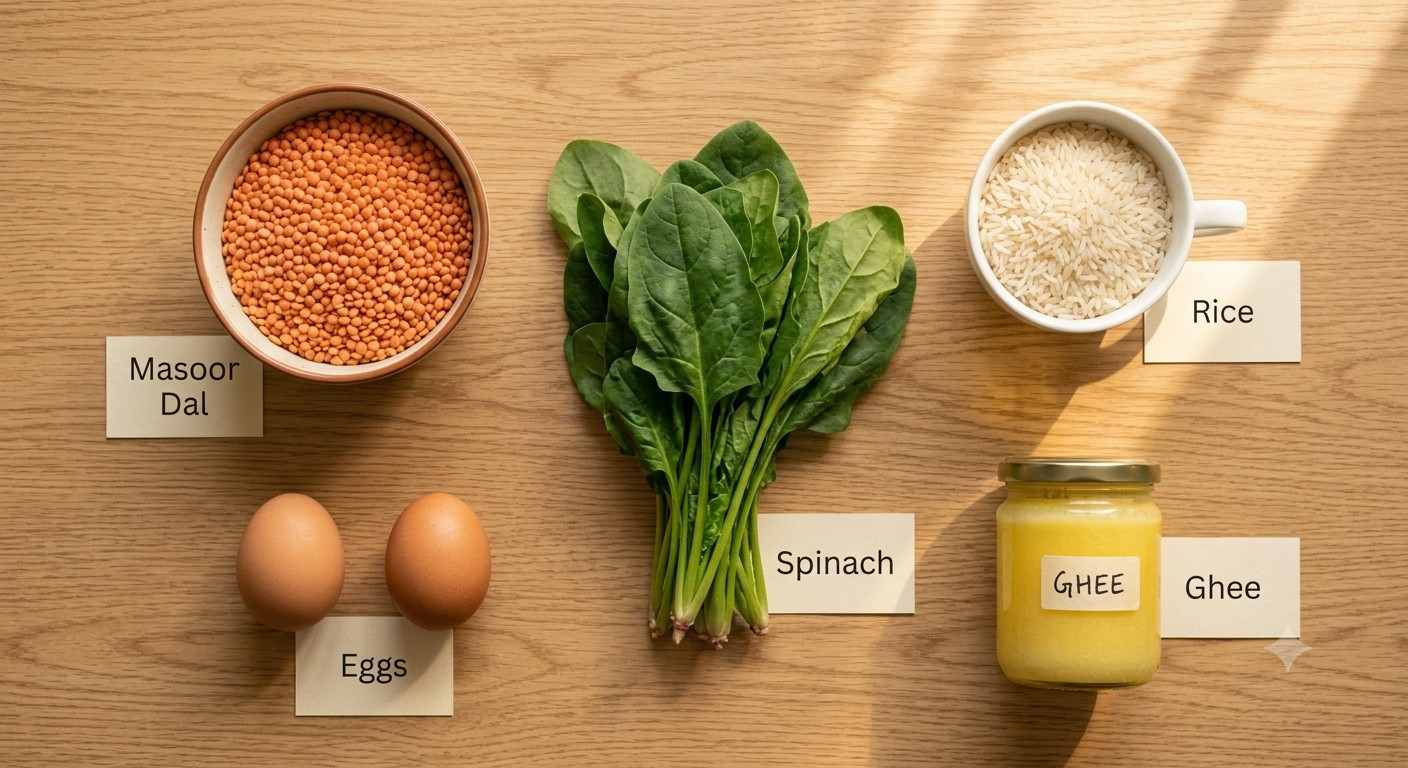
The following uses: masoor dal, rice, spinach, eggs, and ghee with basic spices.
Monday
- • Breakfast: Scrambled eggs with spinach and a little ghee
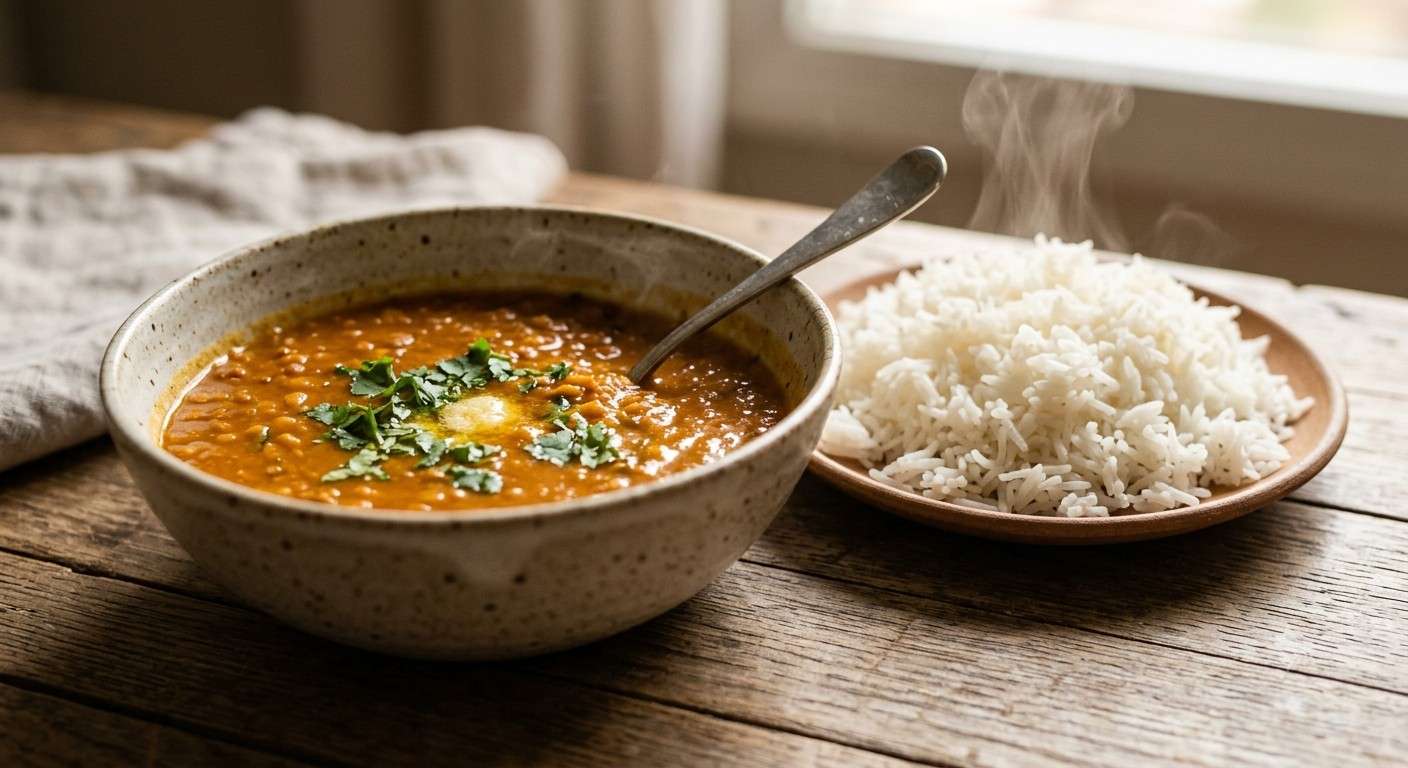
- • Lunch: Masoor dal with rice
- • Dinner: Dal with a tempering of cumin and mustard seeds - a slightly different preparation from lunch
Tuesday
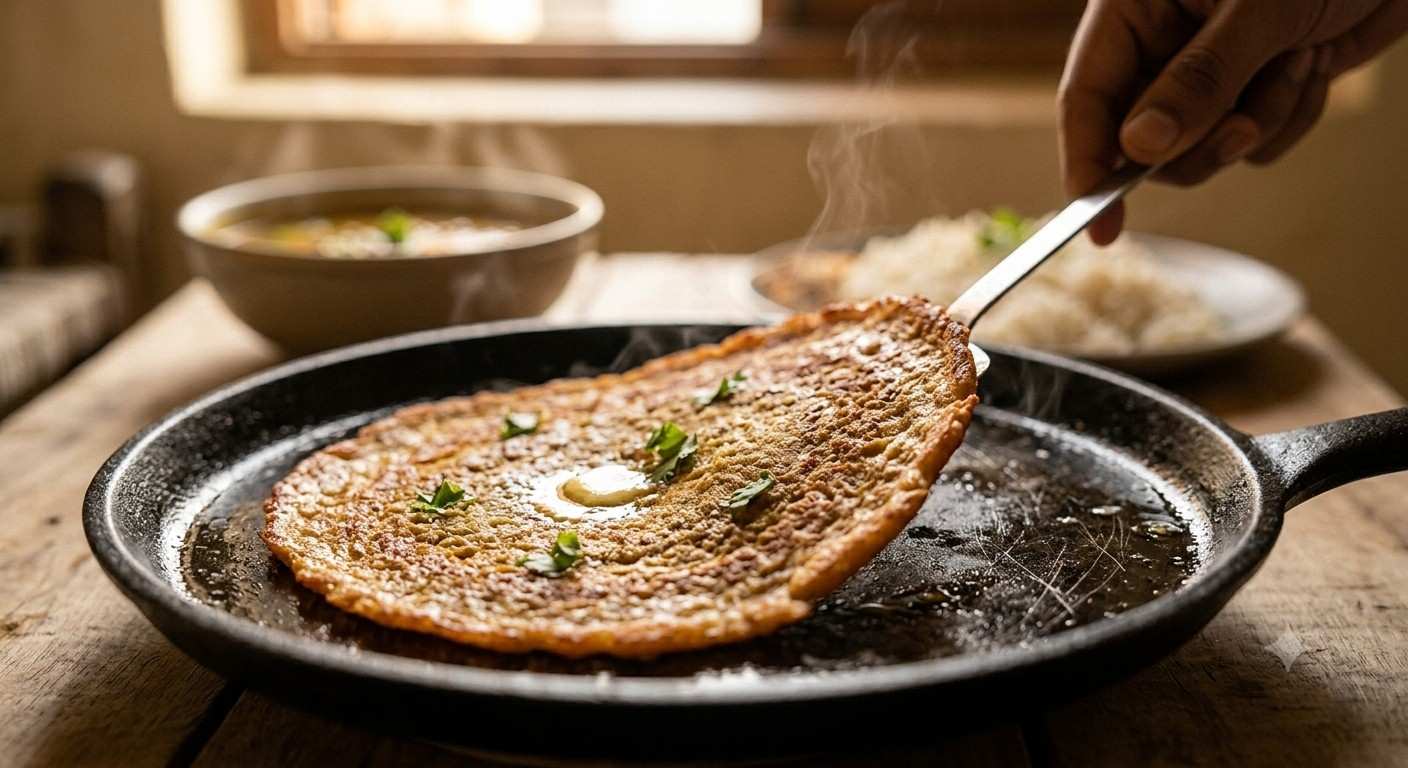
- • Breakfast: Dal cheela (dal pancake soak the dal overnight and blend to a batter, cook like a thin pancake)
- • Lunch: Spinach rice (cook rice with wilted spinach stirred through)
- • Dinner: Egg curry a simple egg curry using the same spice base as the dal
Wednesday
- • Breakfast: Boiled eggs with a slice of whole wheat toast
- • Lunch: Khichdi (dal and rice cooked together with turmeric and ghee the most complete single-dish meal in the Indian repertoire)
- • Dinner: Spinach dal - spinach cooked into the dal at the end, adding freshness and nutrition
Thursday
- • Breakfast: Scrambled eggs with turmeric and pepper
- • Lunch: Dal rice with a fried egg on top
- • Dinner: Dal soup dal cooked thin with extra water, a generous tempering of ghee and cumin, served as a warm soup
Friday
- • Breakfast: Dal dosa (if you've planned ahead dal batter fermented overnight makes an excellent dosa)
- • Lunch: Spinach rice with a fried egg alongside
- • Dinner: Masoor dal with a simple spinach sabzi on the side
Saturday
- • Breakfast: Eggs any style with spinach
- • Lunch: Dal pulao (rice cooked with dal and the same spice base, a one-pot meal)
- • Dinner: Egg bhurji (Indian scrambled eggs with tomato and spices) with roti
Sunday
- • Breakfast: Boiled eggs with a simple dal soup
- • Lunch: A slightly more elaborate version of the week's ingredients perhaps all four in a thali: dal, rice, spinach sabzi, and an egg preparation
- • Dinner: Simple khichdi the week ends as it found its best day
What This Week Produces
Seven days, five ingredients, twenty-one meals not one of which is identical to another. Each preparation uses the same raw materials differently. The variety is real, even if the ingredient list is short.
- This gradual expansion builds cooking knowledge - understanding how ingredients behave, what combinations work, how preparation changes character in a way that attempting elaborate variety from the start never does.
- Financially: These five ingredients cost a fraction of a week's restaurant or delivery eating. Masoor dal costs roughly 100 per kilo, which covers multiple meals. Eggs are inexpensive protein. Spinach is seasonal and affordable. Rice is the most economical staple available.
- Practically: With five ingredients, the mental load of "what should I cook?" is eliminated. The answer is always drawn from the same small set of options. Decision fatigue the phenomenon explored in our guide on focus and decision-making is dramatically reduced when food decisions are pre-made.
Expanding the Framework
Once the five-ingredient week is comfortable, it can be expanded gradually. Add a second vegetable. Introduce a second dal on alternate weeks. Bring in a new spice that changes the flavour profile of existing dishes.
This gradual expansion builds cooking knowledge - understanding how ingredients behave, what combinations work, how preparation changes character in a way that attempting elaborate variety from the start never does.
The five-ingredient week is not a restriction. It is a foundation. Simple, deliberate choices compound over time. Read our guide on the five meals worth knowing by heart and how simplicity in food connects to simplicity in how you live.
“Disclaimer: This content was created with AI assistance and reviewed before publication. It is for informational purposes only and not professional medical, nutritional, legal, or financial advice.”