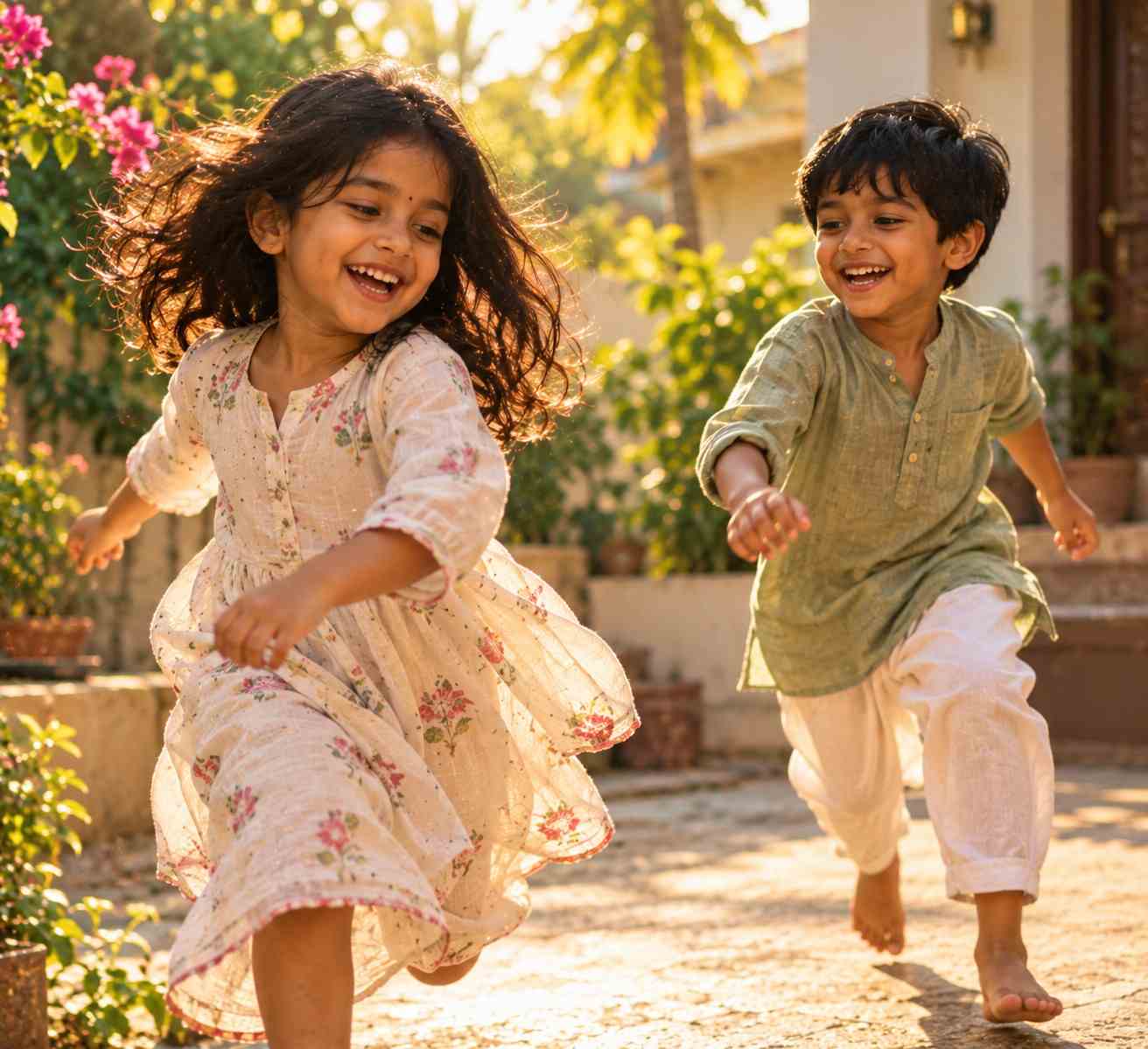
Dressing a child well for India's climate is not complicated — but it requires understanding what actually matters. Most parents default to whatever is available and affordable. The result, particularly in summer, is children in synthetic fabric who overheat, develop heat rash, and are uncomfortable in a way they often cannot articulate.
The One Principle That Covers Everything
Before the season-by-season breakdown, one principle covers every clothing decision for children in India:
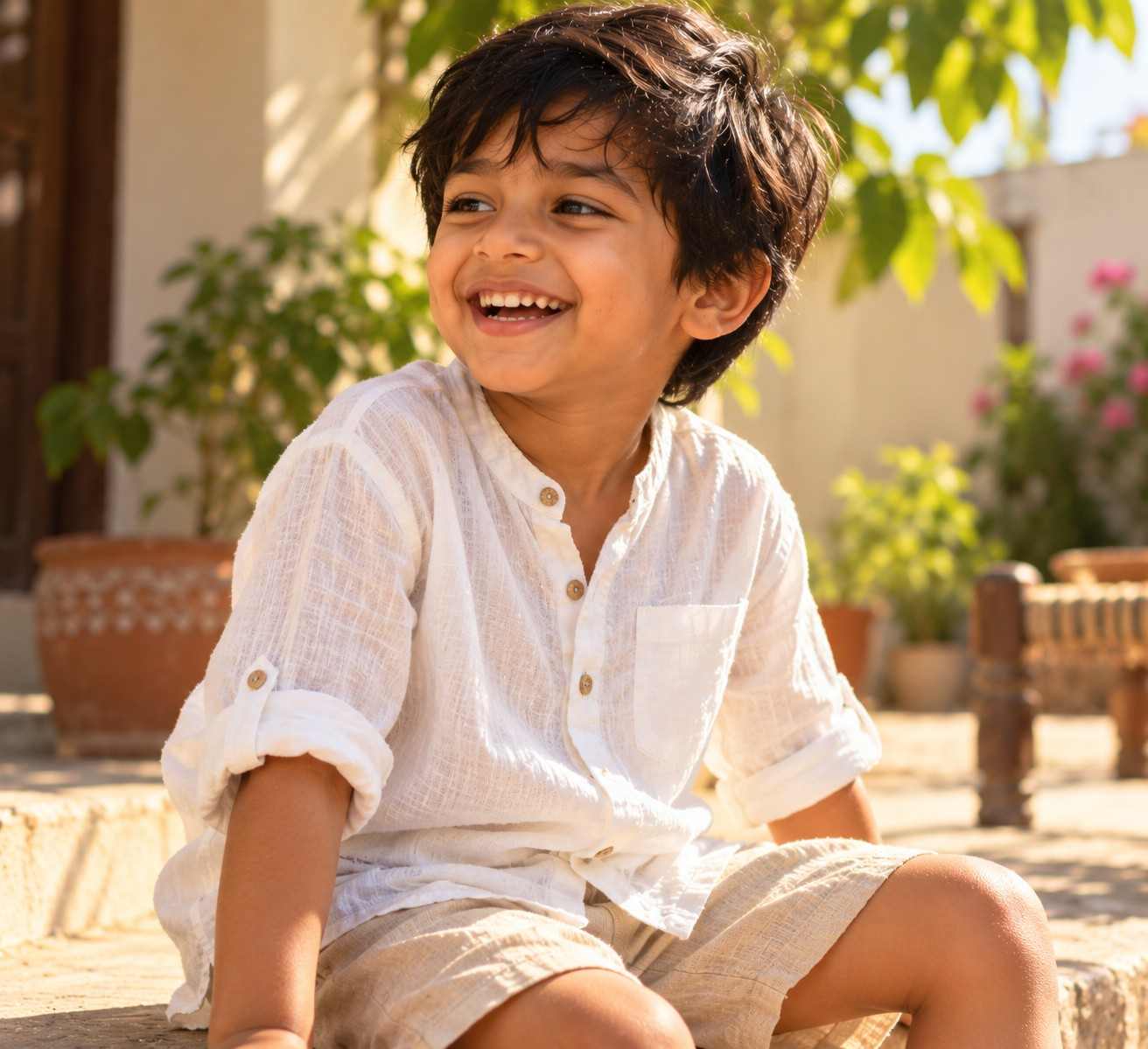
- Natural fabric breathes. Synthetic fabric doesn't. A child in natural cotton in Indian summer is cooler and more comfortable than the same child in polyester - regardless of colour, regardless of how thin the synthetic fabric appears. The physics of fibre structure determine breathability, not appearance.
- Loose fit allows air to move around the body. Tight clothing - regardless of fabric — restricts airflow and traps heat against the skin. Children's clothing that fits generously for movement is also fitting generously for climate comfort.
- Minimal layers means resisting the impulse to layer children out of protective instinct. Indian children are often overdressed — particularly by grandparents applying the thermal logic of colder climates to a hot one. A child who is warm enough to not shiver is almost certainly warm enough. The risk in India's climate is overheating, not chilling.
Summer (March - June): The Priority Is Cooling
Indian summer is the most demanding season for children's clothing. Temperatures above 35°C — often above 40°C in many regions, combined with physical activity, mean that what a child wears has a direct and measurable effect on their comfort and temperature regulation.
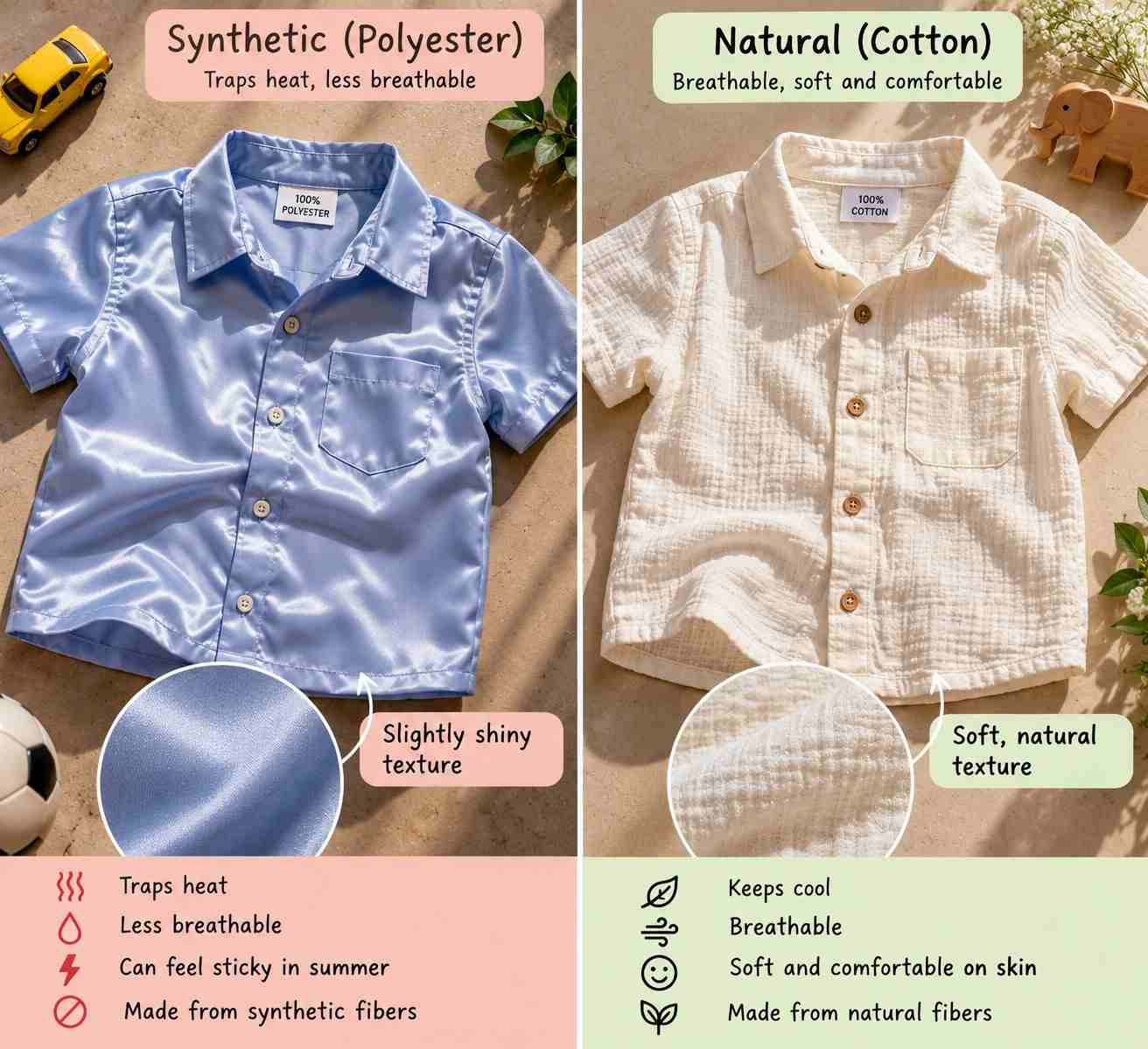
- Fabric: 100% cotton or linen. No synthetic blends. The difference between a cotton shirt and a polyester shirt in 40-degree heat is not subtle - it is the difference between a child who is uncomfortable and one who is genuinely distressed.
- Colour: Light colours reflect heat. White, cream, pale yellow, soft blue — these reflect solar radiation rather than absorbing it. Dark colours absorb heat. In direct sun, a white cotton shirt is measurably cooler than a dark one.
- Coverage: More coverage than most parents instinctively provide. Full-sleeve cotton tops protect from sun without adding heat — the fabric, if natural and loose, allows airflow while keeping direct sun off the skin. This is why traditional Indian summer clothing for children was not shorts and a vest but loose full-length cotton.
- For school: Cotton uniforms, if available. If the school uniform is synthetic, a natural cotton undershirt can reduce direct synthetic fabric contact with skin. Petition the school for natural fabric uniforms — it is a reasonable and evidence-based request.
Monsoon (July - September): The Priority Is Drying Fast
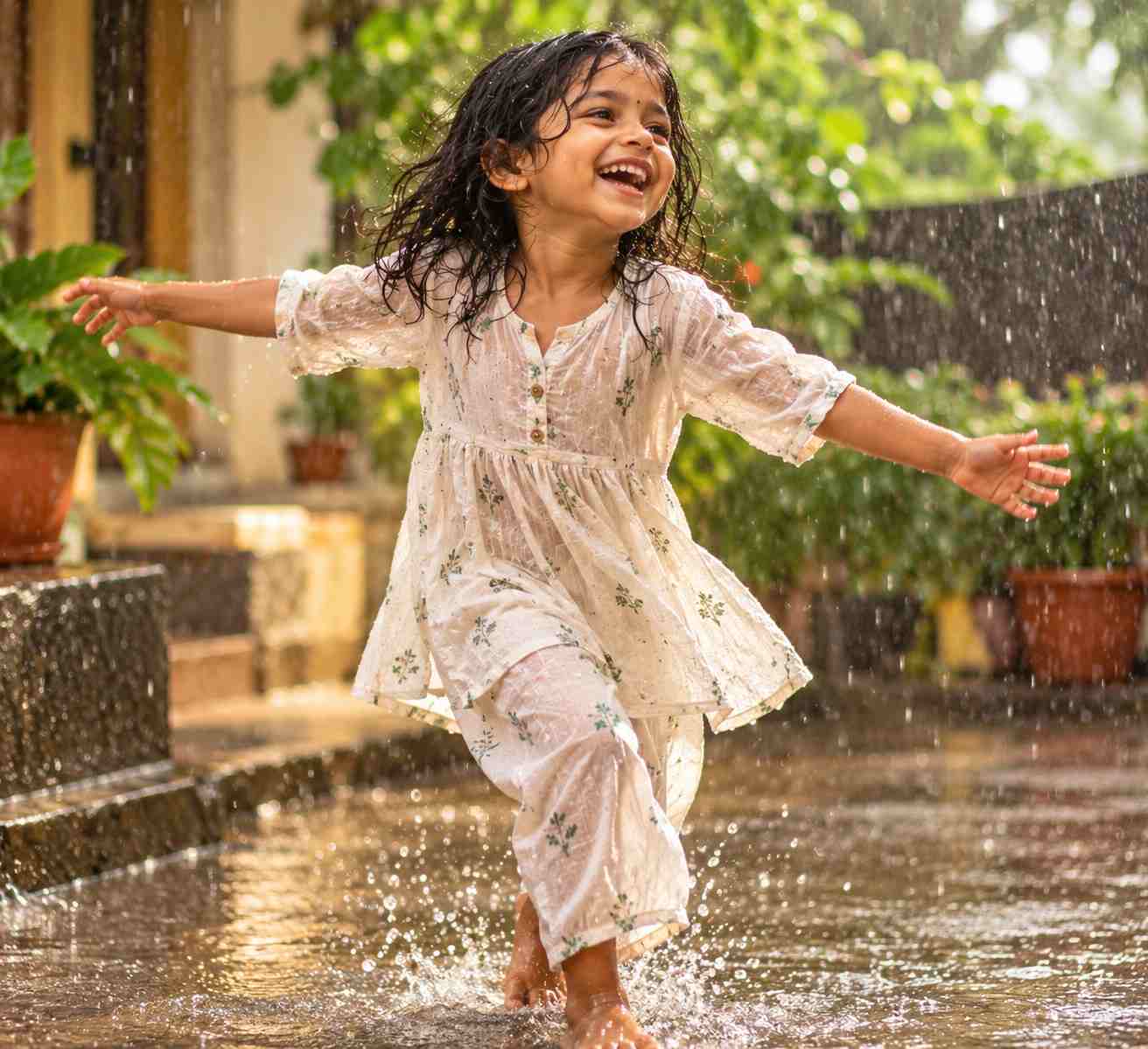
The monsoon brings its own clothing challenges — the combination of heat and humidity means sweat doesn't evaporate normally, and wet clothing clings uncomfortably.
- Fabric: Cotton remains the best choice. It absorbs moisture away from the skin and dries faster than synthetic fabric when air-dried. Linen also performs well in humid conditions — its moisture-wicking properties are excellent.
- Synthetic fabric in monsoon: Synthetic fabric in high humidity feels particularly unpleasant - it doesn't absorb moisture, so sweat remains on the skin, and the fabric itself can feel clammy in humid air. This is the season when the difference between natural and synthetic fabric is most apparent.
- Practical considerations: Have multiple changes of clothes available — children in monsoon season get wet and need to change. Natural fabric dries faster on a line or in a breeze than synthetic (counterintuitively — the moisture absorption that wets it faster also allows it to release moisture faster).
- Footwear: Sandals or slip-on footwear that dries quickly and doesn't retain water. Closed shoes in monsoon season are an invitation to fungal infection.
Winter (November - February): The Priority Is Layering Smartly
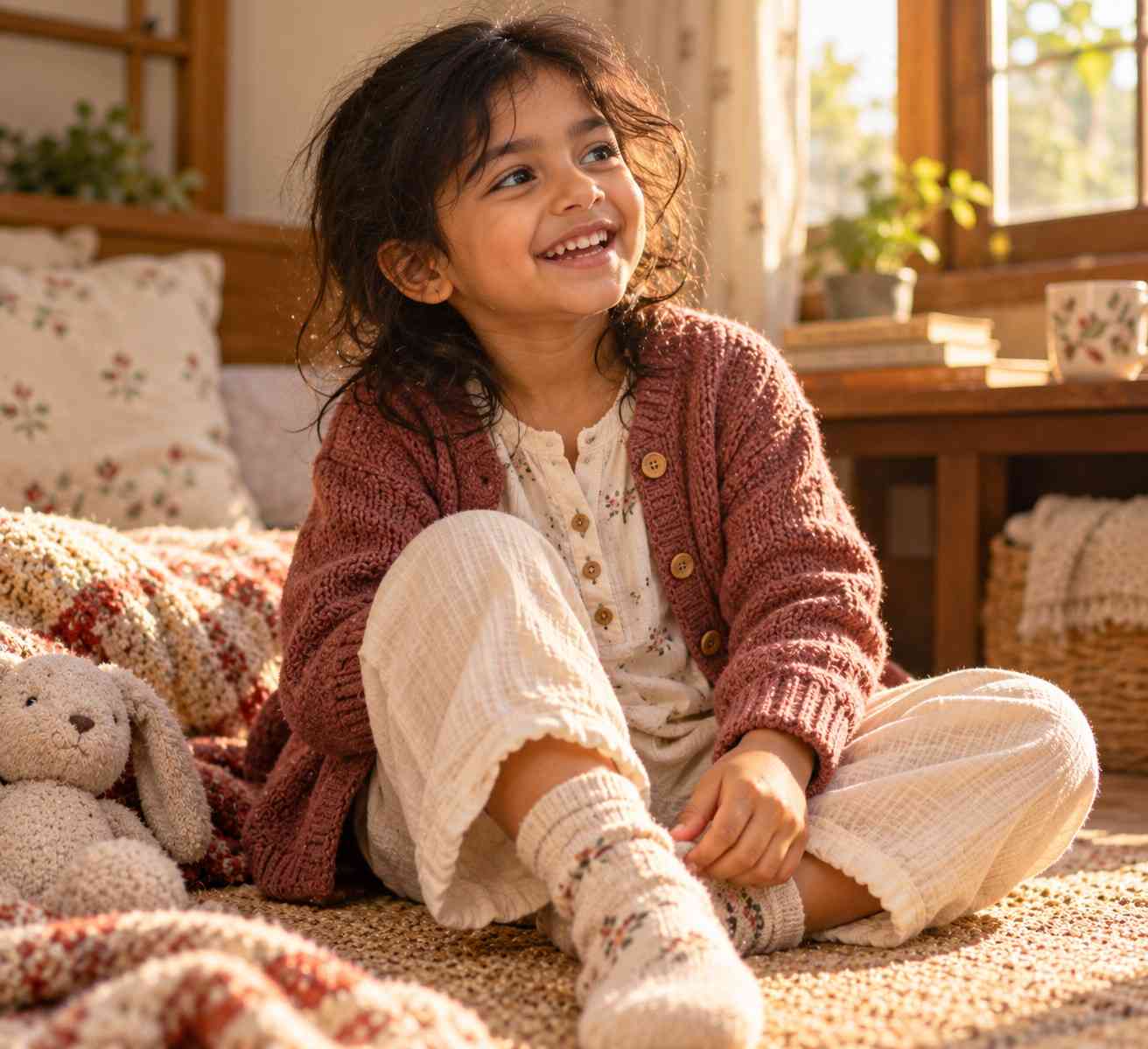
India's winter varies dramatically by region — from genuinely cold nights in Delhi and the hills to mild cool weather in the south. The layering principle applies across all of these, but the number of layers varies.
- The base layer: A well-fitted cotton or natural wool inner layer. Cotton in mild winters, wool for colder regions. The base layer should be snug enough to retain warmth without being constrictive.
- The middle layer: A cotton or wool sweatshirt or cardigan - something that can be added or removed as temperature changes through the day. Indian winters often involve warm afternoons and cold mornings and evenings — the middle layer is what adjusts.
- The outer layer: For genuinely cold regions, a wind-resistant outer layer. For most Indian winters, a cotton jacket or a woollen shawl is sufficient.
- The principle of easy removal: Children move between heated interiors and cool exteriors, between physical activity and stillness. Layers that are easy to add and remove - no complicated fastenings, no stiff structures — allow children to regulate their own temperature rather than depending on an adult to do it for them.
What to Avoid Across All Seasons
- Synthetic fabric directly against the skin. If synthetic fabric must be worn (school uniforms, certain sportswear), a natural fabric layer between the fabric and the skin reduces direct contact.
- Tight elastic waistbands on small children. Tight waistbands restrict circulation and are a common source of discomfort in warm weather. Look for drawstring waists or elasticated waists with generous stretch.
- Dark colours in direct summer sun. Practical and aesthetic preferences aside, dark fabric in direct Indian summer sun is a meaningful contributor to heat stress.
- Over-layering. An overdressed child cannot easily remove layers, and often doesn't communicate discomfort clearly. The Indian parental instinct toward more clothing is understandable but frequently counterproductive in a warm climate.
A Note on Children's Skin
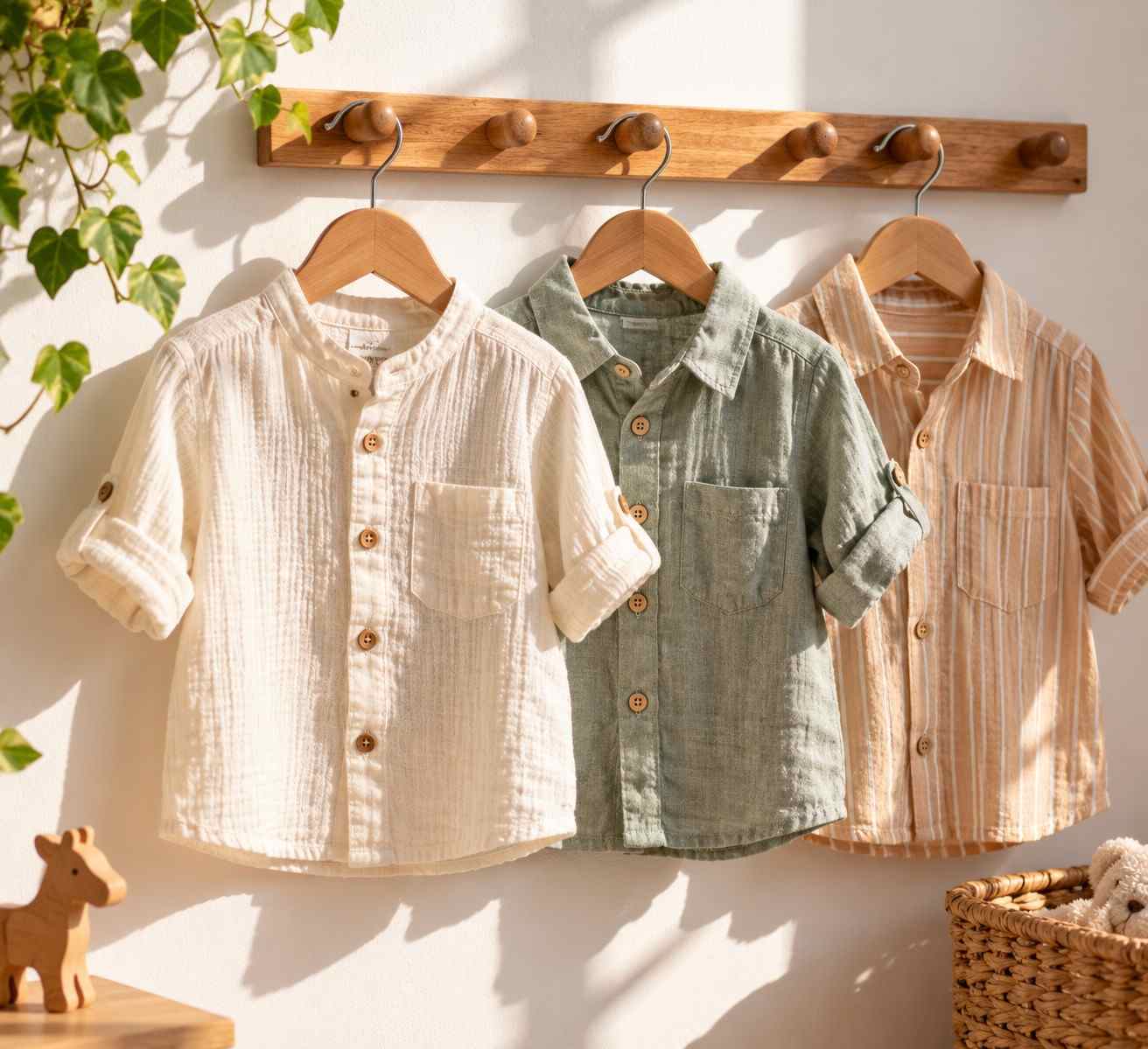
As explored in our earlier guide on why natural fabric matters more for children, children's skin absorbs substances at a higher rate than adult skin and is more reactive to contact with synthetic materials and chemical fabric treatments. Natural fabric — cotton, linen, hemp — is not just more comfortable. It is meaningfully gentler on skin that is still developing its barrier function.
The practical implication: when choosing between a natural fabric option and a synthetic one at similar price points, choose natural for everyday wear. The accumulated contact time — a child wears clothes for 12-16 hours a day — makes the fabric choice more consequential than any single exposure.
Dressing children well for India's climate starts with the same principle as dressing adults — natural fabric, built for this weather. Read why fabric matters more for children than anyone — and how what children eat connects to the same natural living philosophy.
“Disclaimer: This content was created with AI assistance and reviewed before publication. It is for informational purposes only and not professional medical, nutritional, legal, or financial advice”