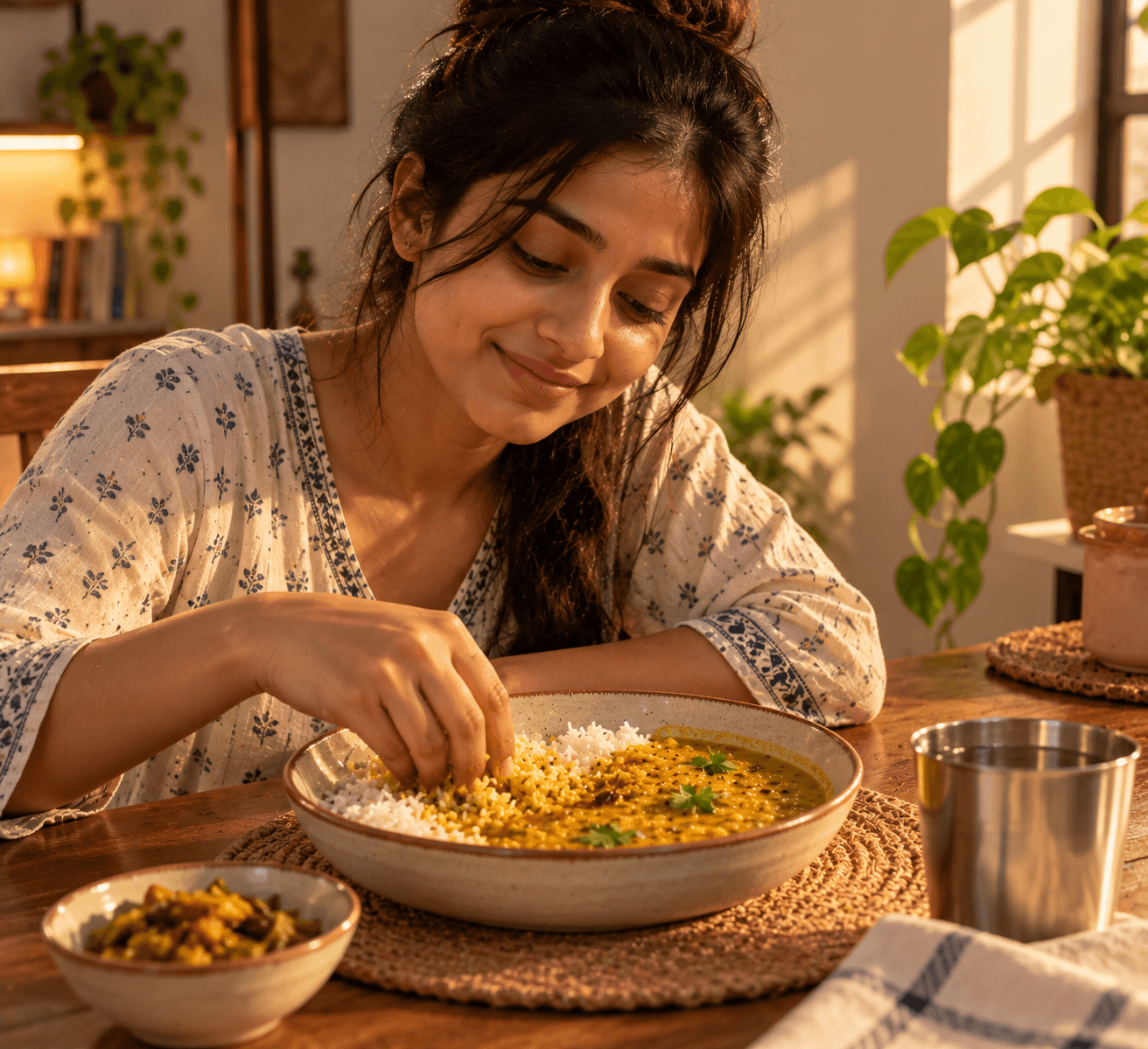
These days are real. They are not failures of discipline or commitment. They are part of what it means to be a person living a full life with real demands. What you eat on these days matters more than on the easy ones — because a depleted system is more vulnerable to the effects of poor nourishment, not less. But the answer is not to demand perfect eating from an already overwhelmed person. The answer is knowing what genuinely helps when capacity is low.
What the Body Needs on a Hard Day
Understanding what the body actually needs on a difficult, depleted day helps cut through the noise of what to eat.
- Stable blood sugar. Stress - emotional or physical — raises cortisol. Elevated cortisol raises blood glucose. Then insulin is released, blood glucose drops, and the crash produces the irritability, fatigue, and cognitive fog that make hard days harder. Eating in ways that prevent additional blood sugar volatility - protein, fibre, and fat rather than refined carbohydrates — reduces this cycle without requiring any extra energy to manage.
- Tryptophan. The amino acid that converts to serotonin — the neurotransmitter associated with mood stability and calm — is found in certain foods. On difficult days, eating tryptophan-rich foods genuinely supports mood biochemically, not just emotionally. Good sources: dal, lentils, eggs, curd, paneer, warm milk, bananas, pumpkin seeds.
- Magnesium. Stress depletes magnesium, and low magnesium is associated with anxiety, poor sleep, and muscle tension — all of which compound the difficulty of a hard day. Magnesium-rich foods: leafy greens, dark chocolate, nuts, seeds, whole grains, and dal.
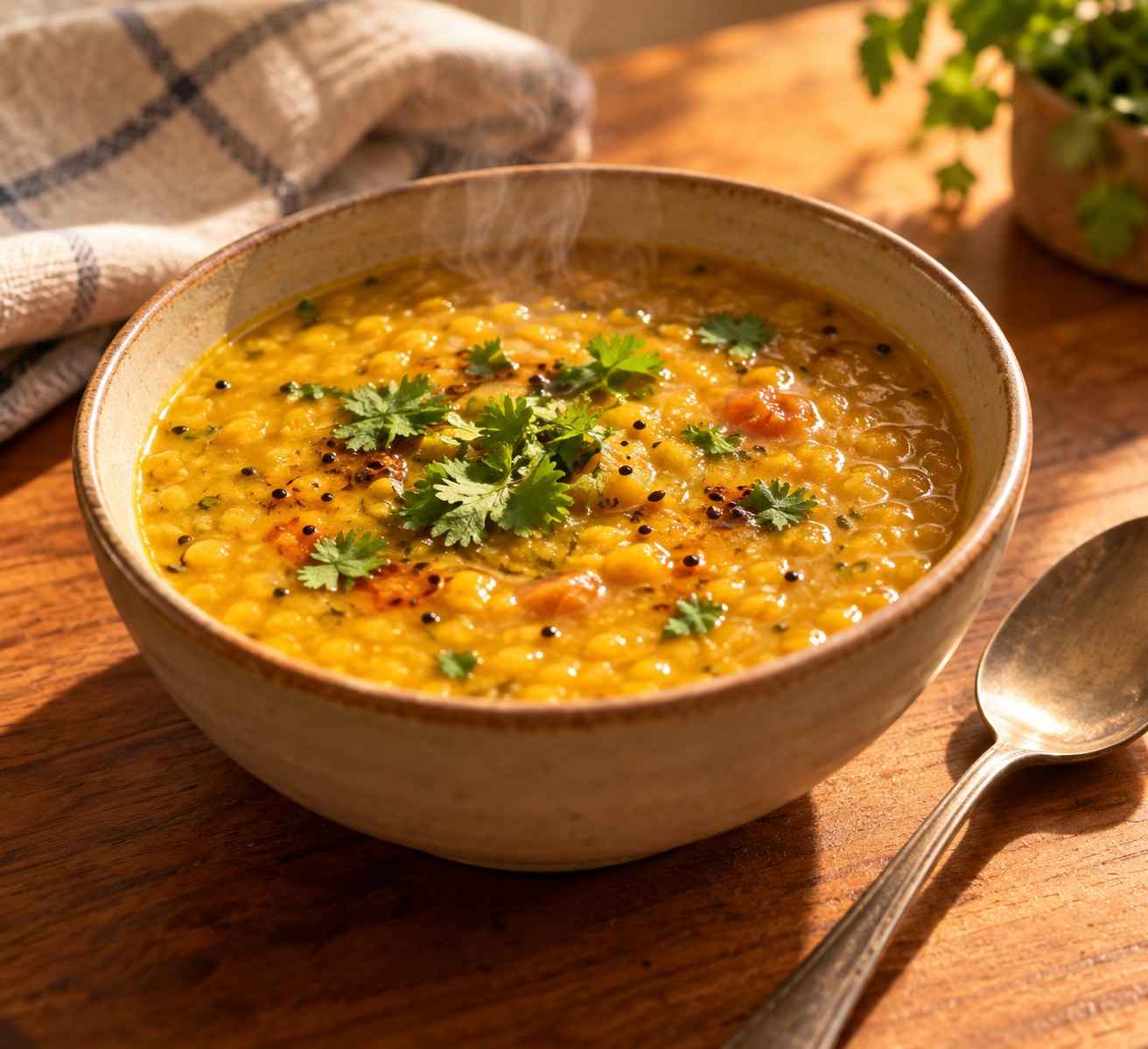
- Warm food. This is not nutritional science - it is experiential truth. Warm food is more comforting than cold food. It signals safety and care to a nervous system that is already stretched. On a hard day, a bowl of warm dal is more restorative than a nutritionally superior cold salad.
The Five Things to Keep Available for Hard Days
These five things require no planning, minimal preparation, and produce meaningful nourishment on days when capacity is low:
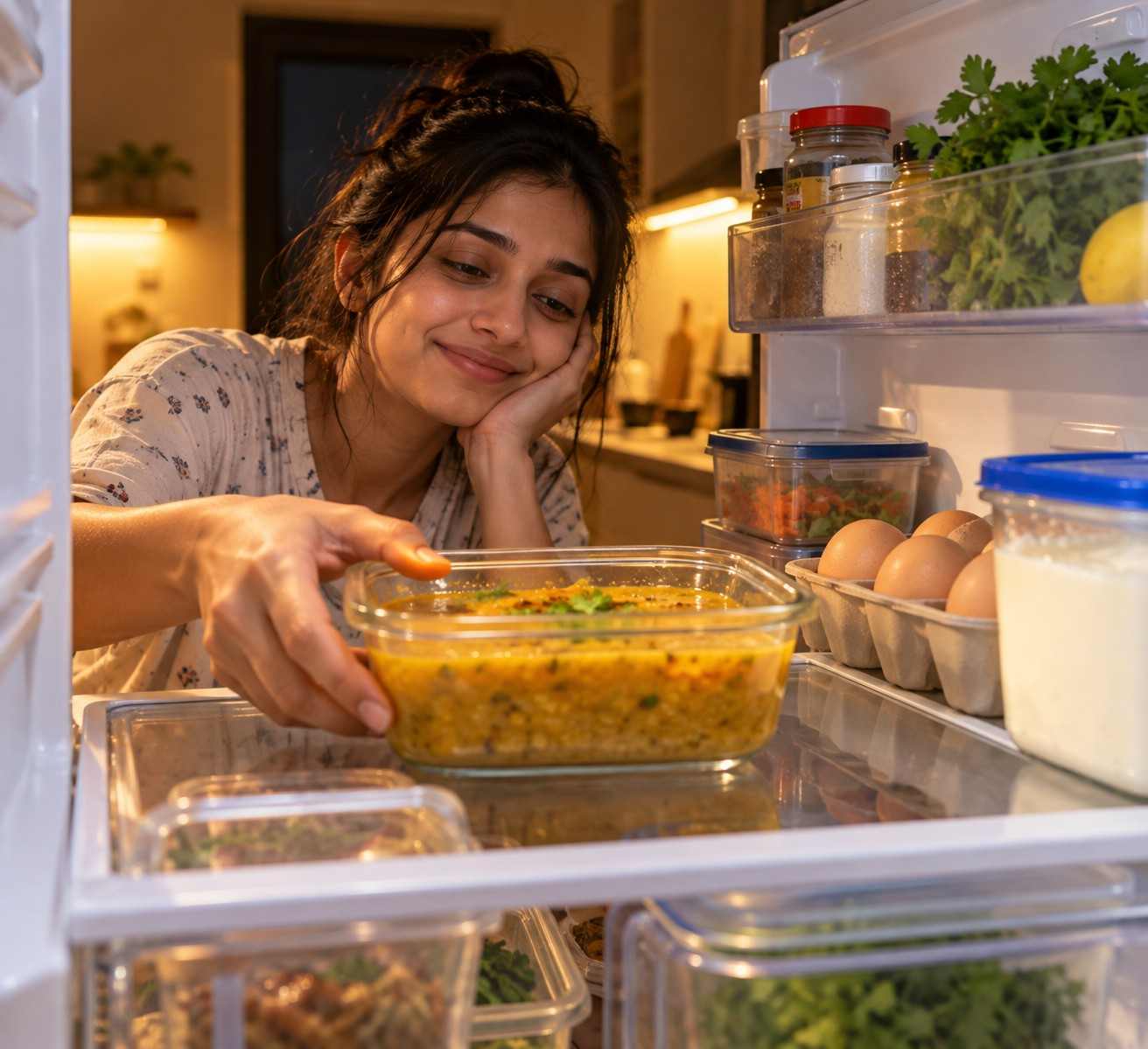
- Dal - already cooked (from batch cooking): If you follow the batch cooking approach from our earlier guide, there is always dal in the fridge. Reheated in 5 minutes, eaten with rice or bread, it provides protein, fibre, tryptophan, and warmth — everything a difficult day needs from food. This is the most important thing to keep available.
- Curd : Straight from the fridge, no preparation required. Curd provides protein, probiotics, and tryptophan. The probiotic content — live bacteria — may support gut-brain axis function, which genuinely affects mood. On a hard day, a bowl of curd eaten slowly is a meaningful act of self-care.
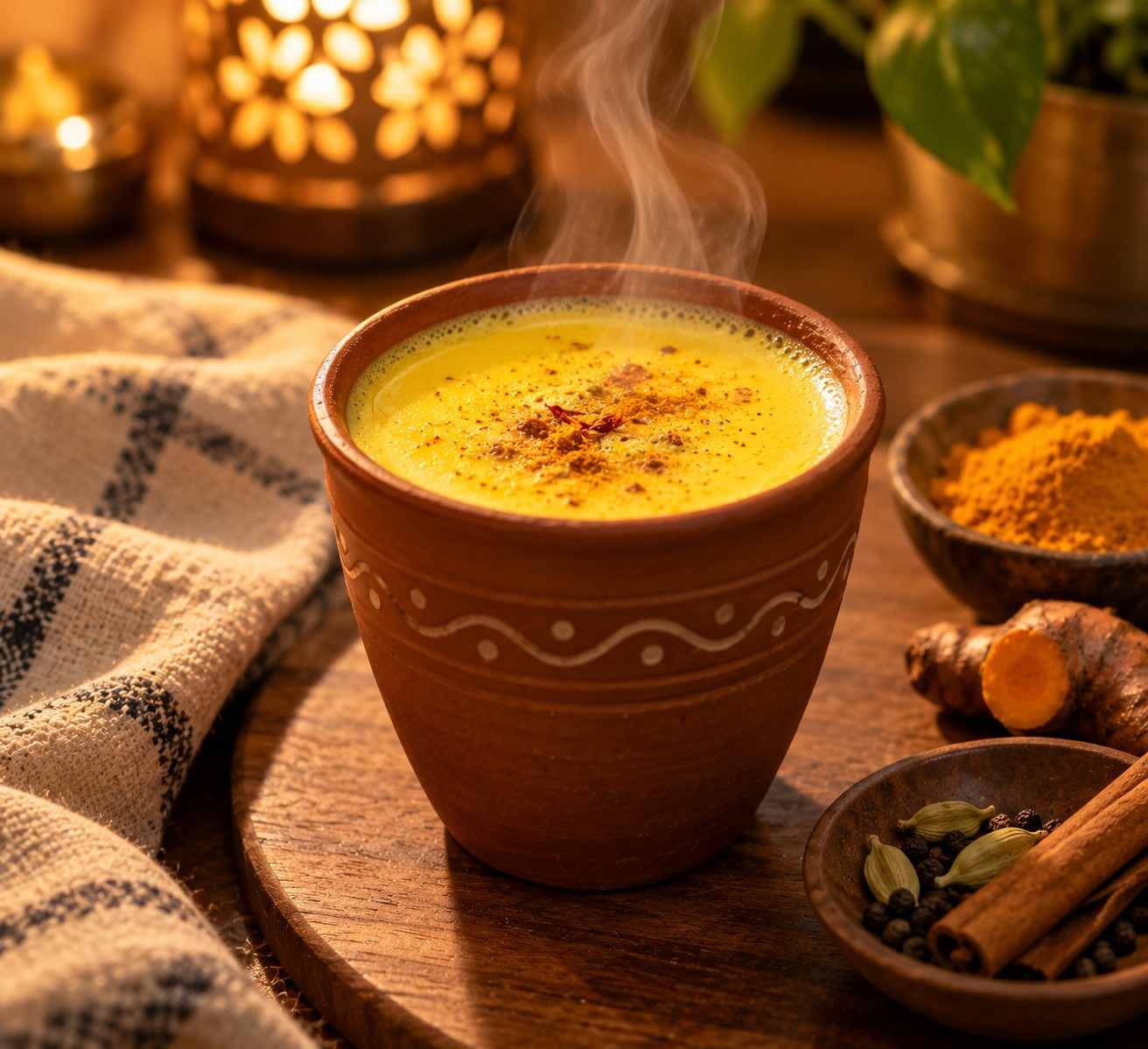
- Warm milk or haldi doodh : Five minutes to make. The combination of tryptophan (from the milk), curcumin (from the turmeric), and the physical warmth of the drink produces a genuine calming effect that is more than placebo. On a day when everything feels like too much, a cup of haldi doodh before sleep is one of the most genuinely useful things available.

- Eggs : An egg takes 3 minutes to cook in any form. Scrambled with a little ghee and salt. Boiled while you sit down. Fried in 2 minutes. Eggs provide complete protein, tryptophan, and fat — all relevant to mood and energy stabilisation. They require almost no decision-making and almost no effort.
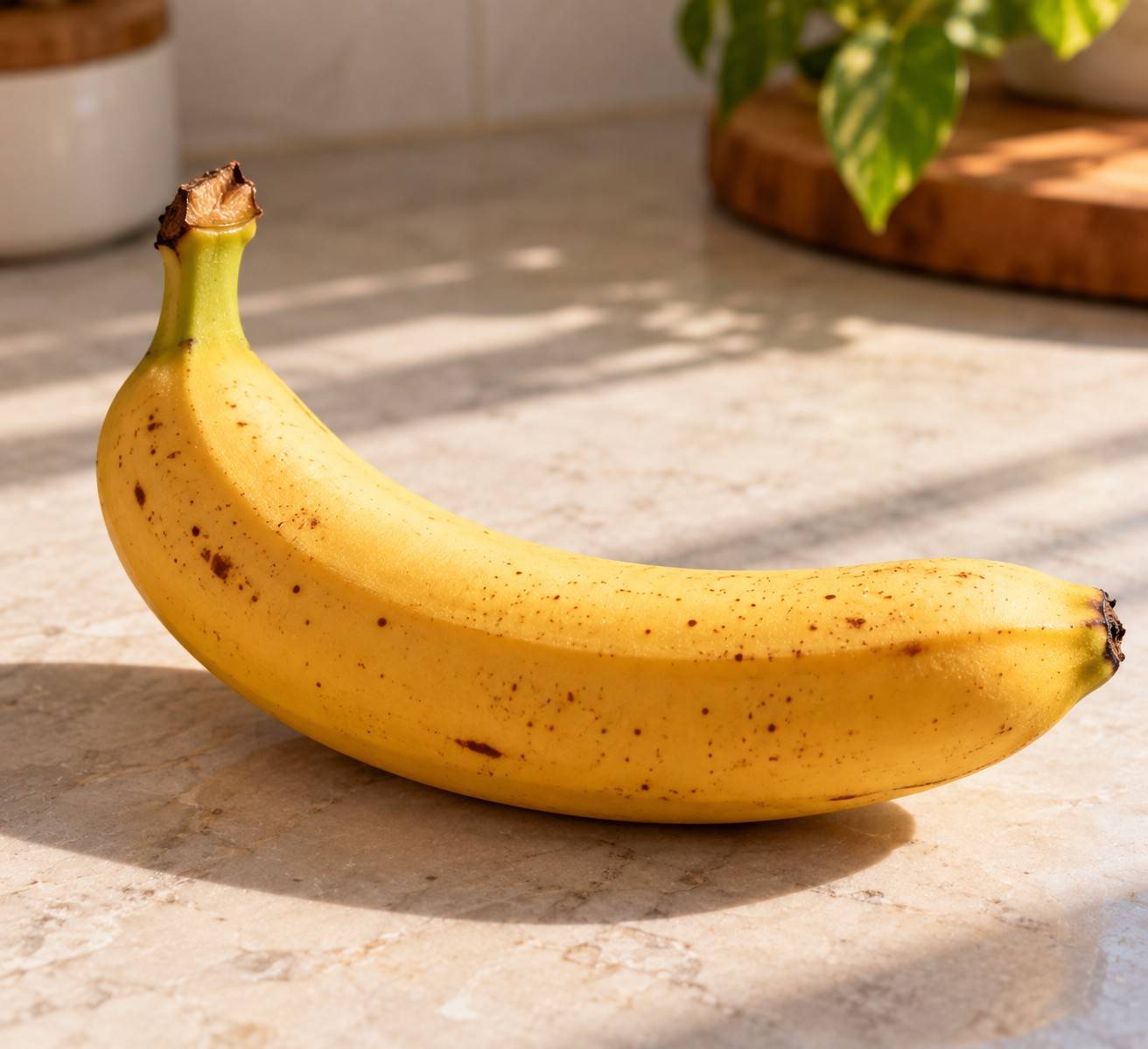
- Banana : No preparation. Portable. High in tryptophan, potassium, and natural sugar that releases gradually due to the fibre content. Not a meal, but a meaningful supplement to any meal on a difficult day.
What Not to Reach For
The foods most people reach for on difficult days are the ones that feel most appealing in the moment and least helpful in the hours that follow.
- Ultra-processed snacks — biscuits, chips, packaged namkeen — provide a brief blood sugar lift followed by a faster crash. They are specifically engineered to be eaten mindlessly, which means they are eaten in large quantities without producing satiety, making the next few hours nutritionally worse.
- Large amounts of refined carbohydrates alone - white rice without dal or protein, plain bread, plain roti — produce the blood sugar pattern described above. They are not harmful in moderate quantities with protein, but as the primary food on a difficult day, they amplify the energy volatility.
- Alcohol — physiologically a depressant, not a reliever. It disrupts sleep architecture, reduces REM sleep, and lowers serotonin and dopamine the day after. On an already difficult day, alcohol reliably makes the following day harder.
- Excessive caffeine — more than your usual amount — raises cortisol further in a system already under stress, and disrupts sleep at the end of a day when sleep is most needed.
The Permission to Be Simple
On hard days, eating simply is not settling for less — it is responding appropriately to circumstances. A bowl of dal and rice, eaten slowly, without screens, is a complete act of self-nourishment. It requires almost no effort. It provides almost everything the body needs. It is exactly the right thing to eat.
The culture that treats elaborate cooking as the measure of good eating has it backwards. Good eating is eating what nourishes you, in the way you're actually able to manage it, on the day you're actually having.
Give yourself permission to eat simply on hard days. The simple meal, eaten with some attention, is enough. On difficult days and easy ones, simple nourishing food is always the answer. Read our guide on the five meals worth knowing by heart — and how the evening affects everything that follows.
“Disclaimer: This content was created with AI assistance and reviewed before publication. It is for informational purposes only and not professional medical, nutritional, legal, or financial advice”