
Getting dressed is not a neutral act. It is one of the first decisions you make each day. It is a physical statement about how you see yourself and how you intend to show up. And the evidence — both research and simple experience — suggests that it matters more than the "it's just clothes" dismissal would have you believe.
Enclothed Cognition — What the Research Shows
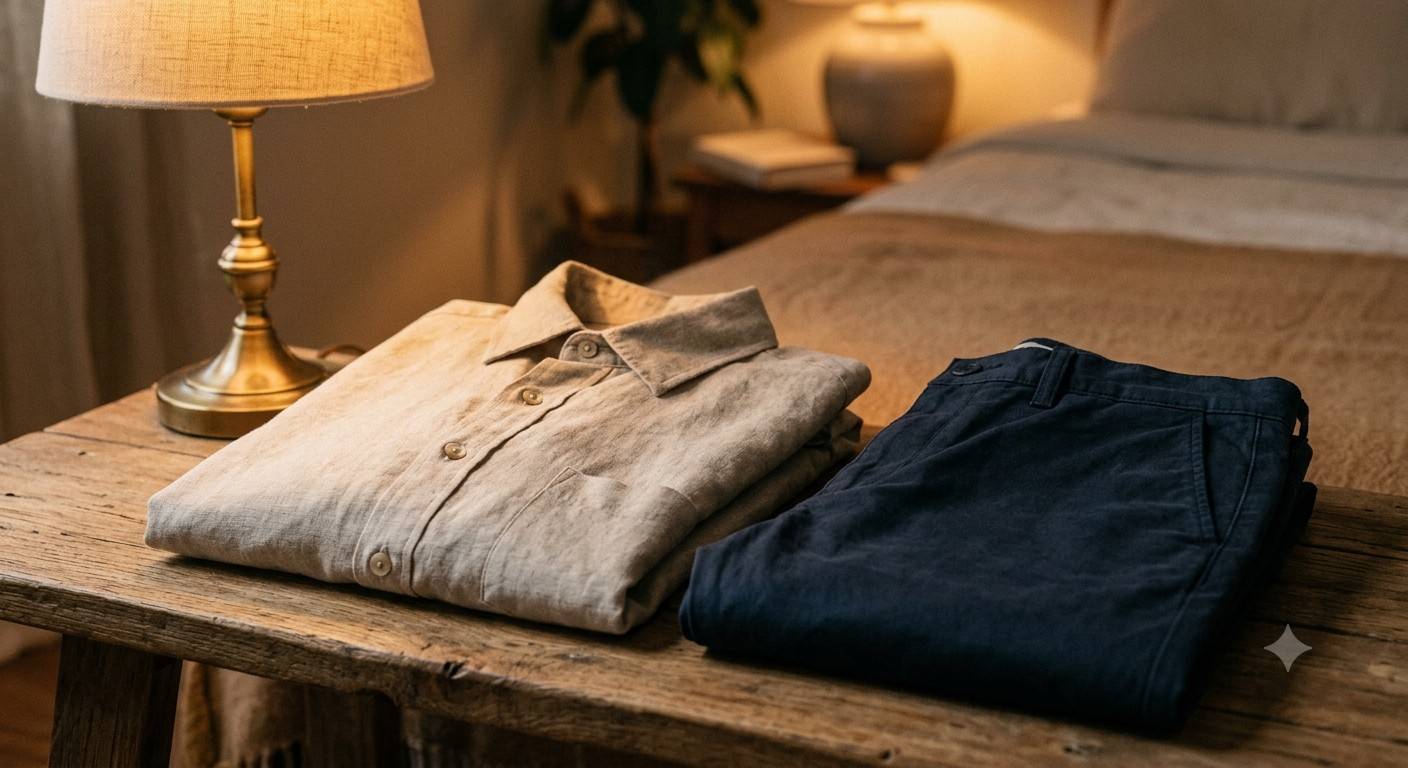
In 2012, researchers at Northwestern University conducted a series of experiments on what they called "enclothed cognition" — the influence of clothing on psychological processes. Their finding was direct and significant: the clothes you wear affect how you think, feel, and perform. In one experiment, participants who wore a white coat - told it was a doctor's coat — performed significantly better on attention-related tasks than those wearing the same coat told it was a painter's coat, and significantly better than those not wearing a coat at all.
The physical experience of wearing something — its texture, weight, and the identity it carries — changes how the brain operates. The change is not cosmetic. It is cognitive. This has been replicated across multiple contexts. People wearing formal clothing perform better on abstract reasoning tasks. People wearing athletic clothing are more likely to exercise. People wearing clothes associated with a professional identity perform better in that professional capacity.
The Morning Dress as an Act of Intention

Getting dressed thoughtfully — choosing what to wear with some consideration, putting it on with care, taking a moment to confirm that it's right — is a small act of intention that sets a precedent for the day. It is the first deliberate choice of the day. And it is a physical, tangible one — not a resolution or a thought, but an action that produces a visible outcome. You look in the mirror and the day's first decision is complete, and completed well.
This matters because of something psychologists call "behavioural momentum" - the tendency for small completed actions to make subsequent actions more likely. The person who begins the day with one intentional choice is more likely to make the next intentional choice, and the next. The person who throws on whatever is closest and rushes out — not because they lack time but because they haven't given the choice any attention — has begun the day in a reactive posture. The day is already happening to them before they've consciously engaged with it.
Self-Respect Is Shown in the Small Things
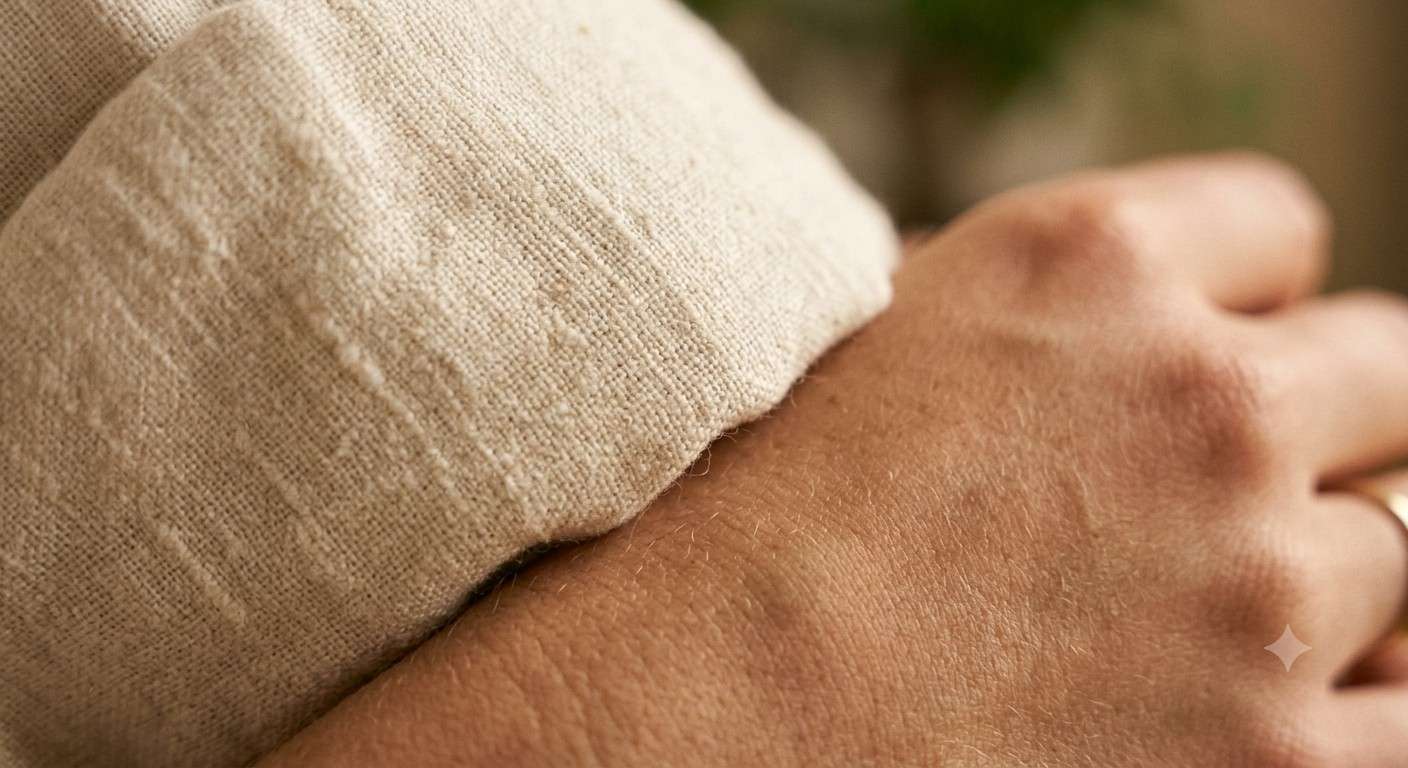
Self-respect — genuine, unconditional regard for oneself — is demonstrated not in grand declarations but in the consistent small things: how you eat, how you rest, how you speak to yourself, and yes, how you dress.
Choosing to wear clothes that are clean, that fit properly, that are made from material you've thought about, that reflect some considered sense of who you are — this is not vanity. It is the daily physical expression of the belief that you are worth showing up for.
The opposite of vanity is not indifference. The person who is completely indifferent to their appearance is not demonstrating humility — they are demonstrating, often unconsciously, a belief that their external presentation doesn't matter because they don't matter. This is not admirable. It is a form of self-neglect dressed up as practicality.
The Difference Between Vanity and Self-Respect
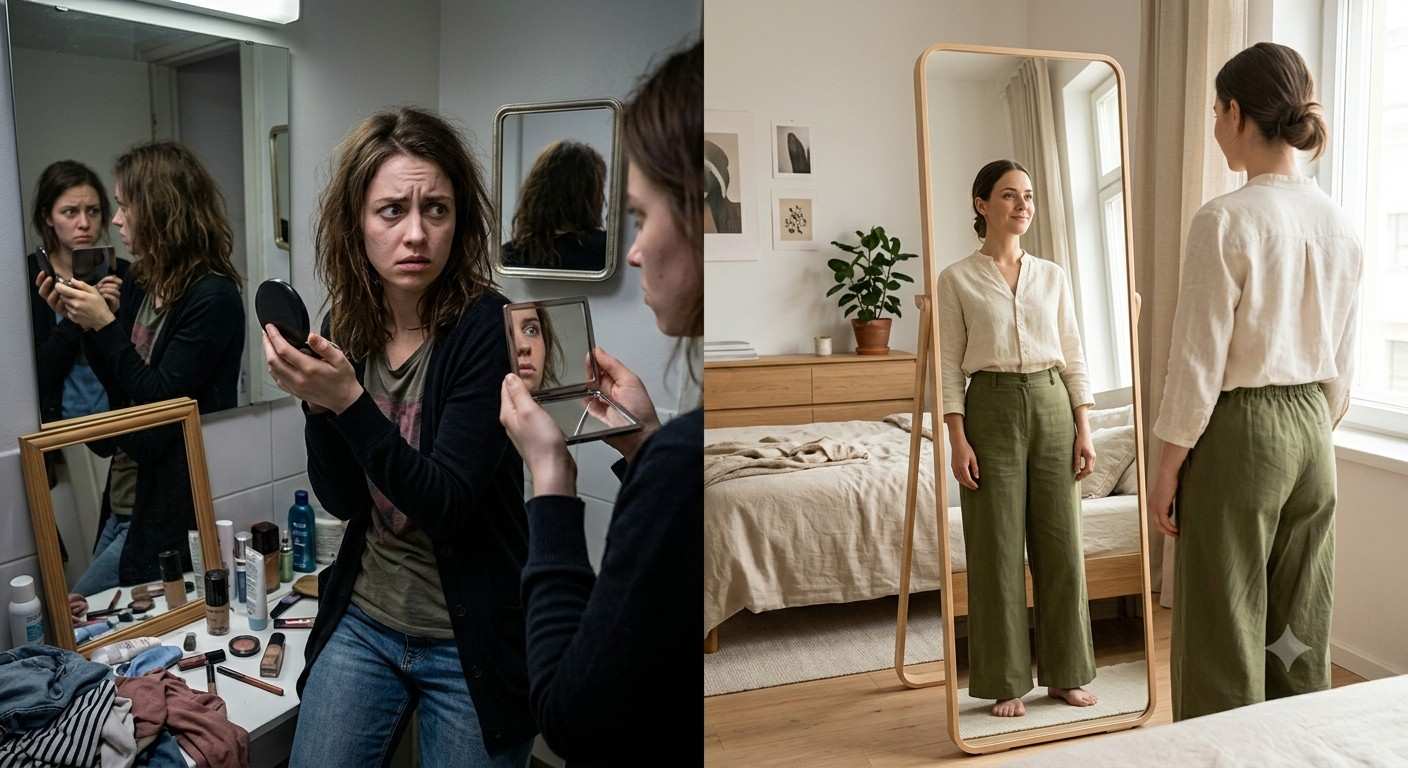
Vanity is concerned with how you appear to others. It is oriented outward — toward approval, status, admiration.
Self-respect in dressing is oriented inward — toward how you feel in what you wear, whether you have made a considered choice, whether what you're wearing reflects who you actually are. The vain person changes their wardrobe to chase trends and external validation. The self-respecting person builds a small wardrobe of things they genuinely like and wear them consistently, regardless of whether they're currently fashionable.
The vain person spends on labels and logos. The self-respecting person spends on fabric and construction — on things that feel good and last, without concern for what the label says. The vain person is always slightly anxious about whether they look right. The self-respecting person is at ease, because what they're wearing is genuinely theirs.
Dressing with Intention in Practice
Dressing with self-respect doesn't require a large wardrobe, expensive clothes, or significant time. It requires three things:
- A wardrobe you've actually chosen. Not accumulated - chosen. Each piece present because you decided it should be there, not because it was on sale or because you didn't throw it away.
- Clothes that fit your actual body. Not the body you used to have or hope to have — the one you have now. Clothes that fit the actual body always look better and feel better than clothes waiting for a different one.
- A moment of attention in the morning. Not an hour of agonising — a minute of consideration. What does today require? What do I feel like wearing? Is this the right choice for where I'm going? This question, asked and answered, is the act of self-respect.
The Natural Fabric Connection

There is something specifically true about natural fabric and self-respect that is worth naming. Wearing fabric that you've thought about — that you know is made from something real, that breathes and moves with your body, that was chosen because it actually serves you — is qualitatively different from wearing whatever was cheap and available. It is a choice that extends beyond the visual.
When you wear natural fabric, you feel it differently. It breathes. It moves. It is present against your skin in a way that synthetic fabric is not. This sensory reality — the physical experience of wearing something good — is a daily form of self-care that costs nothing after the initial choice has been made. That is not vanity. That is the daily practice of choosing well.
Getting dressed with intention is one part of living intentionally. Read how the same principle applies to what you eat — and how living deliberately connects every part of the day.
“Disclaimer: This content was created with AI assistance and reviewed before publication. It is for informational purposes only and not professional medical, nutritional, legal, or financial advice”