
The moment of readiness — the specific future point at which you will have enough knowledge, enough confidence, enough preparation, enough time — does not arrive on its own. It is not a destination you reach by waiting. It is a feeling that comes from having started, not from having prepared.
Why Readiness Feels Real But Isn't

The experience of not feeling ready is genuine. It is a real feeling. But what it is telling you is not what it appears to be telling you.
Not feeling ready feels like a signal about external conditions — that more preparation is needed, that more time should pass, that more knowledge should be acquired before beginning. In practice, it is almost always a signal about internal conditions — specifically, the discomfort of uncertainty, the fear of failure, and the threat that novelty poses to the sense of competence.
These are not preparation problems. They are psychological ones. And the important thing to understand about them is that they are not solved by preparation. They are solved by starting. The discomfort of not feeling ready does not go away with more preparation. It goes away when the thing has been started and the first uncertain steps have been taken. At that point, the discomfort transforms into something different — the discomfort of a challenge rather than the discomfort of dread.
The Preparation Trap
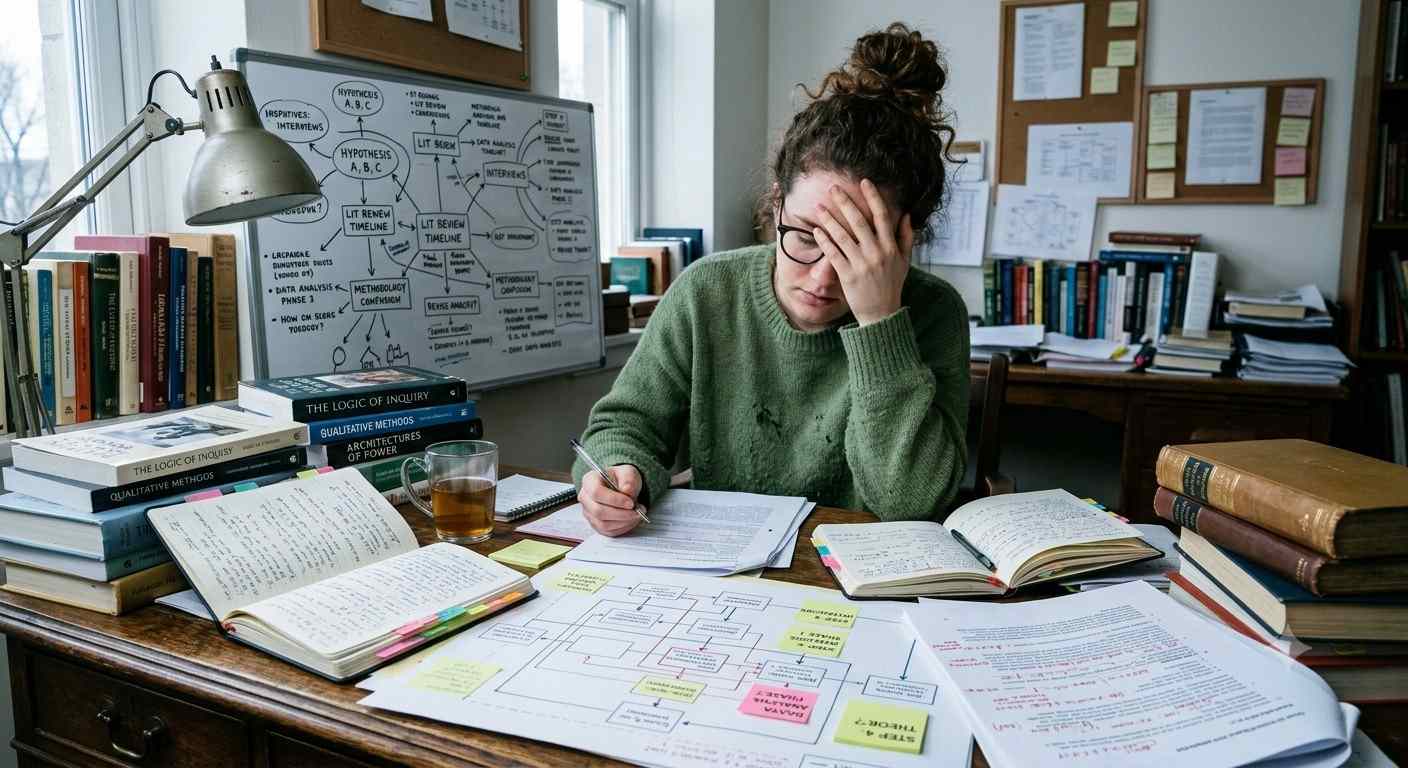
Preparation is valuable. Research, planning, gathering necessary resources - these are legitimate and useful. The preparation trap is not preparation itself, but the use of preparation as a substitute for starting. The signs of the preparation trap:
- You have been planning the same project for months without beginning
- Each time you feel close to starting, you identify something else that needs to be resolved first
- Your preparation feels like progress but produces no visible output
- You consume content about the thing you want to do — books, podcasts, videos — more than you do the thing
- The list of prerequisites keeps growing rather than shrinking
If these signs are familiar, the problem is not preparation deficit. The problem is that preparation has become avoidance with better branding.
The Cost of Waiting

Every period of waiting carries a specific and often invisible cost: the absence of the learning that starting would have produced. The most important knowledge about any new endeavour is almost entirely unavailable before starting. It is produced by the experience of doing — by the mistakes made, the obstacles encountered, the unexpected difficulties and unexpected ease. This knowledge cannot be acquired in advance.
The person who starts an imperfect version of a project and learns from doing it will, within weeks, have more relevant knowledge than someone who has been preparing for months without starting. The learning curve begins at the moment of action, not at the moment of planning. Waiting to start is not neutral — it is an active choice to delay the accumulation of the only knowledge that actually matters.
The Minimum Starting Point
If starting feels impossible, the question is not "how do I feel ready?" but "what is the smallest possible version of starting?"
- A business idea doesn't need a business plan to begin — it needs one conversation with a potential customer.
- A writing project doesn't need an outline to begin — it needs one paragraph.
- A new eating habit doesn't need a complete nutritional plan to begin — it needs one different breakfast.
- A new morning routine doesn't need to be perfect to begin — it needs one component, practised once.
The minimum starting point is not the finished thing. It is the smallest action that constitutes genuine movement rather than continued planning. It is the first real step, however small.
What Starting Actually Feels Like

Starting before feeling ready feels uncomfortable. This is important to know in advance, because the discomfort is often interpreted as confirmation that starting was premature — that the feeling of not being ready was correct.
It was not correct. The discomfort is the normal experience of novelty. It is what it feels like to do something for the first time. It does not mean something is wrong. It means something is new.
The discomfort typically reduces within the first few genuine attempts. Not because you've become more prepared, but because you've become more familiar — because the uncertainty has been replaced by direct experience, and direct experience is always less frightening than imagined uncertainty.
The Arohm Parallel
Everything Arohm is about — natural fabric, simple food, intentional living - began before the conditions were perfect. The insight that natural fabric is better for this climate didn't wait for a complete understanding of textile science. The understanding of simple food didn't wait for a nutritional degree. The practice of intentional living didn't wait for a life free of complexity.
It started with one decision, imperfectly made. And the understanding deepened through the practice of doing, not through preparation for doing. The same is true of anything worth doing. Starting is the hardest part of almost everything. Read our guide on the power of consistency over intensity — and how small daily actions compound into something significant.
“Disclaimer: This content was created with AI assistance and reviewed before publication. It is for informational purposes only and not professional medical, nutritional, legal, or financial advice”