The most common reason people give for not eating well is time. Long working hours, commutes, family responsibilities, social obligations - the day fills up and cooking feels like one demand too many. Delivery apps exist because they solve a real problem, not an imaginary one. But the conclusion that busy people cannot eat well is a false one. It conflates eating well with elaborate cooking and eating well, done practically, requires neither elaborate recipes nor significant time. What it requires is a system that works within the real constraints of a working adult's life.
The Problem With Most Healthy Eating Advice
Most nutrition advice is written for people with flexible schedules, well-stocked kitchens, and the time and energy to cook fresh meals. It suggests things like "prepare a balanced meal for each eating occasion" and "choose whole foods at every meal" advice that is nutritionally sound and practically irrelevant to someone who is commuting, in back-to-back meetings, and has thirty minutes between arriving home and needing to sleep. The result is that busy people feel the advice doesn't apply to them, disengage from the idea of eating well, and default to whatever is available and convenient which, in Indian cities, typically means restaurant food, delivery, or packaged snacks. All of which carry the hidden-ingredient problems discussed in our cooking at home guide. A realistic guide for busy working adults starts from a different premise: given your actual schedule and actual energy levels, what is the minimum viable system for eating well?
The Minimum Viable System
One Batch Cook Session Per Week - 60 to 90 Minutes
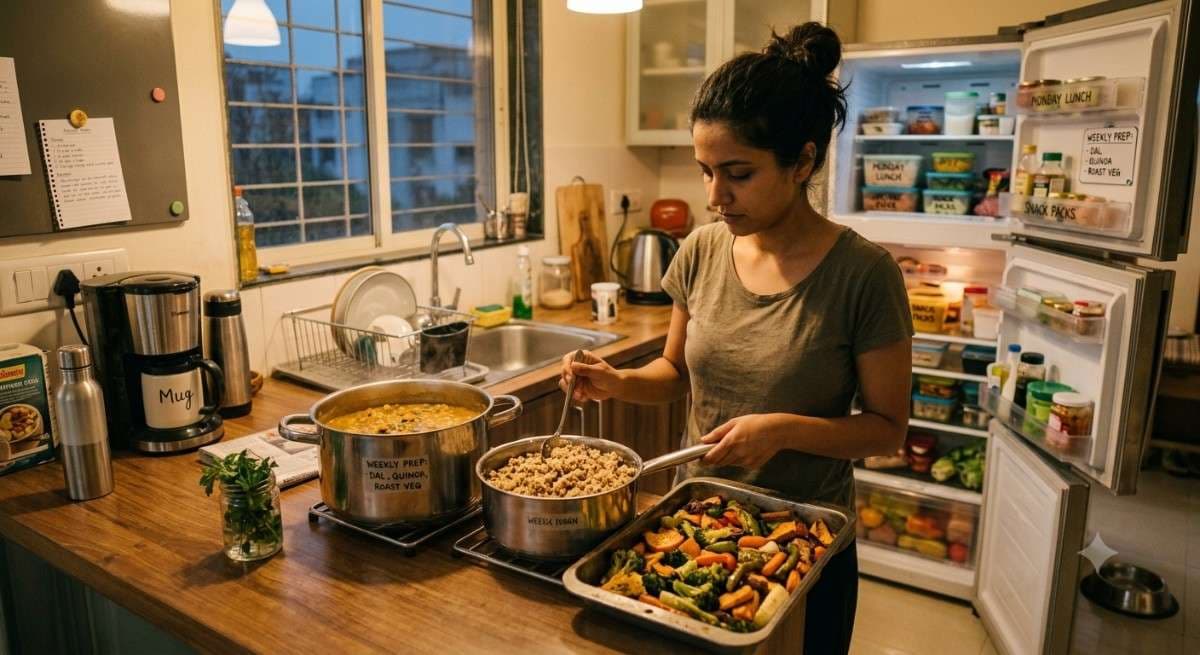
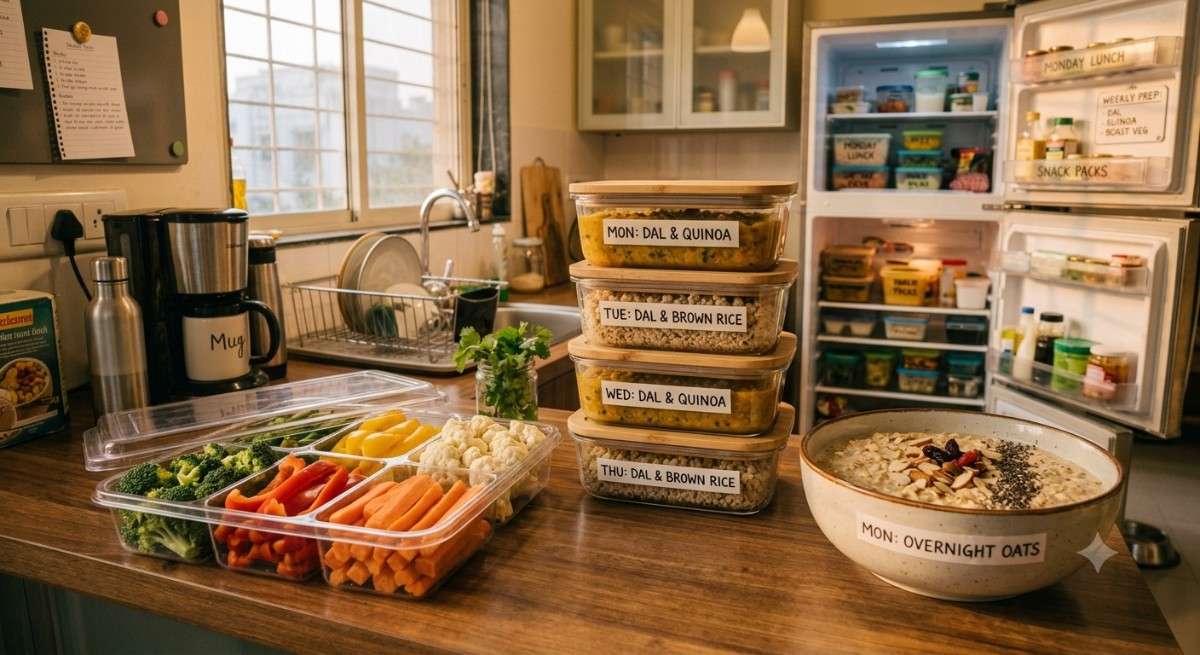
This is the foundation of eating well when busy. One session per week - Sunday evening or whenever your schedule allows - produces enough base food to sustain good eating through most of the week. What to batch cook:
- A large pot of dal. A 500-gram batch of any dal masoor, toor, moong - takes 25 minutes and produces six to eight portions. Refrigerates for five days, freezes for three months. Eaten with rice or roti, it provides complete protein and fibre at every meal it anchors. This is the most valuable single thing a busy person can cook.
- A cooked grain. A cup of rice (yields three cups cooked), quinoa, or millet. Takes 20 minutes. Provides the base for grain bowls, dal combinations, and side portions throughout the week. No decision required at mealtime the grain is already there.
- One vegetable preparation. A simple sabzi - roasted sweet potato, sautéed spinach with garlic, a dry aloo preparation - takes 15 to 20 minutes and provides variety and micronutrients across several meals.
The Assembly Approach to Weekday Meals
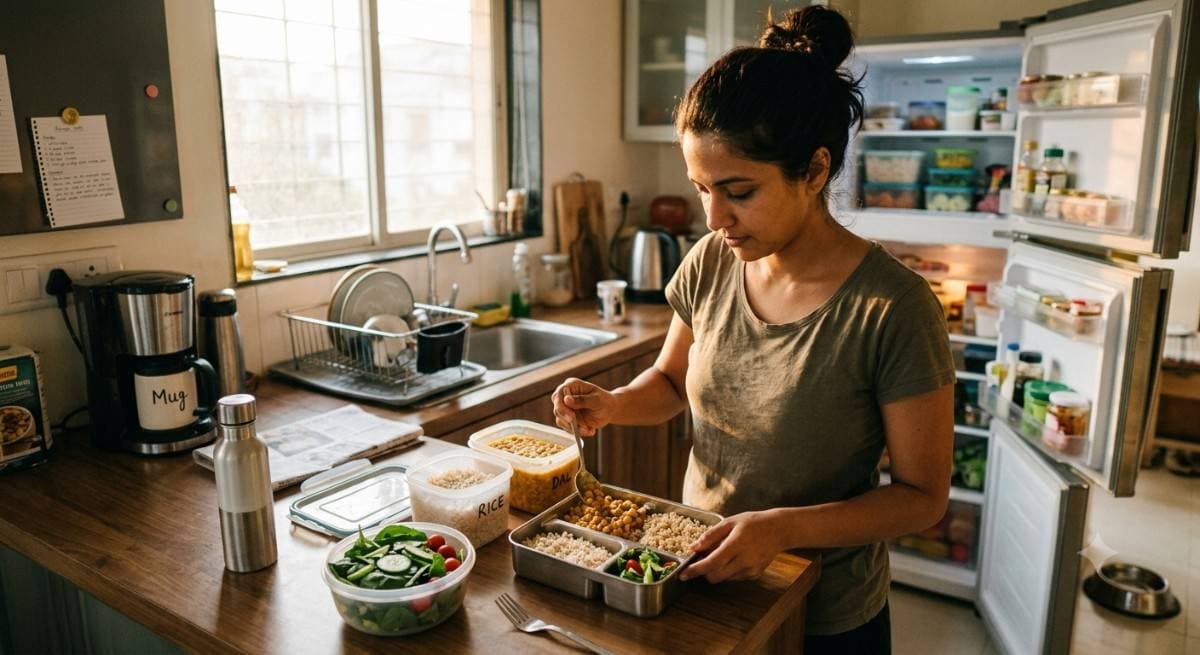
Once batch cooking is done, weekday meals become assembly rather than cooking. Assembly takes 5 minutes, not 30.
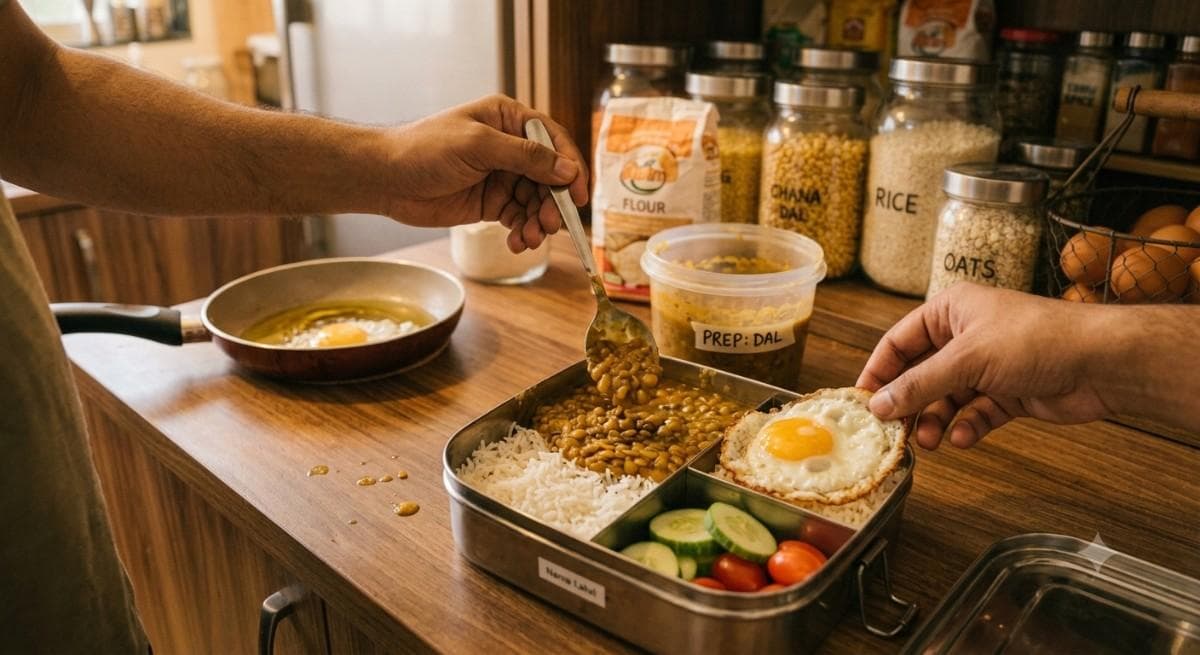
- Lunch from home: Dal + grain + vegetable preparation, portioned into a container the night before. Reheated in 2 minutes at work. This is nutritionally complete, costs less than 100 per meal, and takes under 5 minutes to prepare.
- Quick dinner: Dal and rice with a fried or scrambled egg on top. Warm, complete, protein-rich, ready in 10 minutes. Or dal with fresh roti if you have slightly more time and energy. Or grain bowl - cooked grain from the batch, any available protein (egg, canned fish, leftover chicken, paneer), whatever vegetables are available, a simple dressing.
- Breakfast: As explored in our breakfast guide, the most effective breakfasts take 5 to 10 minutes. Eggs in any form. Greek yoghurt with nuts and fruit. Oats with nut butter. None of these require preparation beyond the cooking time itself.
The Pantry as Infrastructure
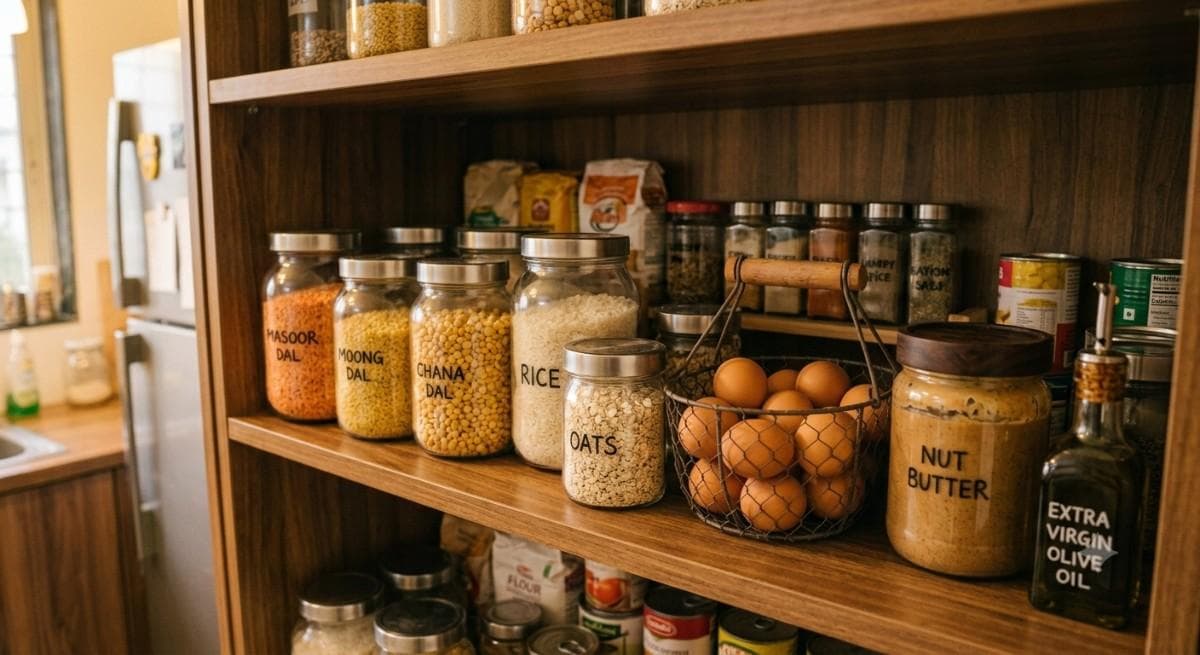
A well-stocked pantry reduces the friction of eating well to near zero. When the right ingredients are available, a good meal can be assembled in minutes. When the pantry is empty or stocked with the wrong things, even simple healthy eating requires effort that busy people don't have. The essential pantry for busy eating:
- Protein: Dal and legumes (masoor, toor, moong, chana, rajma) in bulk. Eggs always. Curd. Paneer in the freezer. Canned fish (tuna, sardines) for quick protein without cooking.
- Grains: Rice (brown or white - both work). Oats for breakfast. Whole wheat atta
- Vegetables: A small rotation of vegetables that last well sweet potato, onion, tomato, spinach (freezes well), frozen peas and corn.
- Fats and flavour: Good cooking oil (cold-pressed groundnut, coconut, or ghee). A basic spice collection. Nut butter. Nuts and seeds for snacking and adding to meals.
Convenience items that support rather than undermine: Canned tomatoes. Coconut milk. Good quality pickle (a small amount adds flavour and probiotics). Dark chocolate for genuine occasional indulgence. With this pantry in place, a complete nutritious meal is always 10 to 15 minutes away - regardless of what else the day has produced.
Strategic Use of Delivery and Restaurants
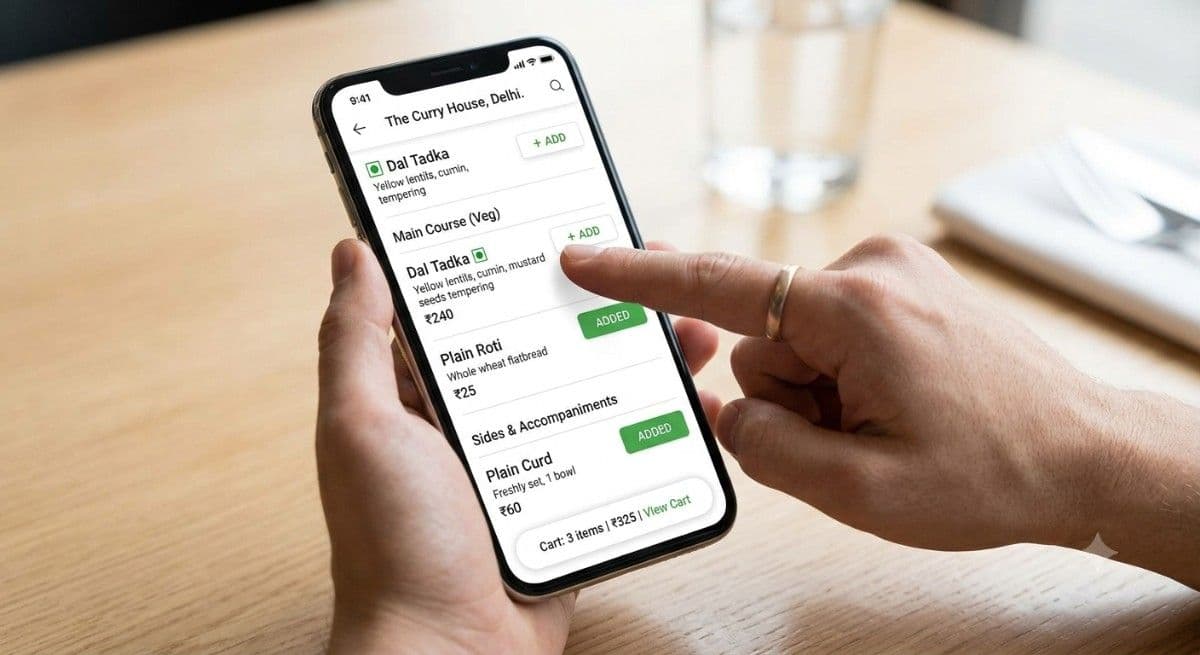
Eating well when busy doesn't mean never ordering food. It means ordering strategically rather than by default.
- When to order: When you're genuinely too depleted to cook or have no batch-cooked food available. On occasions worth celebrating. When specific food is genuinely what you want rather than just what's convenient.
- What to order when you do: Dal-based dishes (dal makhani, dal tadka, dal fry) from any Indian restaurant are typically lower in refined carbohydrates and higher in protein than most alternatives. Grilled or tandoor-cooked proteins without heavy sauce. Whole grain roti over naan. Curd-based dishes. Simple vegetable preparations.
- What to limit when ordering: Heavily fried items, cream-based gravies, white rice in large portions, bread-heavy meals, and deep-fried snack-category items. None of these are forbidden - they're simply not the default choice when eating well is the goal
The Two Rules That Cover Most Situations
For the times when no system is in place and a decision needs to be made quickly, two rules cover most eating situations:
- Rule 1: Protein first. Whatever else is available, identify and prioritise the protein source. Dal, eggs, curd, legumes, paneer, fish, chicken - wherever the protein is, build the meal around it. A meal with adequate protein will produce better satiety, more stable blood sugar, and better nutrition than a meal of equivalent calories without it.
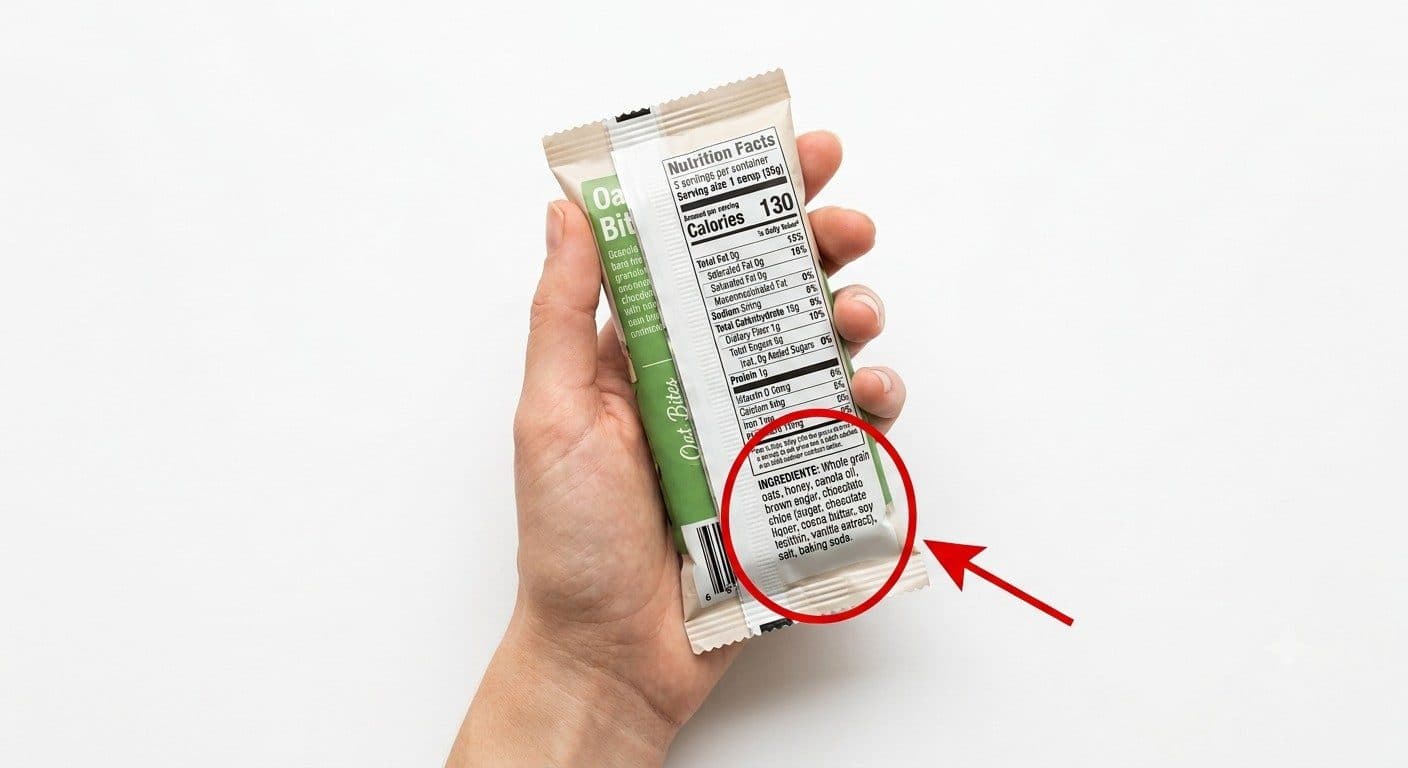
- Rule 2: Avoid the obvious processed options. Packaged biscuits, instant noodles, packaged chips, sugary drinks - these are the default when nothing better is available. They produce the worst outcomes rapid blood sugar rise and crash, poor satiety, high sodium and refined carbohydrate - for the least nutritional return. Almost any other food choice is better than these.
Eating Well Is a System Problem, Not a Willpower Problem
The reason busy people eat badly is not that they lack the commitment to eat well. It's that their environment empty fridge, long work hours, readily available delivery, no batch-cooked food - makes good eating harder than bad eating. The solution is not to try harder. It's to invest a small amount of time once a week in building the system the batch cook, the pantry, the few reliable preparations that makes good eating the path of least resistance rather than the difficult option. Once the system is in place, eating well on a busy weekday requires less effort than deciding what to order and waiting for it to arrive. Eating well is the fuel that makes everything else possible. Read our guide on the five meals worth knowing by heart and how to build the evening routine that sets up a better tomorrow.
“Disclaimer: This content was created with AI assistance and reviewed before publication. It is for informational purposes only and not professional medical, nutritional, legal, or financial advice”