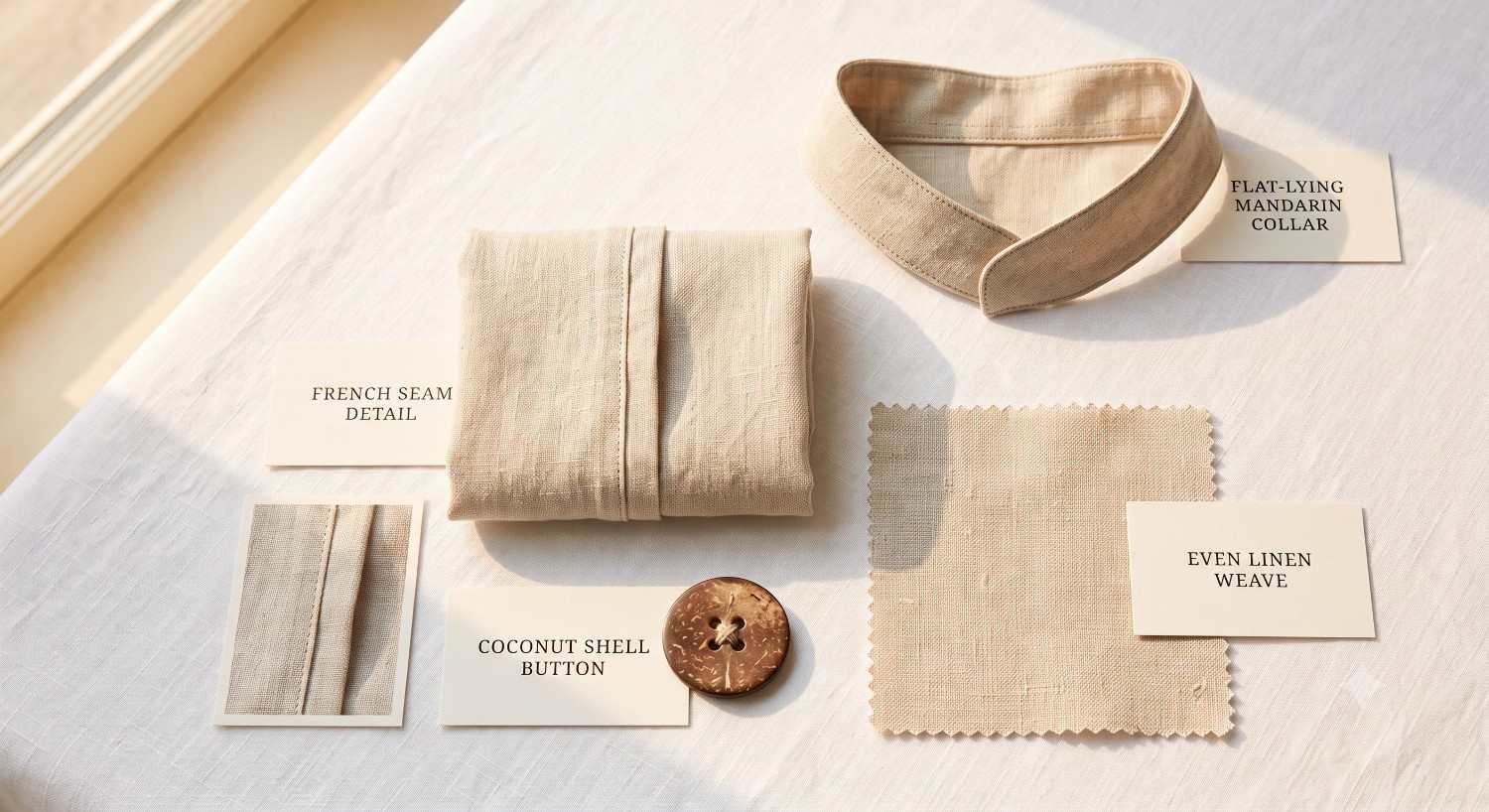
There's a reason your grandfather's cotton shirt still exists somewhere in the house. Natural fabric, cared for properly, doesn't just survive — it improves. It softens. It develops a character that no new garment has. The difference between a natural fabric piece that lasts two years and one that lasts ten isn't the fabric. It's what happens between wears. Most people treat natural fabric the same way they treat synthetics — hot wash, tumble dry, done. This works for polyester. For linen, cotton, and hemp, it's the fastest route to a worn-out, misshapen, prematurely aged garment. Here's how to actually care for natural fabric — so it earns that ten-year timeline.
Understanding Why Natural Fabric Needs Different Care
Synthetic fibres are plastic. They don't absorb water, they don't react to heat in meaningful ways, and they don't have the structural complexity of natural fibres. You can be rough with them and they hold their shape — because they were manufactured to a fixed form. Natural fibres are living material. Cotton comes from a plant. Linen comes from flax. Hemp comes from a stalk. These fibres absorb moisture, respond to heat, and have a weave structure that can be damaged by aggressive treatment — or preserved and improved by gentle care. Understanding this distinction changes how you approach every wash.
Washing — The Most Important Step
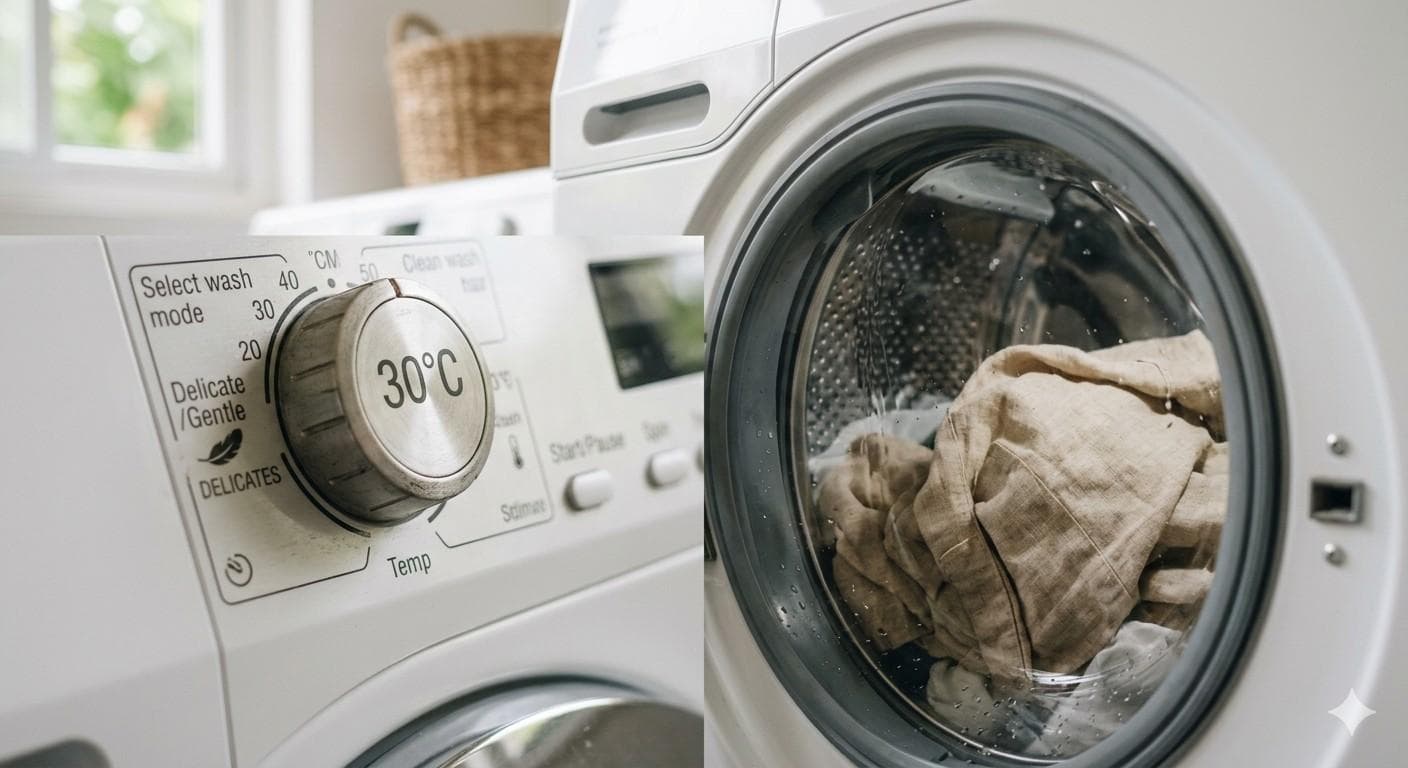
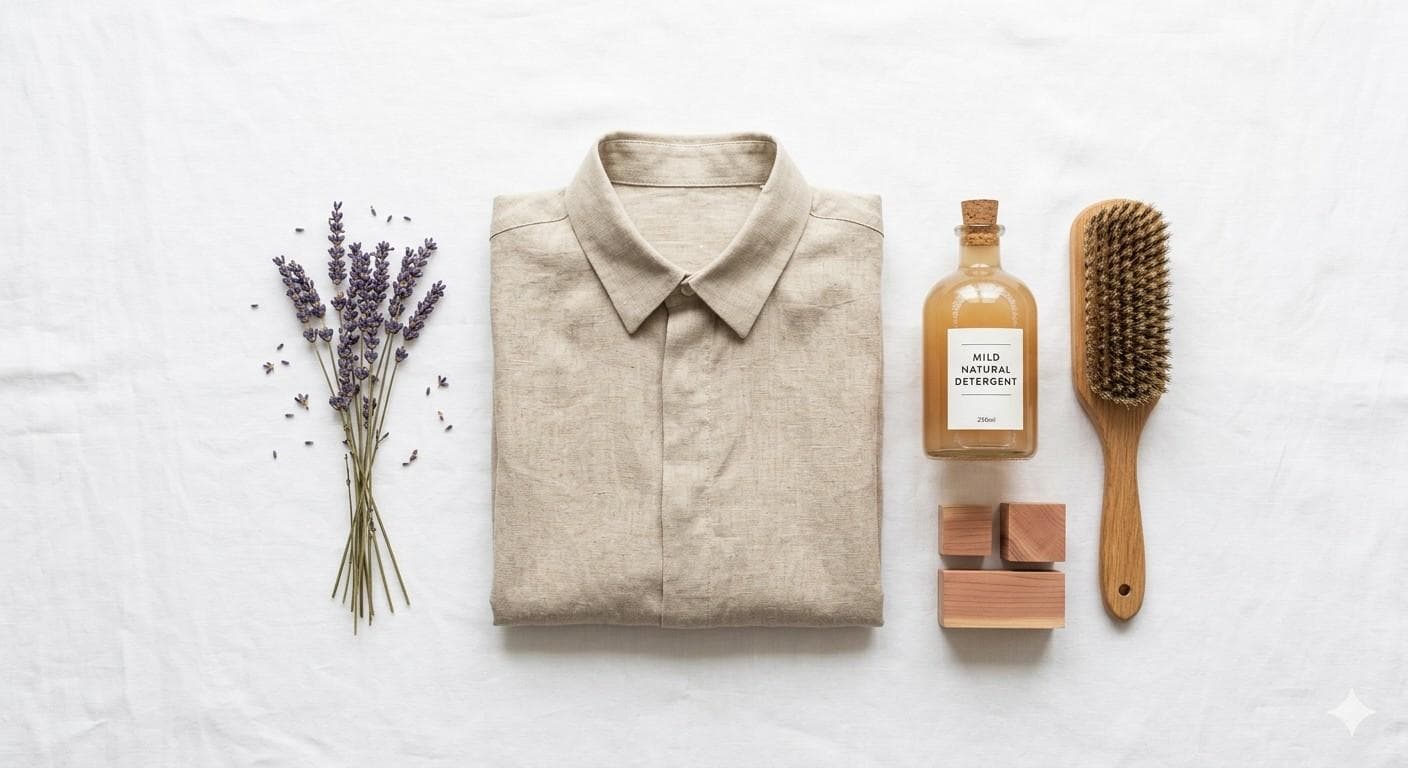
Temperature matters more than anything else. Hot water causes natural fibres to contract. This is the primary cause of shrinkage in cotton and linen — not the washing machine itself, but the temperature of the water. Once a natural fabric shirt has shrunk, it cannot be fully restored. The rule: cold or cool water only. 30°C maximum for regular washes. For delicate linen or fine cotton, cold water (below 20°C) is ideal. Use a gentle cycle. The agitation of a washing machine is the second cause of damage to natural fabric. The fibres of linen and hemp in particular can be weakened by excessive mechanical action. Use the gentle or delicate cycle — not because the fabric is fragile, but because it doesn't need the aggression of a full cycle to come clean. Use a mild, natural detergent. Harsh detergents strip the natural oils from cotton and linen fibres, making them feel rough and brittle over time. A mild liquid detergent — preferably pH-neutral and free from bleach or optical brighteners — preserves the softness and structure of the fibre. Less detergent than you think you need is usually correct. Turn garments inside out. This reduces friction on the outer surface during washing, preserving the colour and weave appearance for longer. Wash less frequently than you think. Natural fabric is naturally antibacterial to varying degrees — hemp especially. A shirt worn for a day in mild conditions doesn't need washing. Airing it out — hanging it somewhere with airflow for a few hours — refreshes it without the wear of a wash cycle. Washing natural fabric only when it actually needs it dramatically extends its life.
Drying — Where Most Damage Happens
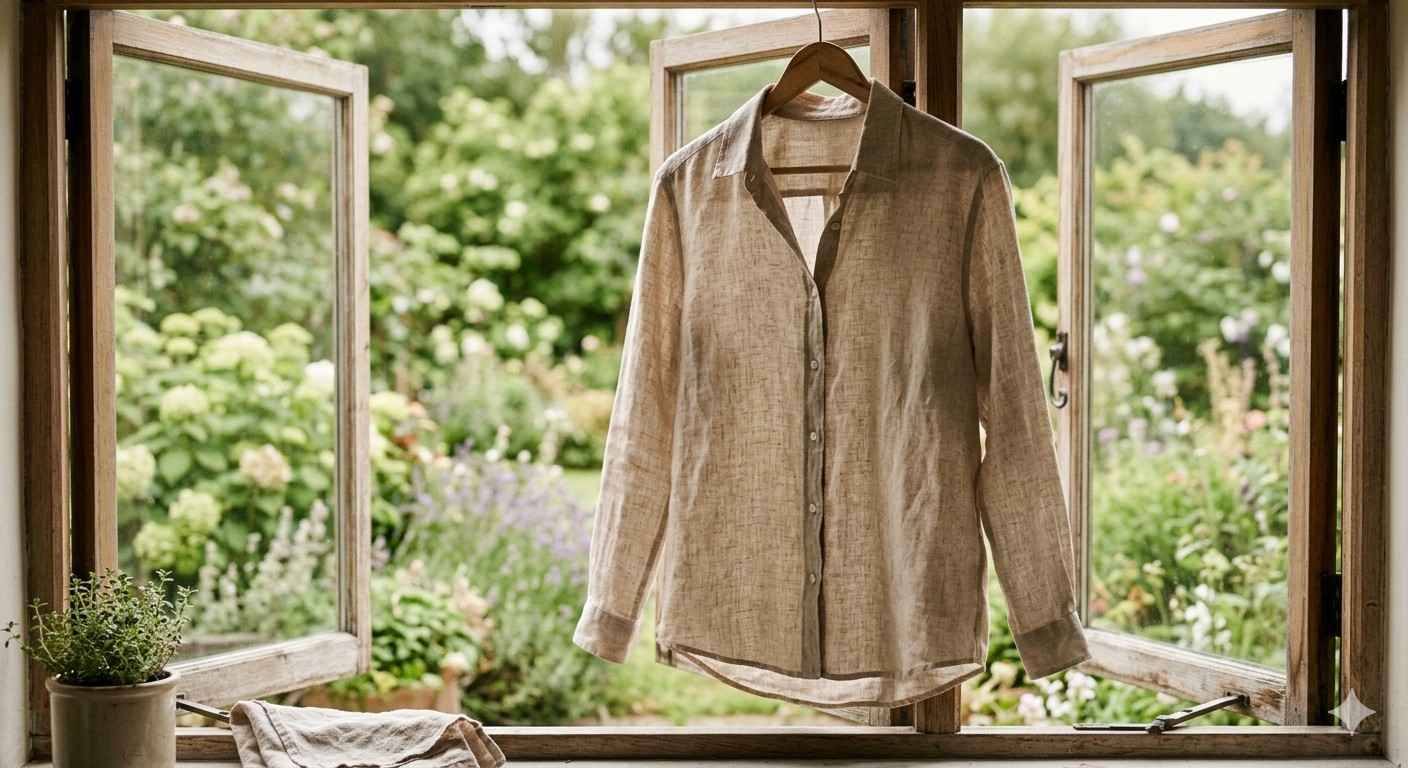
The tumble dryer is natural fabric's biggest enemy. High heat in a tumble dryer causes the same contraction as hot water — but more severely and more unevenly. It also creates friction between garments that breaks down fibre structure over time. A linen shirt put through a tumble dryer repeatedly will feel noticeably rougher and look visibly more worn within months. The rule: always air dry natural fabric. Lay flat or hang to dry in a well-ventilated area, out of direct harsh sunlight. Direct intense sunlight can fade natural dyes and weaken some fibres over time — diffused natural light or shade is ideal. For linen and cotton shirts, hang them on a proper hanger — not a thin wire hanger that leaves shoulder marks — while still slightly damp. This allows gravity to gently pull out wrinkles as the shirt dries, reducing or eliminating the need for ironing. For hemp, which is the most durable of the three, slightly more flexibility applies — but air drying remains the best practice.
Ironing and Wrinkle Management
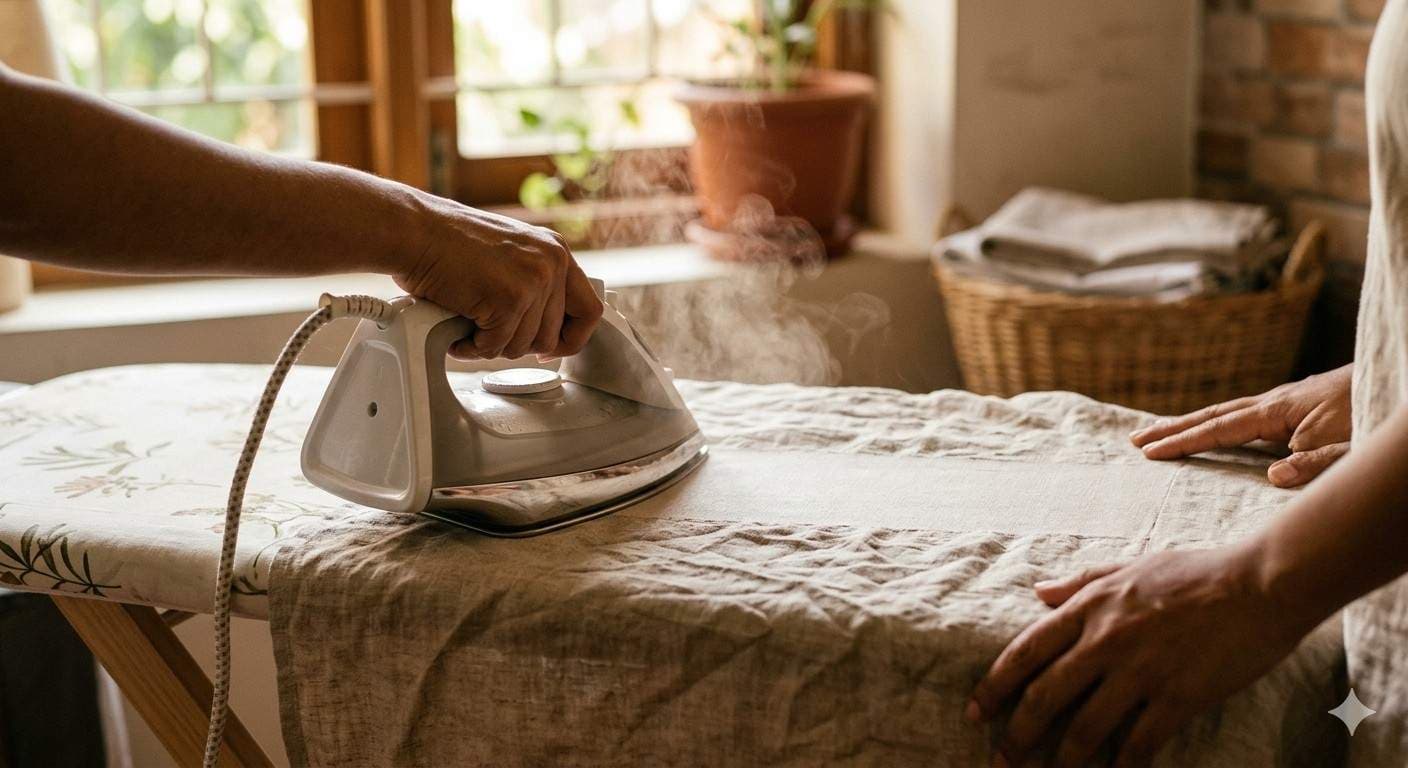
Linen wrinkles. This is a property of the fibre, not a defect. The way to think about linen wrinkles is the way you'd think about the patina on leather — it's part of wearing something real. That said, if you prefer a smoother look: Iron linen and cotton while still slightly damp. The residual moisture makes ironing dramatically easier and more effective. A dry linen shirt resists ironing; a slightly damp one responds beautifully. Use a medium-hot iron on linen, medium on cotton, and low-medium on hemp. Too much heat can scorch natural fibres and damage the weave structure. Test on a hidden area if you're unsure. Steam is your friend. A garment steamer is gentler than a flat iron and excellent for linen — it relaxes the fibres without the pressure and direct heat of ironing. For a quick refresh between wears, hanging the shirt in the bathroom during a hot shower achieves a similar effect. Embrace the wrinkle. A slightly wrinkled linen shirt worn with intention and confidence looks stylish. A slightly wrinkled polyester shirt looks like it wasn't looked after. The difference is in how you wear it, not the wrinkle itself.
Storage — The Long Game
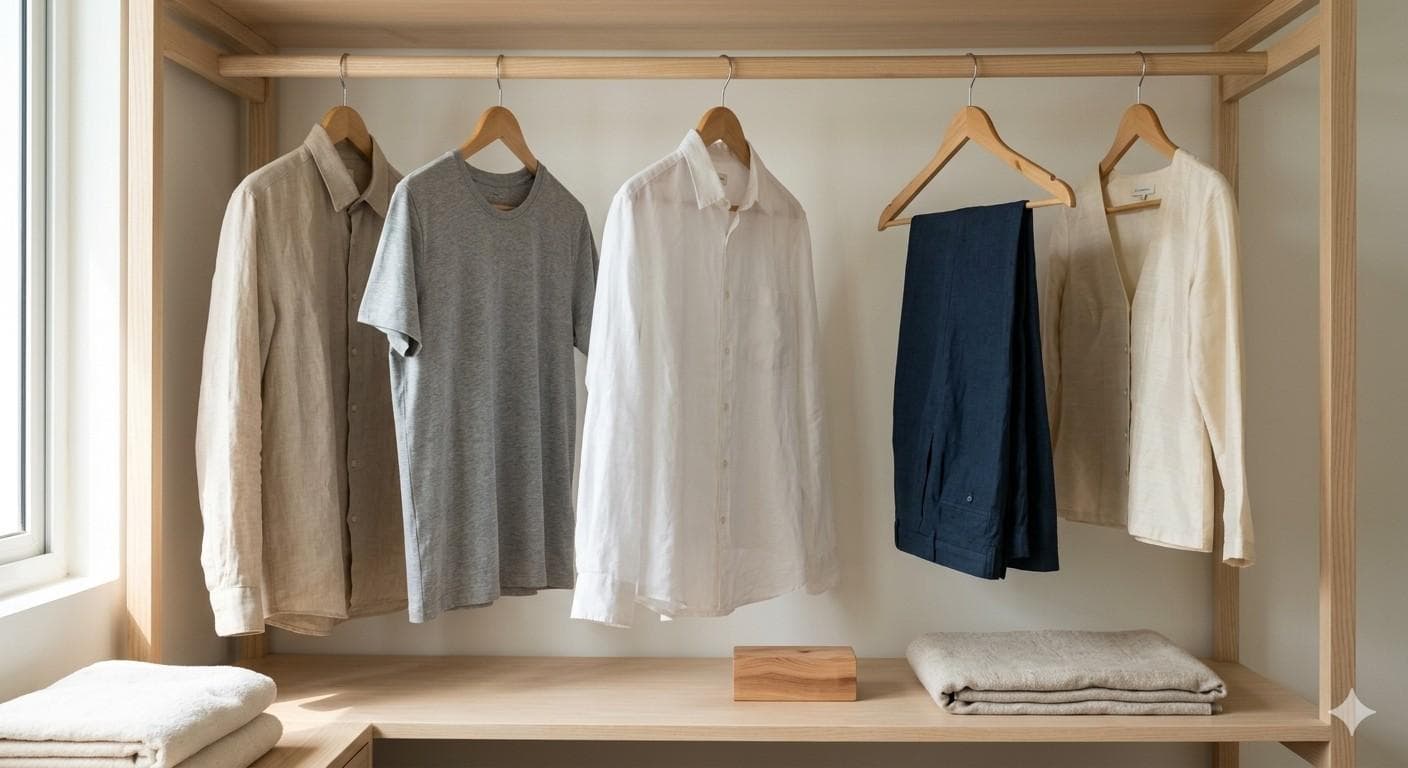
How you store natural fabric between wears determines how it looks when you reach for it. Fold or hang — but correctly. Heavy garments like linen trousers and overcoats do better folded — hanging can distort the shape over time. Lighter shirts do better on proper hangers with space between them. Give garments breathing room. A wardrobe packed tightly traps moisture and prevents airflow — which can lead to mildew on natural fabrics in humid climates. Leave space between hanging items. Store clean. Never store natural fabric with stains or body oils present. These oxidise over time, creating permanent marks and breaking down the fibre around the affected area. Wash or air out before storing. For long-term storage — between seasons — fold garments in breathable cotton storage bags or pillowcases. Avoid plastic bags, which trap moisture. Cedar blocks or dried lavender deter moths without the chemical damage of synthetic mothballs.
“Disclaimer: This content was created with AI assistance and reviewed before publication. It is for informational purposes only and not professional medical, nutritional, legal, or financial advice”