
The average Indian professional consumes two to four cups of chai or coffee per day. Some consume more. Caffeine has become the default mechanism for managing energy and focus — an external stimulant that overrides the body's natural energy rhythms and provides the alertness that adequate sleep, nutrition, and movement would otherwise produce.
This is not an argument against chai. Chai, consumed mindfully and in moderation, is one of the great pleasures of Indian daily life and provides genuine health benefits. The argument is against dependency — against the pattern of needing caffeine to function at a basic level, and the blood sugar and cortisol disruption that comes with overconsumption.
There are foods that genuinely support cognitive function, sustained energy, and mental clarity — not through stimulation but through nourishment. Here are seven of them, most of which are already present in the Indian kitchen.
1. Walnuts
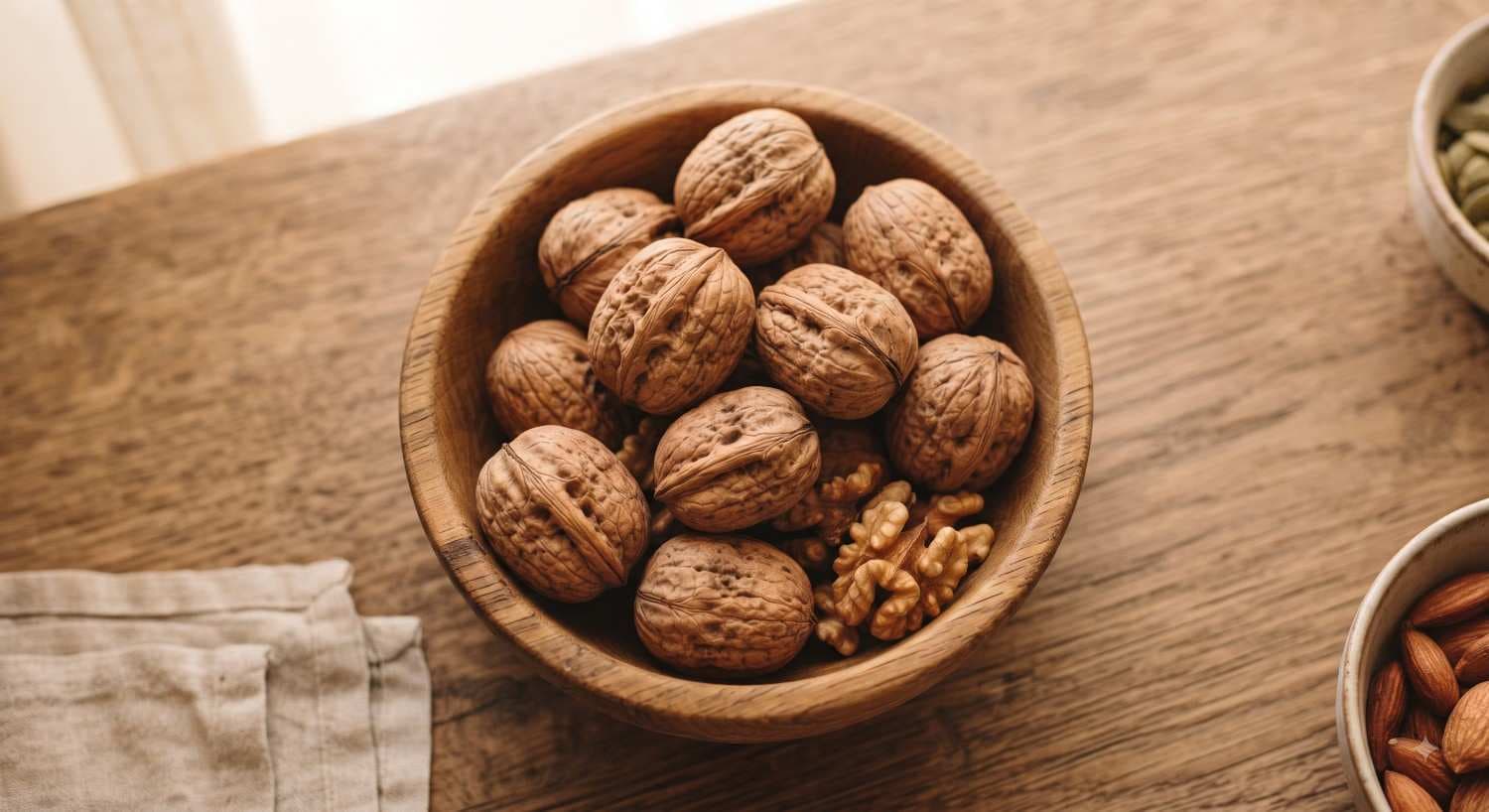
Walnuts are the most cognitively beneficial nut available, and the evidence for this is unusually strong. They contain alpha-linolenic acid (ALA), a plant-based omega-3 fatty acid that supports the structure of brain cell membranes and reduces neuroinflammation. They also contain polyphenols that cross the blood-brain barrier and have been shown to improve cognitive performance in multiple studies. A landmark UCLA study found that walnut consumption was associated with significantly better cognitive test scores across age groups. A study published in the British Journal of Nutrition found that daily walnut consumption improved memory, learning speed, and information-processing in young adults.
The practical application is simple: a small handful of walnuts (about 7–8 whole walnuts) as a morning or afternoon snack. They require no preparation, are readily available across India, and provide cognitive support within a regular eating pattern.
2. Turmeric (with Black Pepper)

Turmeric is the most studied spice in modern nutritional science, and its cognitive benefits are substantial. Curcumin — the active compound in turmeric — crosses the blood-brain barrier and has been shown to reduce neuroinflammation, clear amyloid plaques (associated with Alzheimer's disease), and increase levels of BDNF (brain-derived neurotrophic factor) — a protein that supports the growth and maintenance of neurons.
The critical addition: black pepper. Curcumin on its own has very poor bioavailability — it is difficult for the body to absorb. Piperine, the active compound in black pepper, increases curcumin absorption by up to 2,000%. The traditional Indian combination of turmeric and black pepper in cooking is one of many instances where traditional food knowledge intuitively achieved what nutritional science later confirmed.
A daily cup of warm turmeric milk (haldi doodh) with a pinch of black pepper provides consistent curcumin delivery. Adding turmeric and black pepper to everyday cooking — dal, sabzi, rice — provides ongoing low-level supplementation through diet.
3. Dark Leafy Greens — Especially Spinach and Methi
Dark leafy vegetables — palak (spinach), methi (fenugreek leaves), sarson (mustard greens), and amaranth — are among the most nutrient-dense foods available and have a direct and well-evidenced relationship with cognitive function.
These greens are rich in folate, vitamin K, lutein, and beta-carotene — all of which are associated with reduced cognitive decline and improved brain function. Folate is particularly important: it is required for the synthesis of neurotransmitters including serotonin and dopamine, which regulate mood, motivation, and focus. A study from Rush University Medical Center that tracked dietary patterns and cognitive performance found that people who ate one serving of leafy greens per day had the cognitive function of people 11 years younger than those who rarely consumed them.
In Indian cooking, these greens are naturally incorporated — palak in dal palak, methi in methi paratha, sarson in sarson da saag. The key is regularity. One serving per day is the target that produced the study results above.
4. Eggs — Specifically the Yolk
Eggs are one of the most nutritionally complete foods available, and their cognitive benefits are underappreciated. The yolk specifically contains choline — a nutrient essential for the production of acetylcholine, the neurotransmitter associated with memory, attention, and cognitive processing speed.
Choline deficiency is common and is associated with impaired memory and reduced ability to concentrate. Most people do not consume adequate choline from their diet. Two eggs provide approximately 300mg of choline — the recommended daily intake is 450mg for women and 550mg for men. Eggs also provide high-quality protein (which, as discussed in our satiety guide, supports blood sugar stability and the sustained energy that focus requires), B vitamins, and DHA (a form of omega-3 particularly important for brain cell structure).
The simplest application: two eggs at breakfast, in any preparation. This provides the choline needed for morning cognitive performance and the protein for blood sugar stability through the morning.
5. Amla (Indian Gooseberry)
Amla is one of the most powerful antioxidant foods in the world — richer in vitamin C than almost any other natural source — and its cognitive benefits are increasingly well-documented.
The vitamin C in amla is a cofactor in the synthesis of norepinephrine and serotonin — neurotransmitters that regulate attention, mood, and energy levels. Amla also contains tannins and polyphenols that protect neurons from oxidative damage and reduce neuroinflammation.
Traditional Ayurvedic texts describe amla as medhya rasayana — a brain tonic. Modern research is increasingly confirming the biological basis for this classification. Amla is available fresh in autumn and winter, and as dried amla, amla powder, and amla pickle throughout the year. A small fresh amla eaten daily, or a teaspoon of amla powder in warm water or yoghurt, provides consistent antioxidant and cognitive support.
6. Pumpkin Seeds (Kaddu ke Beej)
Pumpkin seeds are one of the most nutritionally dense seeds available and are particularly relevant to cognitive function and energy. A 30-gram serving provides significant quantities of zinc (essential for nerve signalling), magnesium (which regulates neurotransmitter release and supports sleep quality that underpins cognitive function), iron (required for oxygen transport to the brain), and copper (involved in neural signal transmission).
Zinc deficiency is surprisingly common in India and is associated with reduced attention, memory impairment, and mood dysregulation. Pumpkin seeds are one of the richest plant-based sources of zinc available.
They are also rich in tryptophan — the amino acid precursor to serotonin — making them relevant to mood stability as well as cognitive function. A handful of pumpkin seeds as a snack, or added to yoghurt, oatmeal, or salad, provides a consistent source of these cognitive minerals without requiring any significant dietary change.
7. Whole Oats
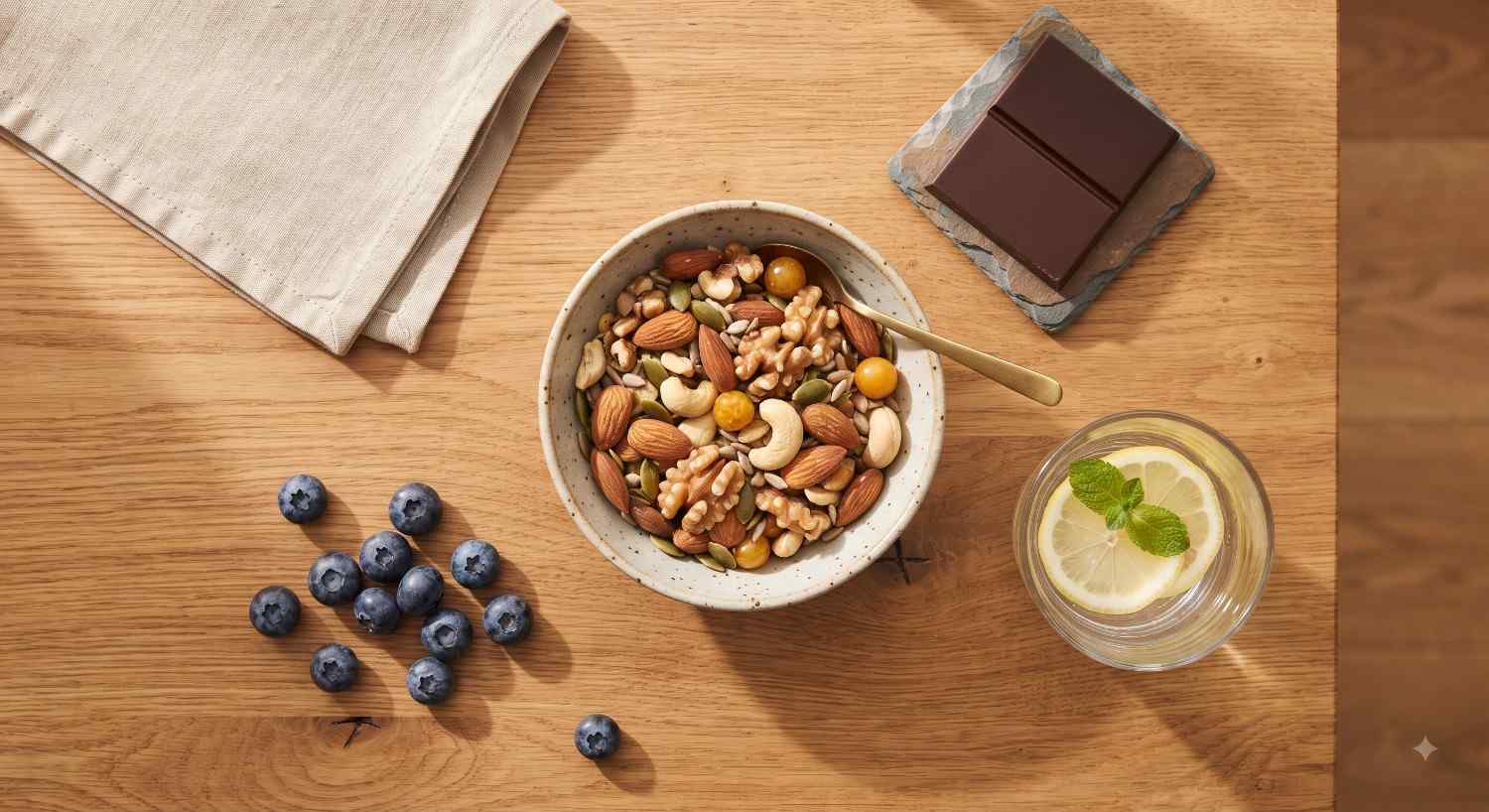
Oats provide what may be the most practically important contribution to sustained cognitive function: stable blood sugar through a morning of work.
The soluble fibre in oats — particularly beta-glucan — forms a gel in the digestive tract that slows the absorption of glucose into the bloodstream. This produces a slow, sustained release of energy over several hours rather than the spike-and-crash pattern of refined carbohydrate breakfasts. The prefrontal cortex — the brain region responsible for focus, decision-making, and working memory — is exquisitely sensitive to blood glucose fluctuations. Stable glucose means stable focus.
Oats also contain a unique antioxidant called avenanthramides, which have been shown to increase blood flow to the brain and improve cognitive performance. The key is preparation: plain rolled oats or steel-cut oats, cooked in water or milk, with added protein and fat (nut butter, nuts, seeds) to further slow glucose absorption. Instant oats with sugar and flavouring negate most of the benefit.
A Pattern, Not a List
These seven foods work best not as isolated interventions but as part of a consistent eating pattern. The combination of stable blood sugar (oats, eggs, walnuts), reduced neuroinflammation (turmeric, amla, leafy greens), and adequate micronutrient supply (pumpkin seeds, eggs, leafy greens) produces a nutritional environment in which the brain functions well across the day.
This is not a supplement protocol. It is simply eating in a way that nourishes the brain as well as the body — with foods that are already part of the Indian kitchen and require no special sourcing or preparation.
The alternative — chai every two hours and whatever is available at the desk — produces stimulation followed by crashes followed by more stimulation. It is an expensive and inefficient way to maintain cognitive performance, and it masks rather than addresses the nutritional conditions that make genuine mental clarity possible.
“Disclaimer: This content was created with AI assistance and reviewed before publication. It is for informational purposes only and not professional medical, nutritional, legal, or financial advice ”