Linen has had a significant moment in Indian menswear over the past few years. Walk into any mid-range clothing store in any Indian city and you'll find shirts labelled linen. Browse any online clothing platform and the word appears everywhere. The demand for natural, breathable fabric has created a market — and markets, when they move fast, also create confusion. Not everything labelled linen is linen. And even among genuine linen products, quality varies enormously in ways that the label doesn't tell you. Here is a practical guide to buying linen in India — what it should feel like, what to look for, what to avoid, and what to pay for different quality levels.
What Linen Actually Is
Linen is a natural textile made from the fibres of the flax plant (Linum usitatissimum). The process of extracting usable fibre from the flax plant is labour-intensive — which is why genuine linen costs more than cotton and significantly more than synthetic alternatives.
The key properties of genuine linen:
- Breathability: Linen's hollow fibre structure allows air to pass through the weave. This is the property that makes it genuinely cooling in hot weather — not just the perception of coolness, but actual thermodynamic function.
- Moisture management: Linen absorbs moisture quickly and releases it into the air even faster. This wicking and evaporation cycle keeps the wearer drier than cotton in humid conditions.
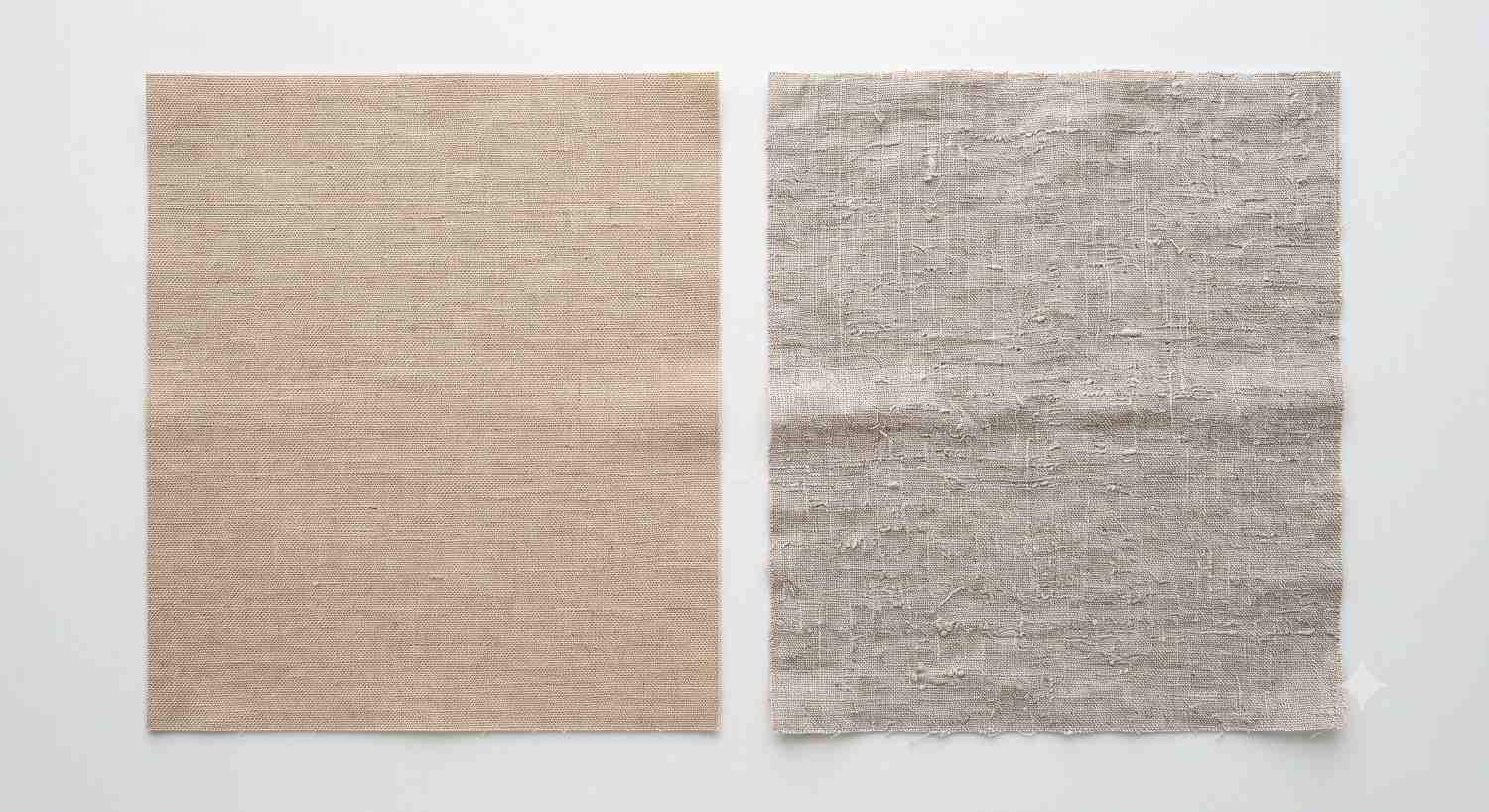
- Texture: Genuine linen has a characteristic slight irregularity — the natural variation in flax fibre produces a texture that is more interesting and tactile than the uniform smoothness of cotton or synthetic fabric.
- Wrinkling: Linen wrinkles readily. This is a structural property of the fibre, not a quality defect. Linen that doesn't wrinkle has typically been treated with synthetic finishing agents that reduce this property — at the cost of some breathability and the natural character of the fabric.
- Improvement with washing: Genuine linen becomes softer and more comfortable with each wash. New linen has a characteristic stiffness that relaxes progressively. This is one of the markers of genuine linen — if a "linen" shirt feels soft and flexible from the first wear without having been washed, it is likely a linen-synthetic blend or a treated imitation.
The Linen Market in India — What You're Actually Buying
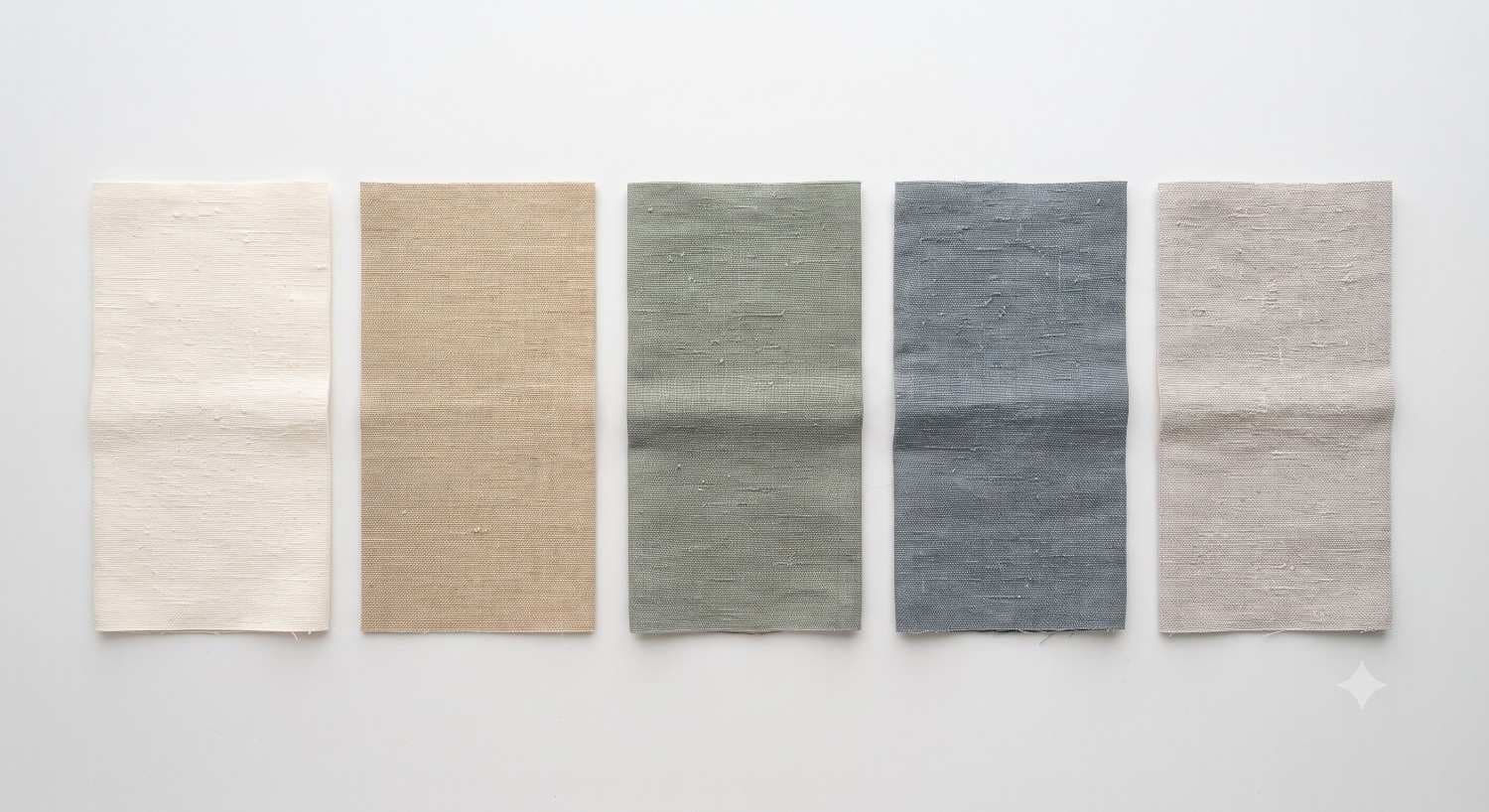
The Indian linen market has several distinct segments that are often conflated.
- Pure linen (100% flax): The genuine article. India imports most of its linen fibre from Europe — primarily Belgium, France, and the Netherlands, where the climate produces the highest quality flax. Some domestic cultivation exists but is limited. A shirt of 100% linen is the most breathable, most authentic, and most expensive option.
- Linen-cotton blends: A blend of linen fibre and cotton, typically in ratios between 30:70 and 70:30. These blends are more affordable than pure linen, softer from the first wear (cotton reduces the initial stiffness of linen), and slightly less wrinkle-prone. They retain meaningful breathability if the linen proportion is sufficient (above 40%). This is a legitimate and practical option particularly for those new to linen who find the texture of pure linen initially unfamiliar.
- Linen-viscose or linen-polyester blends: These are where the category becomes problematic. Viscose (rayon) is a semi-synthetic fabric that mimics the drape and appearance of linen but lacks its breathability and durability. A 55% linen, 45% viscose blend looks like linen, may feel similar in-store, but performs significantly worse in heat and humidity. Linen-polyester blends are the least desirable - the polyester component negates much of the breathability benefit.
- Viscose sold as linen: The most common form of misrepresentation in the Indian market. Viscose has a visual similarity to linen a slight sheen, a natural colour, a similar drape — that makes it easy to pass off as linen to an untrained eye. It is not linen. It does not breathe like linen. It does not improve with washing like linen.
How to Identify Genuine Linen in Store
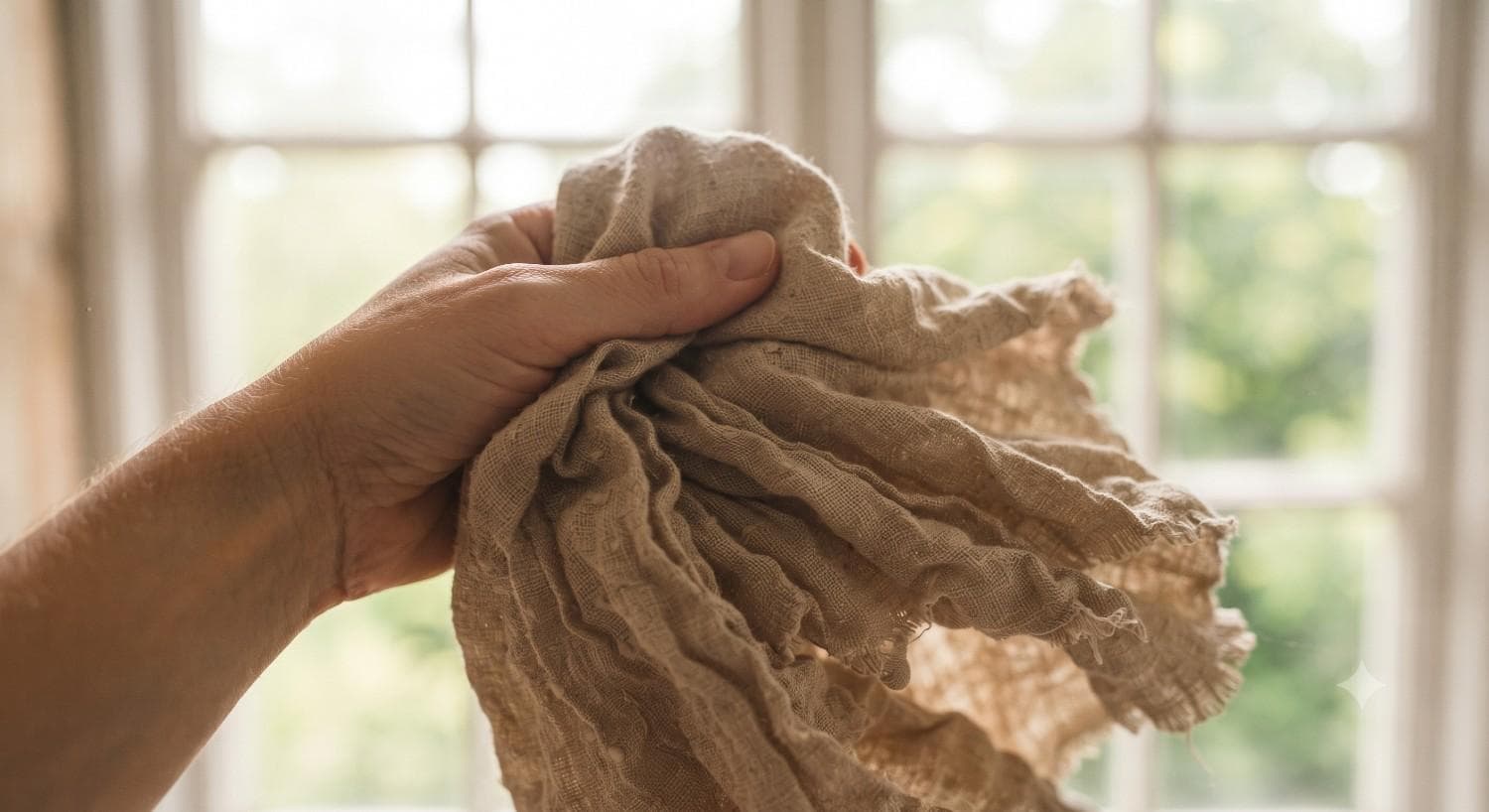
- The wrinkle test. Scrunch a portion of the fabric firmly in your hand for five seconds, then release. Genuine linen will wrinkle visibly and hold those wrinkles. Viscose and synthetic blends will spring back more readily. Heavily treated linen may also resist wrinkling, but if a shirt doesn't wrinkle at all under this test, be sceptical.
- The touch test. Genuine linen has a distinctive texture — slightly irregular, with a natural coarseness that is different from the uniform smoothness of cotton or the slight slipperiness of viscose. Run your thumb across the fabric: if it feels uniformly smooth or slightly slippery, it is likely not pure linen.
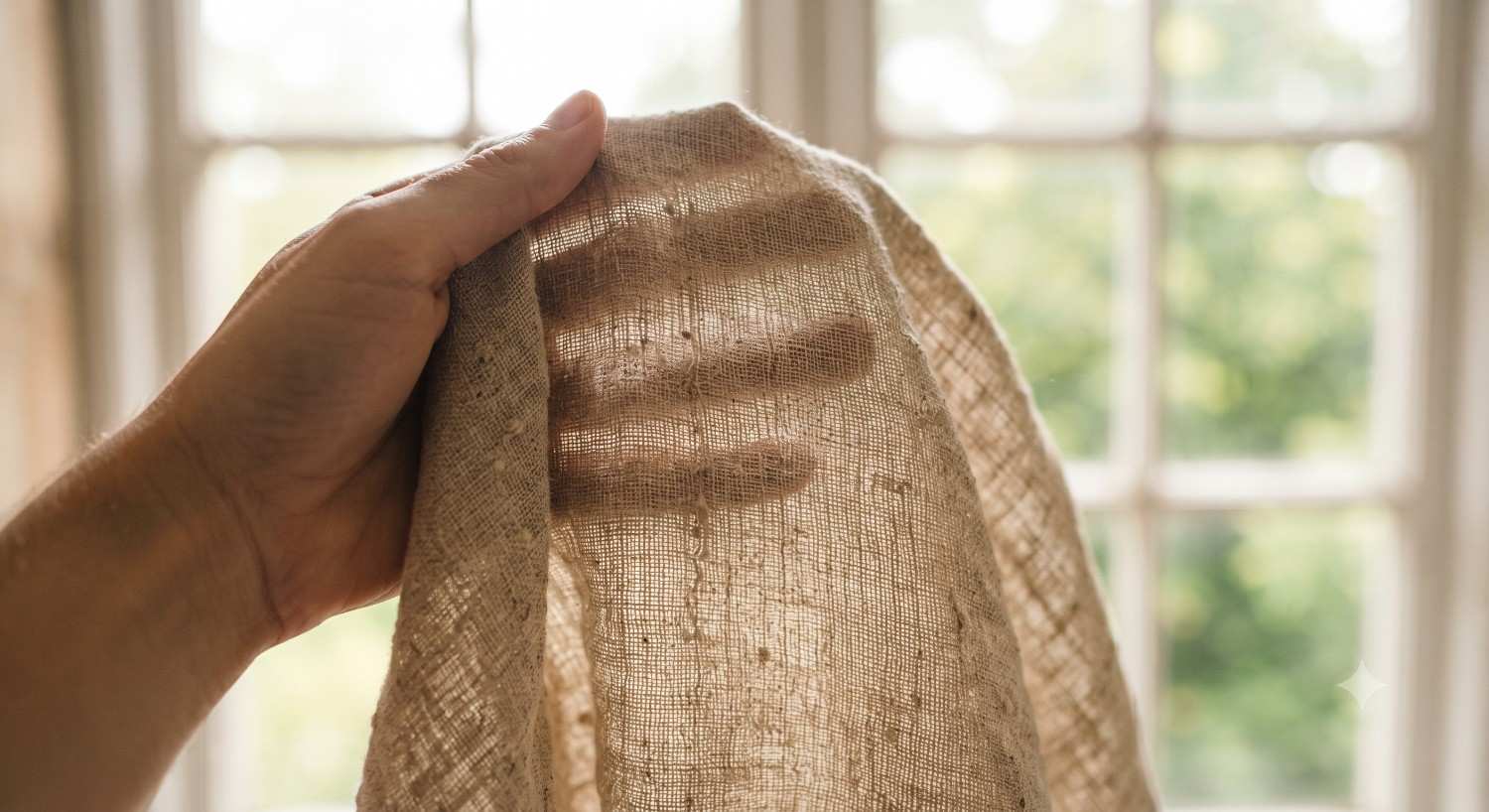
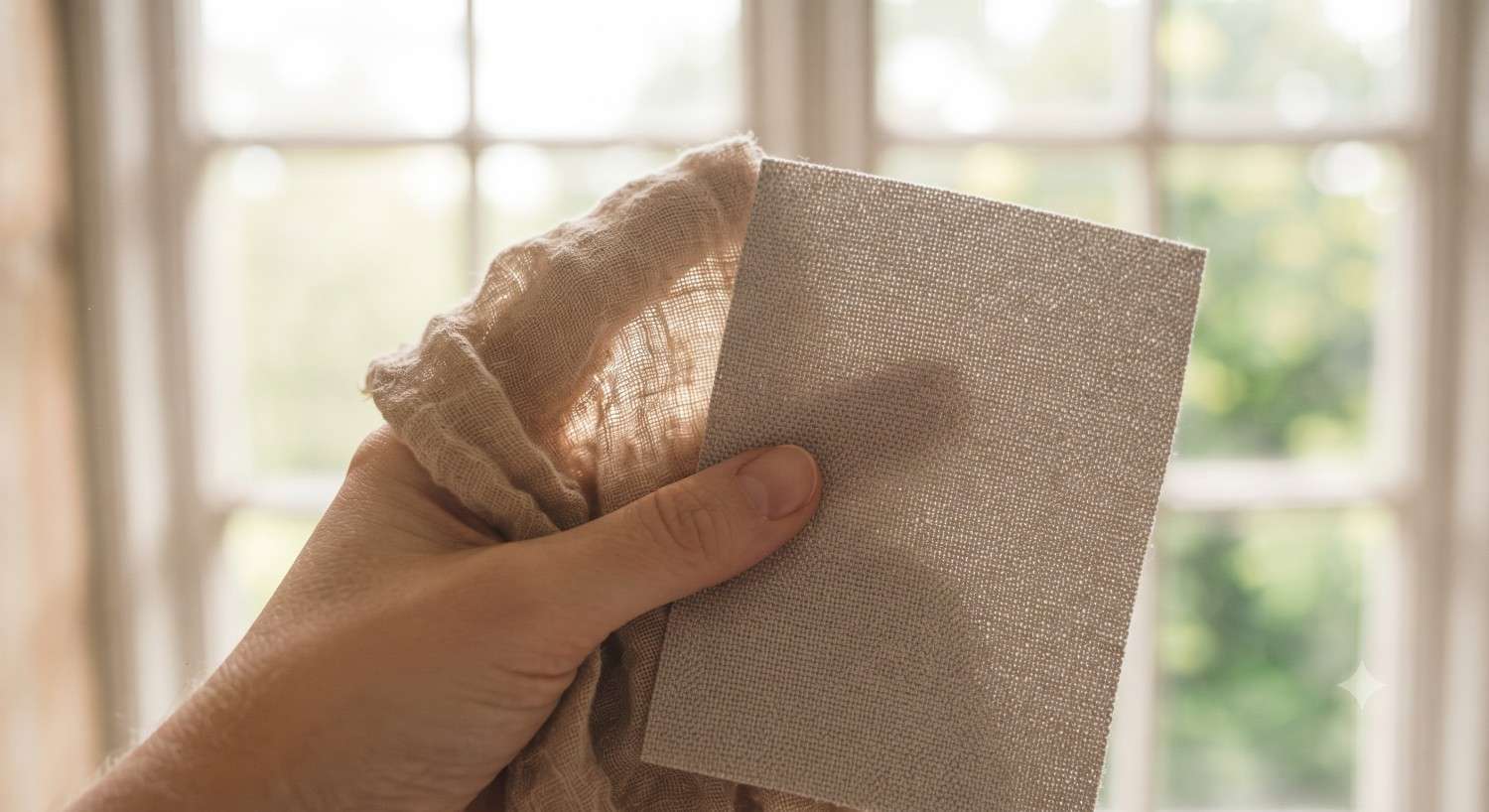
- The light test. Hold the fabric up to a light source. Genuine linen has a slight translucency and visible weave irregularity. The light passes through in a slightly uneven pattern. Viscose tends to be more uniform.
- The feel when worn. In a warm environment, put the garment on or hold it against your skin. Genuine linen feels slightly cool against the skin and allows airflow. Viscose and synthetic alternatives feel warmer and more static against the skin.
- Read the label carefully. The fabric composition label is legally required to be accurate. "100% linen" means 100% flax fibre. "Linen blend" or any mention of viscose, polyester, or rayon alongside linen indicates a blend. The term "linen look" or "linen style" typically indicates no linen content at all.
What to Pay - A Price Reality Check
Genuine linen costs more than most fast fashion alternatives. Understanding why helps you calibrate what to pay. High quality pure linen shirts (₹2,500-6,000+): At this price range, you should expect 100% European or quality Indian linen, good construction, natural or vegetable dyes, and a shirt that will last five to ten years with proper care. This is the investment tier. Mid-range linen or linen-cotton blend shirts (1,200-2,500): At this range, pure linen is possible but less common. Good linen-cotton blends (40%+ linen) are more likely. Quality varies significantly look for construction quality (seams, buttons, collar) as markers of overall garment quality. Budget tier (under 1,200): Genuine high-quality linen at this price point is rare. What you typically find is linen-viscose blends, heavily processed linen with synthetic finishing, or fabric labelled linen with minimal actual linen content. Not necessarily to be avoided a reasonable linen blend at this price can be a practical starting point - but manage expectations accordingly.
What Good Linen Construction Looks Like
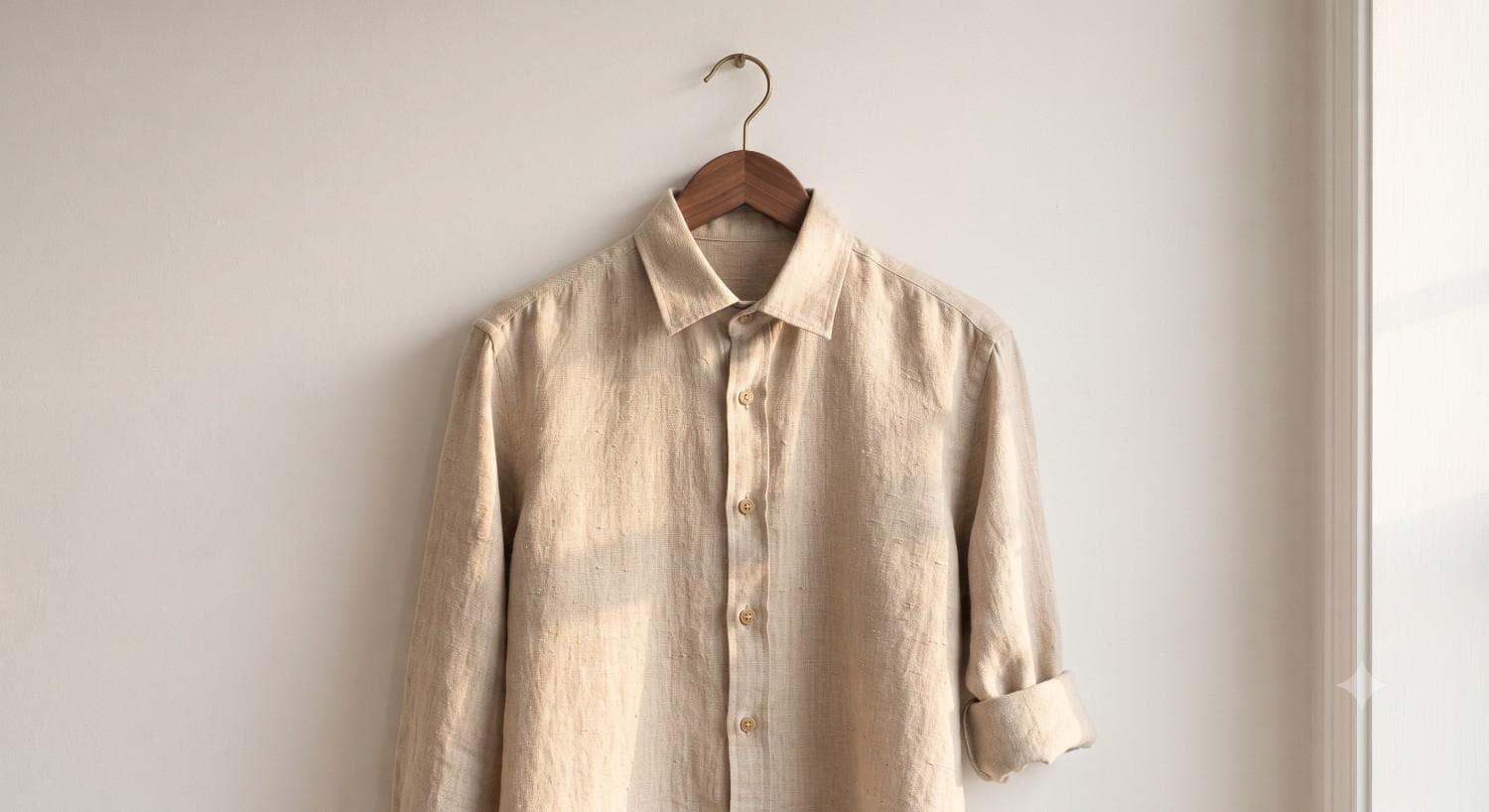
The fabric is one element of a linen shirt's quality. The construction matters equally.
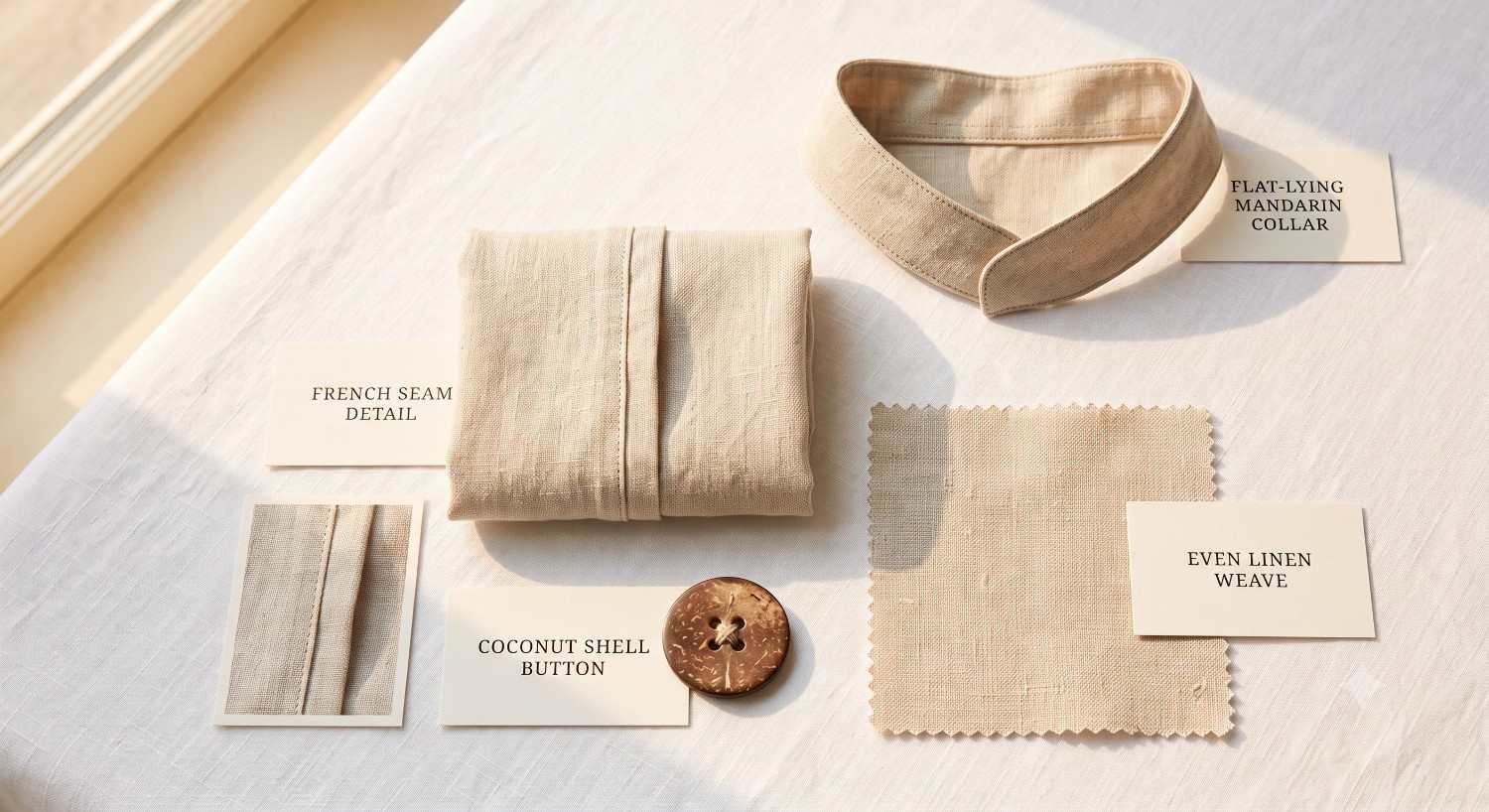
- Seams: French seams (where the raw edge is enclosed within the seam) or flat-felled seams are the hallmarks of quality linen construction. They prevent fraying, hold through repeated washing, and feel comfortable against the skin. Overlocked seams are acceptable; raw or loosely overlocked seams are not.
- Buttons: Natural buttons - coconut shell, mother of pearl, or horn are appropriate for linen garments and signal attention to the whole. Cheap plastic buttons on an otherwise quality linen shirt indicate a compromise in overall garment thinking.
- Collar construction: A linen collar should lie flat naturally. If the collar tips lift or curl immediately after washing, the interfacing (the stiffener inside the collar) is inadequate or synthetic. Good linen collars maintain their shape through washing.
- Hem: The hem should be even and cleanly finished. A curved hem (slightly longer at the sides than the front and back) is appropriate for casual linen shirts and allows for comfortable untucked wearing.
Where to Buy Linen in India
Brand stores with transparent sourcing: Look for brands that specify their linen source, fabric weight, and composition. Transparency about these details is itself a quality signal. Fabric stores for custom-made: For those willing to have shirts made by a tailor, buying linen fabric by the metre from a reputable fabric store gives complete control over quality. Tell the tailor you want French seams, natural buttons, and a relaxed fit. This often produces better results at better value than ready-to-wear at similar price points. Handloom and craft markets: State-run handloom emporia (present in most Indian cities) carry genuine hand-woven linen and linen-cotton fabrics from traditional weaving regions. Quality is generally excellent and pricing is fair.
“Disclaimer: This content was created with AI assistance and reviewed before publication. It is for informational purposes only and not professional medical, nutritional, legal, or financial advice”