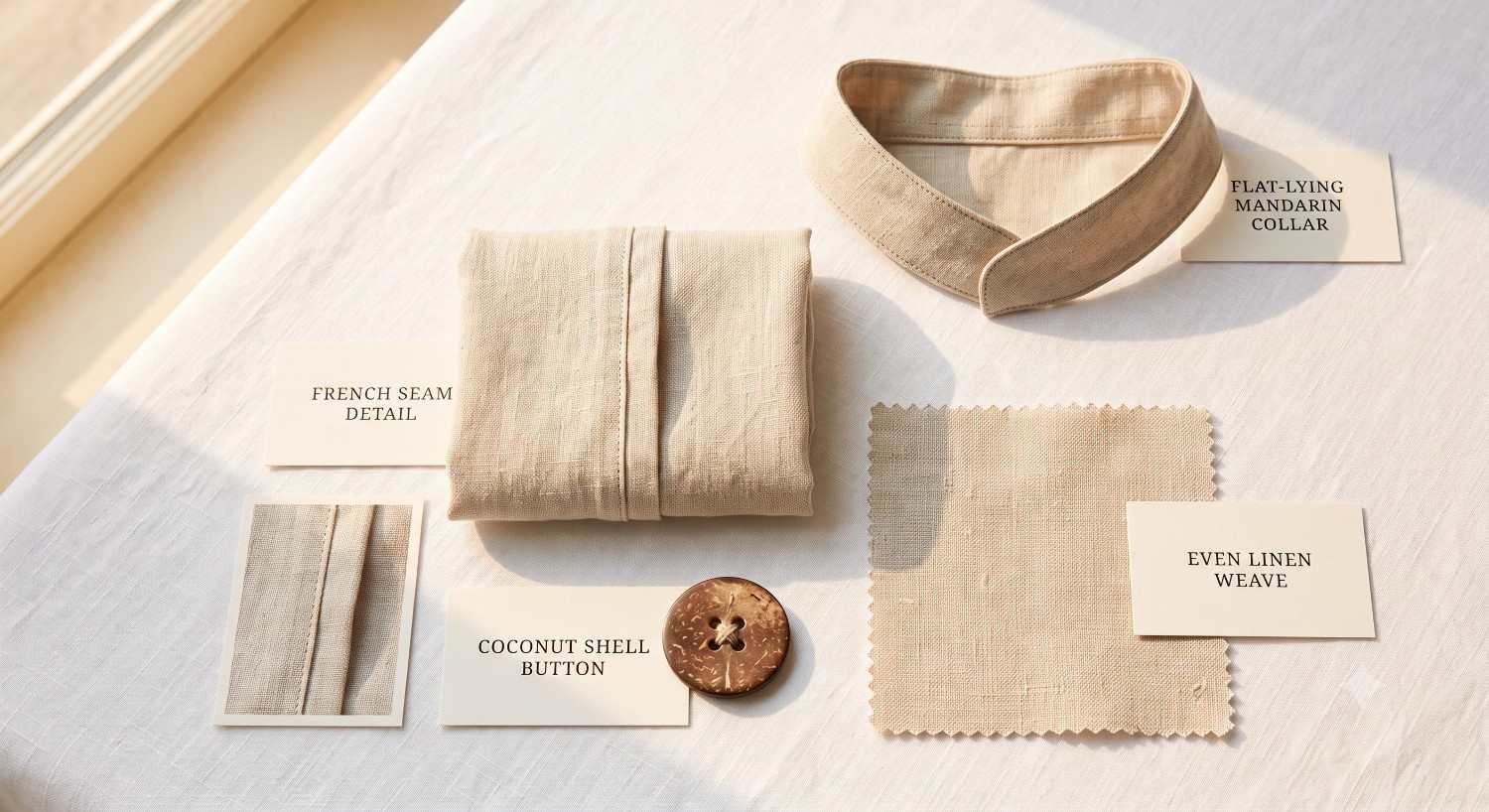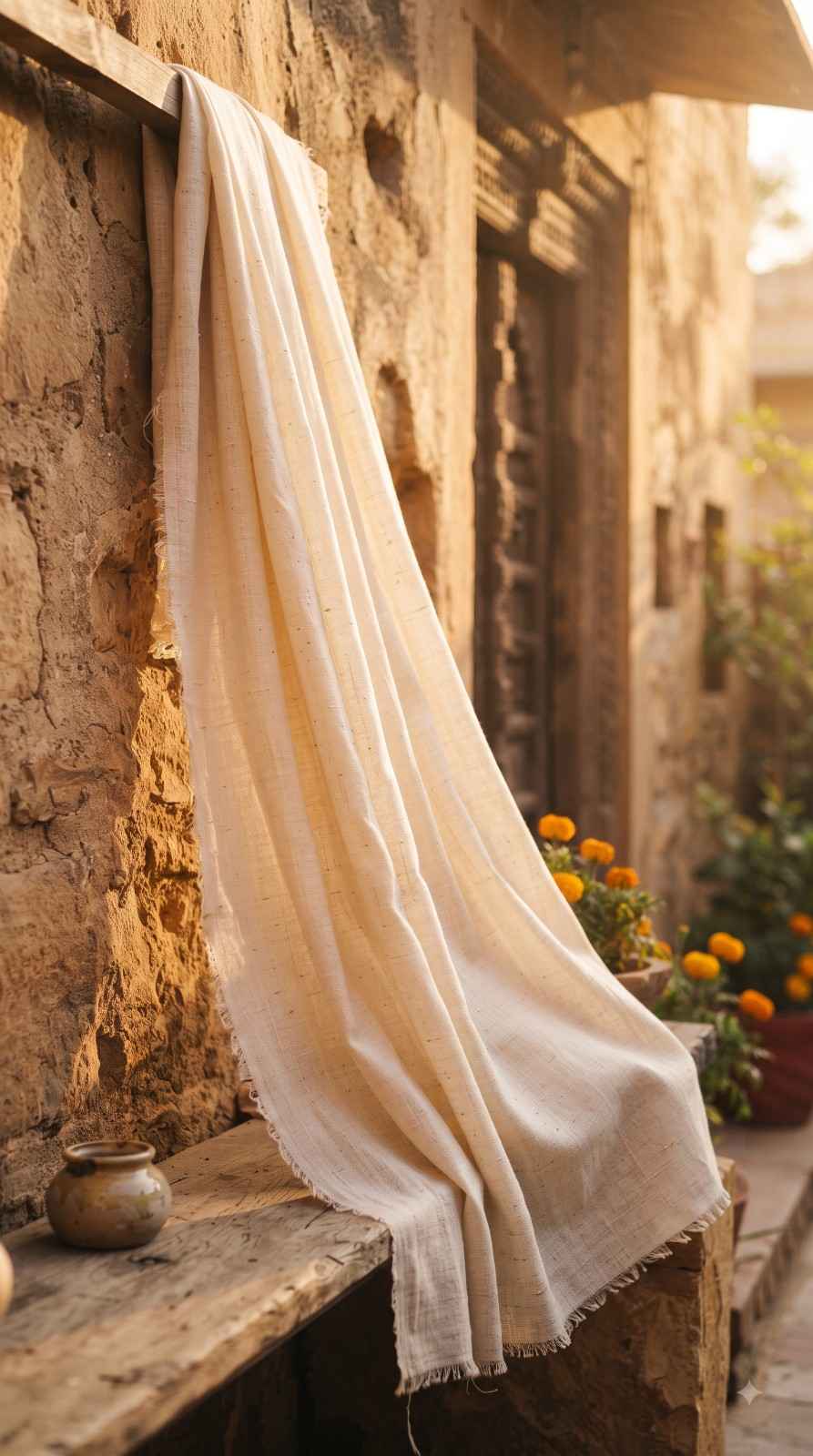
The word sustainable is modern. The practice is ancient. And nowhere is this more true than in India, where natural fabric — cotton, linen, silk, and eventually khadi — was not a lifestyle choice or an ethical stance. It was simply what people wore, because it was what grew from the earth, what hands could spin, and what the climate demanded. India's relationship with natural fabric is one of the oldest and most sophisticated in human history. Understanding it changes how you think about the clothes you wear today.
Cotton: India's Original Gift to the World
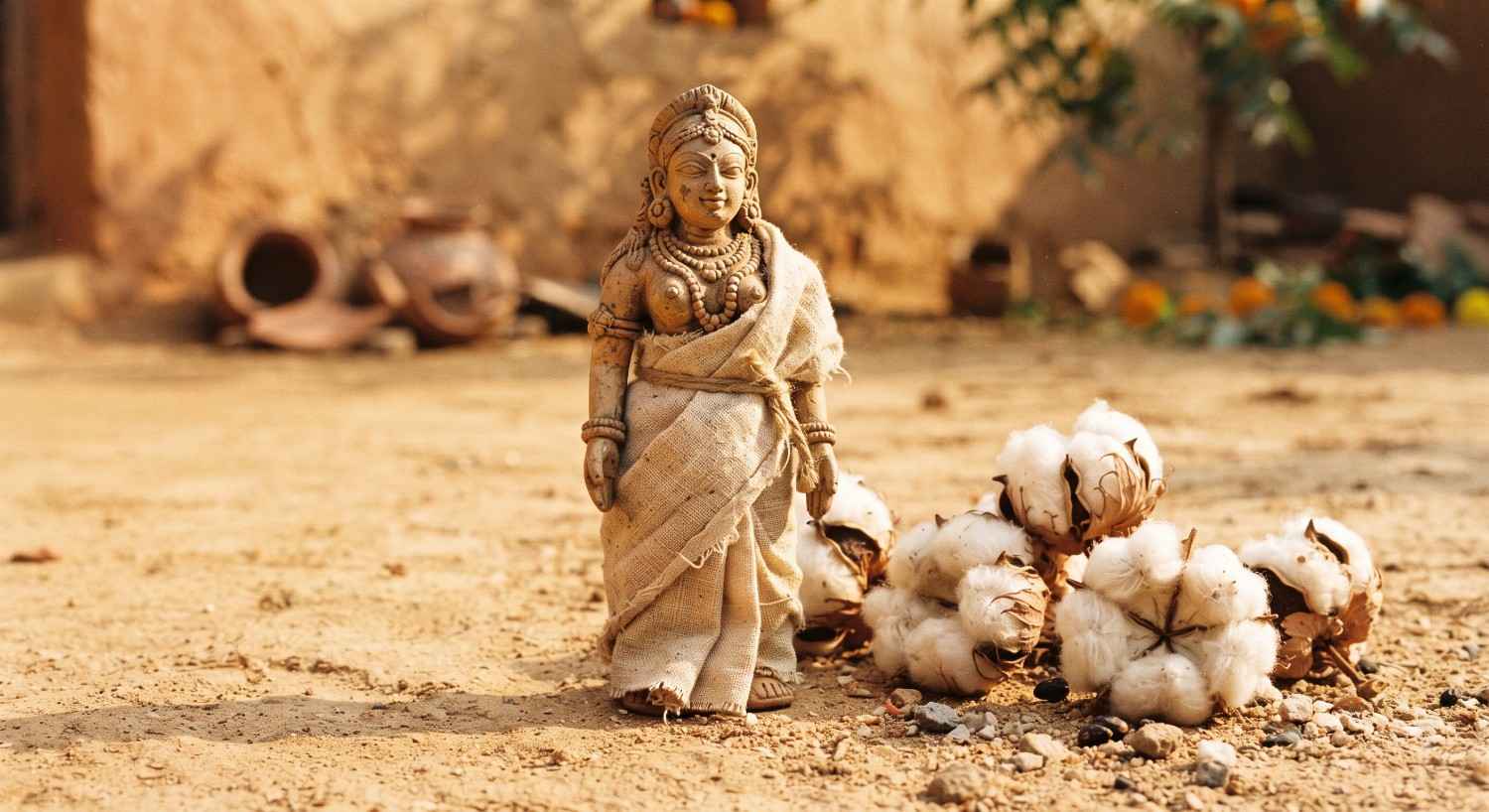
The cultivation of cotton in India dates back to at least 3000 BCE — among the earliest in the world. The Indus Valley Civilisation, centred around Mohenjo-daro and Harappa, produced cotton textiles of remarkable quality. Archaeological evidence suggests that Indian cotton was being traded with Mesopotamia and ancient Egypt more than four thousand years ago.
When Alexander the Great's armies arrived in India in 326 BCE, they encountered cotton for the first time and described it as "wool that grew on trees" — a fabric so fine and so unlike anything they had seen that it seemed miraculous.
For millennia, Indian cotton was the most prized textile in the world. The muslin of Dhaka — woven so fine it was called "woven air" and "running water" — required thread so delicate that it could only be spun in the specific humidity of the Dhaka riverbank, by weavers who trained for years. A single sari of Dhaka muslin could be passed through a finger ring and packed into a matchbox.
The Handloom Heritage
Across India, different regions developed distinct textile traditions, each adapted to local climate, local fibre, and local aesthetic:
- Bengal produced the finest cottons — Dhaka muslin, Jamdani, Baluchari silk.
- South India developed Kanjeevaram silk and Chettinad cotton — fabrics that combined extraordinary durability with visual richness.
- Gujarat produced Patola silk and Ajrakh cotton — resist-dyed fabrics of geometric precision.
- Rajasthan developed block-printed cottons, tie-dye fabrics (Bandhani), and lightweight cotton weaves suited to extreme desert heat.
- Maharashtra produced Paithani silk and Chanderi cotton — fabrics that were worn by royalty and farmers alike, in different weights and qualities.
Each of these traditions was built on natural fibre, natural dye, and handloom weaving. Each was adapted to its climate. Each represented accumulated knowledge passed through generations of weavers who understood the properties of their fibre as intimately as a doctor understands anatomy.
Khadi and the Politics of Natural Fabric
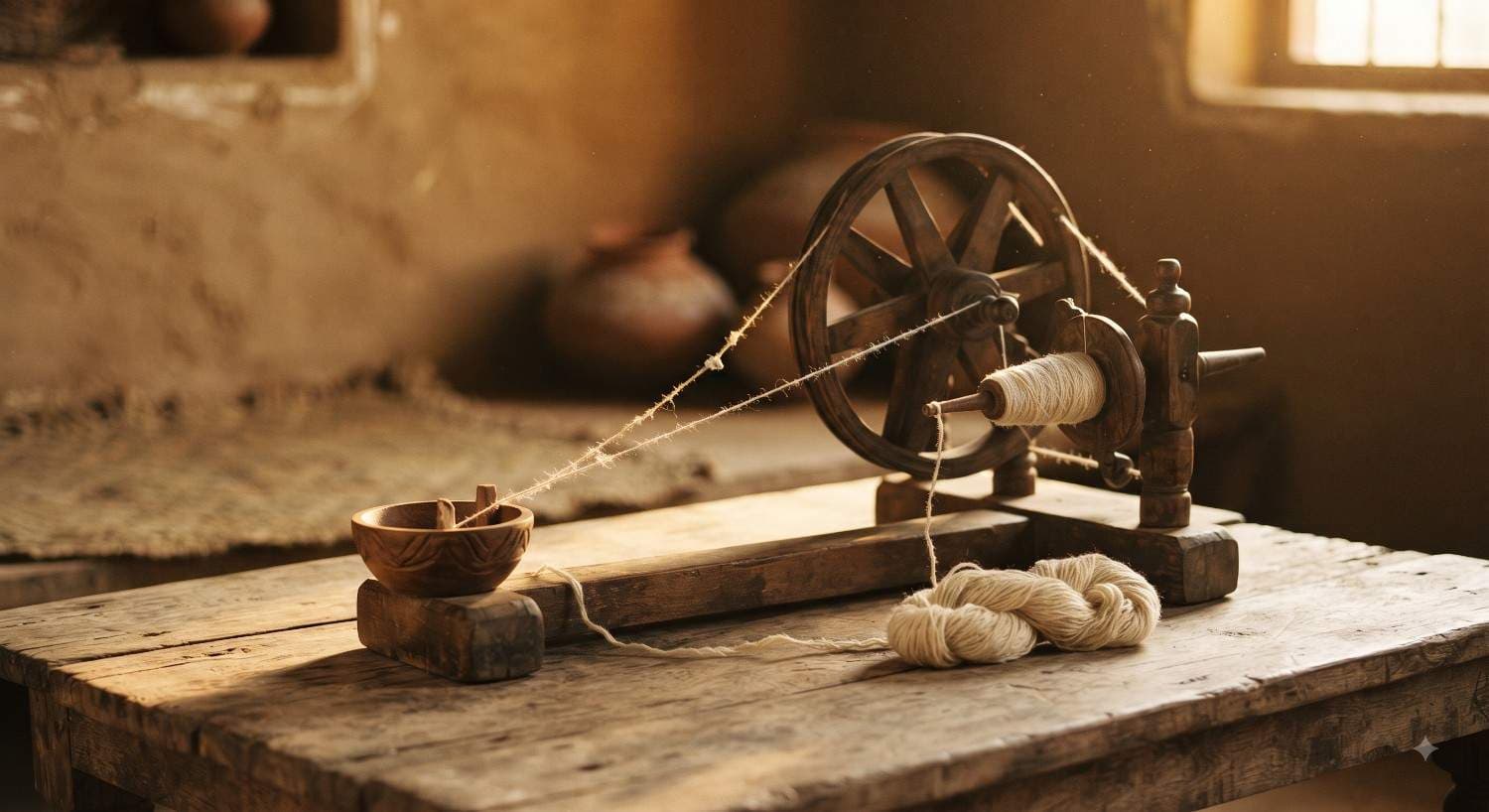
No discussion of natural fabric in India is complete without Khadi — the hand-spun, hand-woven cotton cloth that Mahatma Gandhi elevated from a simple garment to a political symbol of extraordinary power.
Gandhi understood something that took the rest of the world another century to learn: that what you wear is a political act. The British textile industry had systematically destroyed India's handloom weaving economy — importing cheap machine-made cloth from Lancashire mills while taxing Indian-produced fabric out of the market. The result was the impoverishment of millions of weavers and the severing of India's relationship with its own textile heritage.
Gandhi's response was the spinning wheel — the charkha. He wore Khadi not because it was the finest cloth available but because it was produced by Indian hands, from Indian cotton, within the Indian economy. The Dandi March of 1930, at its core, was also about the right of Indian people to make their own salt — and their own cloth.
Khadi became the fabric of independence. And with independence, something was quietly lost — the industrial ambitions of a new nation redirected attention toward synthetic fabric production, toward modernisation, toward the efficiency of the mill over the intimacy of the loom.
What Synthetic Fabric Displaced
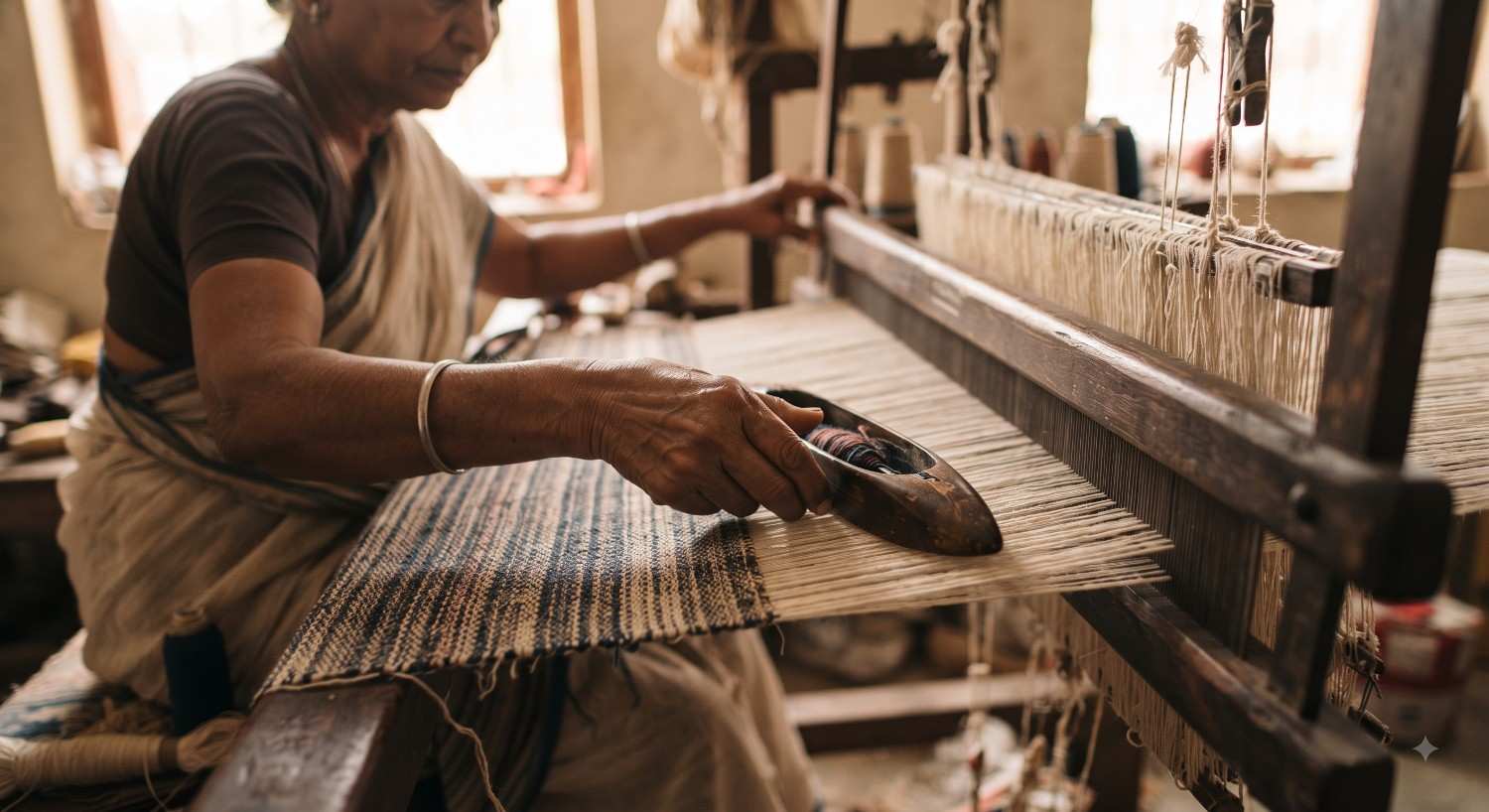
When synthetic fabric arrived in India — polyester in particular, which became widely available from the 1970s onward — it displaced natural fabric with startling speed. It was cheaper. It didn't require the skilled labour of weaving. It held colour brightly. It was easy to care for.
What it replaced was not just a fabric. It replaced:
- A relationship between body and climate that had been built over thousands of years. The knowledge, accumulated through millennia of living in India's specific heat, that certain fibres breathe and certain fibres don't.
- A living weaving economy that had sustained millions of artisans across the subcontinent for generations. The shift to synthetic fabric contributed directly to the decline of handloom weaving — a crisis that continues today.
- A sensory relationship with clothing — the feel of hand-spun cotton against skin, the particular drape of natural fibre, the way clothes softened and became more personal with each wash — that synthetic fabric simply cannot replicate.
The Return
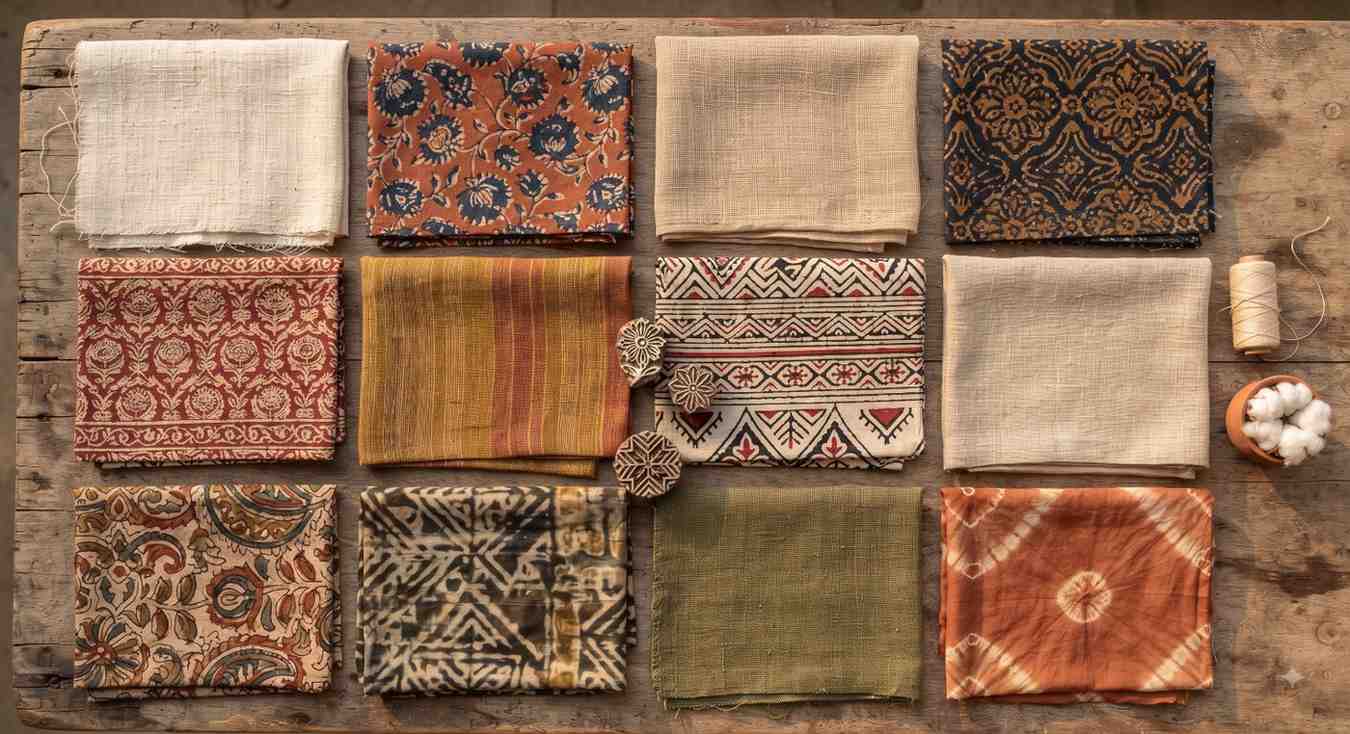
What is happening now — the growing interest in natural fabric, the return to linen, cotton, hemp, and khadi — is not a trend. It is a correction.
Young Indians are rediscovering what their great-grandparents knew: that the climate of this country demands natural fibre. That the body functions better when what touches it breathes. That clothes made from natural material age beautifully instead of degrading into plastic waste.
This rediscovery is happening in the same generation that is also rediscovering traditional food — the value of dal over protein shakes, of haldi doodh over supplements, of seasonal produce over packaged nutrition. It is part of a broader recognition that many of the things that were displaced by modernity were displaced not because they were inferior, but because they were slower, more artisanal, and less scalable.
What This Means for What You Wear Today
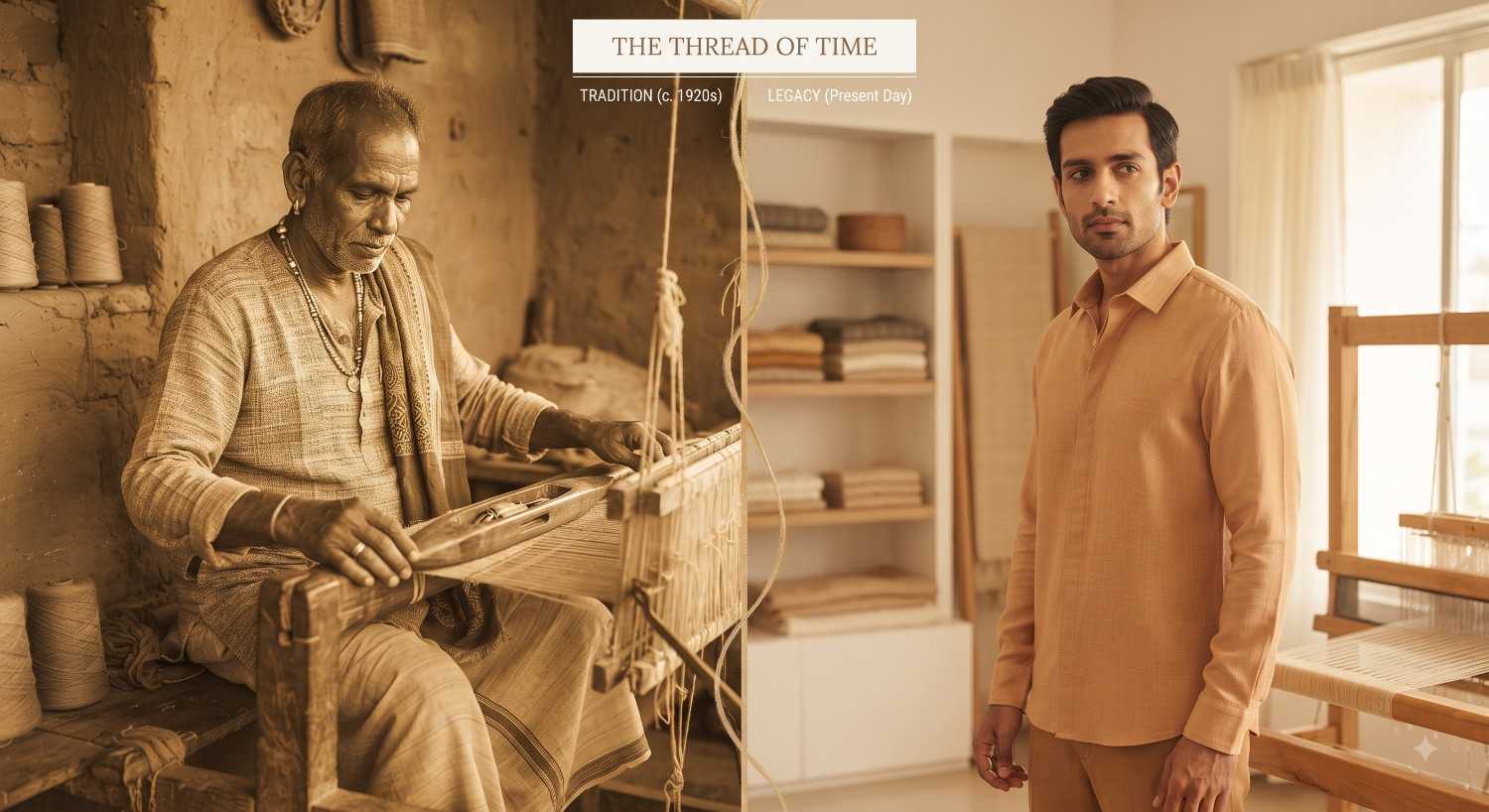
Choosing natural fabric today is not a nostalgic act. It is a practical one — choosing what works for the climate, what lasts longer, what feels better, what ages beautifully instead of degrading.
But it is also a continuation. Every time someone reaches for a linen shirt over a polyester one, they are — whether they know it or not — participating in a tradition that stretches back four thousand years, to the cotton fields of the Indus Valley, to the weavers of Dhaka and Kanjivaram and Chanderi, to the spinning wheels of a freedom movement.
That tradition never required a word like sustainable. It just required understanding what the earth provides and using it well.
“Disclaimer: This content was created with AI assistance and reviewed before publication. It is for informational purposes only and not professional medical, nutritional, legal, or financial advice ”