Breakfast gets written about constantly. What to eat, when to eat it, whether to eat it at all. It's treated as the most important meal of the day — a title it may or may not deserve. Dinner, on the other hand, gets almost no attention. Most people eat whatever is convenient, whenever they get around to it, in whatever quantity feels satisfying. Then they wonder why they sleep badly, wake up sluggish, or feel heavy the next morning. What you eat at dinner — and when you eat it — has a direct and measurable effect on sleep quality, morning energy, digestion, and long-term metabolic health. It's the most overlooked meal in the daily rhythm. Here's what's going wrong and what to do instead.
The Problem: Dinner Has Become the Biggest Meal of the Day
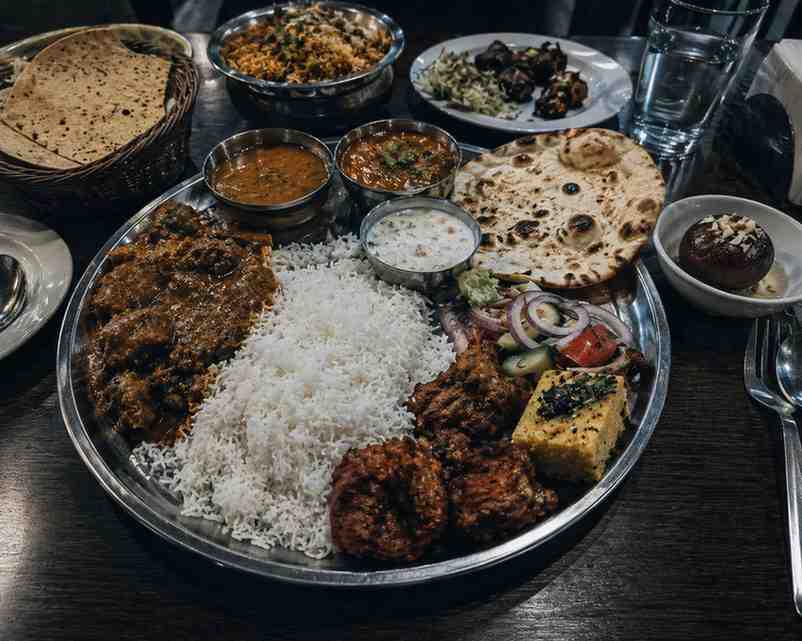
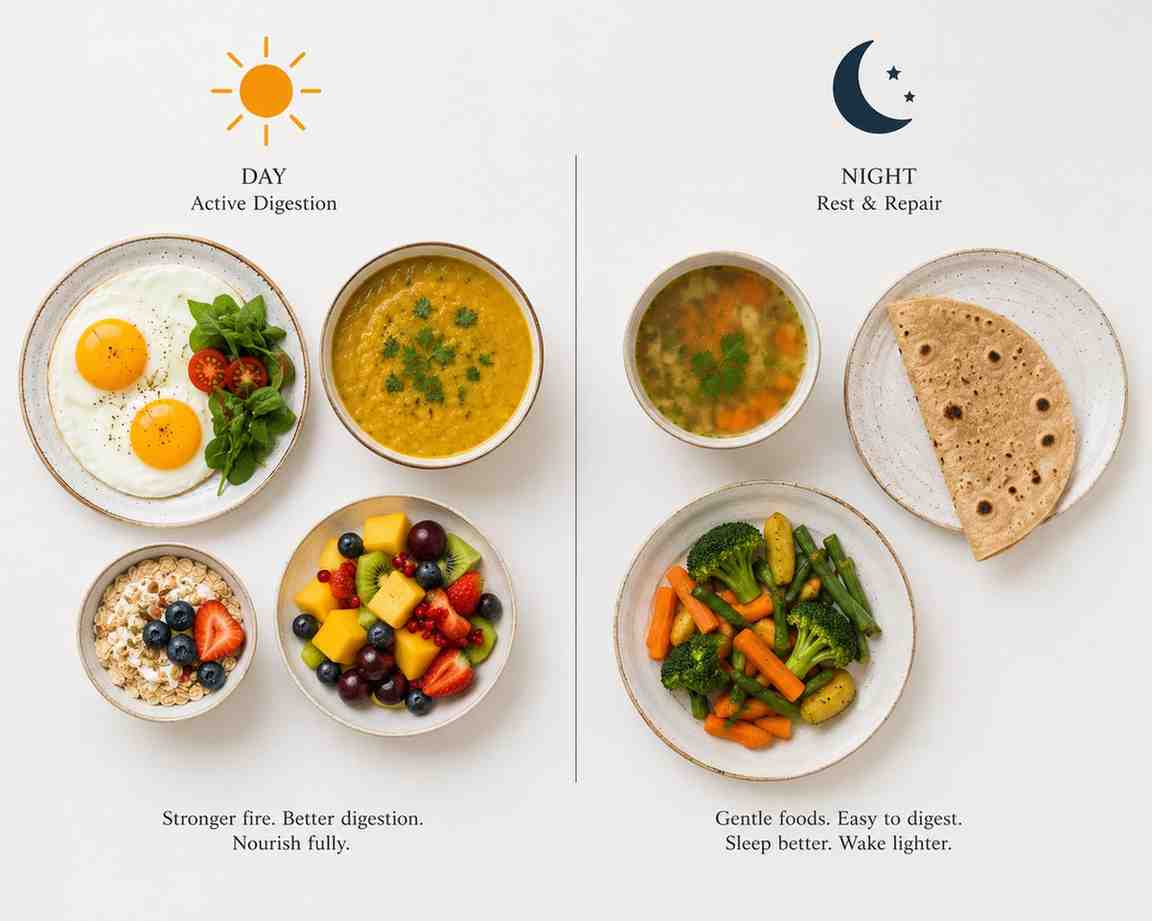
For most working people, the daily eating pattern looks something like this: a rushed or skipped breakfast, a modest lunch, and then a large dinner in the evening as the primary meal of the day. This is backwards. Human digestion is governed by circadian rhythm — the same internal clock that controls sleep and wakefulness. Digestive enzyme production, stomach acid levels, insulin sensitivity, and gut motility are all higher during the day and lower in the evening. The body is physiologically primed to process food efficiently in the morning and afternoon, and less prepared to do so at night. Eating a large, heavy meal in the evening — when digestive capacity is reduced — means the body spends the night processing food rather than performing the restorative functions that sleep is designed for: cellular repair, memory consolidation, hormone regulation, and immune function. The result is poorer sleep, groggier mornings, and over time, a metabolic pattern that promotes weight gain and reduces energy.
What Happens in Your Body After a Late Heavy Dinner

The sequence is worth understanding in some detail: Blood sugar spikes late. A large carbohydrate-heavy dinner raises blood glucose significantly. Insulin is released to manage it. But insulin sensitivity is lower in the evening — the body is less efficient at clearing glucose from the blood at night. This means blood sugar stays elevated longer, disrupting sleep architecture and promoting fat storage. Digestion competes with sleep. Active digestion requires blood flow to the gut, acid production, and muscle activity in the digestive tract. Sleep requires a reduction in metabolic activity and a drop in core body temperature. These two processes conflict — if digestion is active when you try to sleep, sleep quality degrades. You may fall asleep but won't sleep as deeply. Acid reflux becomes more likely. Lying down with a full stomach increases the likelihood of stomach acid moving upward into the oesophagus. Many people who experience nighttime acid reflux attribute it to stress — but the timing and composition of dinner is usually the primary cause. Morning hunger is disrupted. A large late dinner suppresses appetite the following morning, contributing to the common pattern of skipping or rushing breakfast — which then sets up blood sugar instability for the rest of the day. The evening meal effectively sabotages the morning one.
The Two Things That Matter Most at Dinner
1. Eat Earlier
The single most impactful change most people can make to their dinner habit is eating earlier. Aim to finish dinner at least two to three hours before sleep. This gives the body enough time to complete the initial phase of digestion before lying down. For someone who sleeps at 11pm, this means finishing dinner by 8pm — which is manageable for most people. For someone who sleeps at 10pm, 7pm is the target. This one adjustment — without changing what you eat at all — meaningfully improves sleep quality for most people within a week.
2. Make It Lighter Than Lunch
Dinner should be the lighter of the two main meals. This runs counter to how most people eat, but it aligns with how the body works. A moderate-sized dinner — sufficient but not filling — reduces the digestive burden at night and leaves the body free to do what sleep is for. What a well-composed dinner looks like:
- A portion of lean protein (dal, fish, chicken, paneer, eggs, legumes)
- A generous amount of vegetables — cooked is easier to digest than raw in the evening
- A modest amount of complex carbohydrates if needed (rice, roti, quinoa) — not the centrepiece
- Warm, cooked food rather than cold or raw where possible — easier on evening digestion
Foods That Help Sleep — and Foods That Hurt It
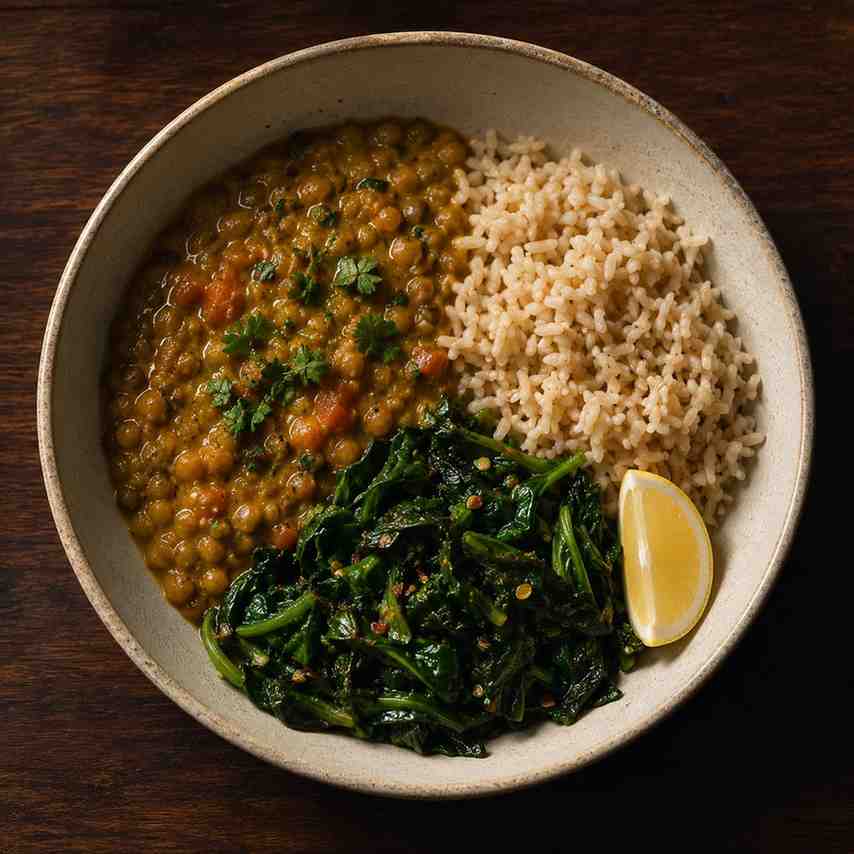
Foods that support better sleep: Tryptophan-rich foods — Tryptophan is an amino acid that the body converts to serotonin and then melatonin, the hormone that governs sleep. Good sources include: dal, lentils, paneer, milk, eggs, pumpkin seeds, and bananas. Magnesium-rich foods — Magnesium supports muscle relaxation and has been linked to improved sleep quality. Good sources: leafy greens, nuts, seeds, whole grains, and dark chocolate (in moderation). Warm milk with spices — The traditional Indian practice of drinking warm milk with turmeric or nutmeg before bed is not superstition. Milk contains tryptophan. Nutmeg has mild sedative properties. Turmeric reduces inflammation. The warmth raises and then lowers core body temperature — a signal to the brain that sleep is coming. Foods that disrupt sleep: Large amounts of refined carbohydrates — White rice, white bread, and sugar-heavy foods at dinner cause the blood sugar spike-and-crash cycle during the night, causing lighter sleep and early waking. Spicy or heavily oiled food late at night — Both stimulate digestive acid production and raise core body temperature — the opposite of what sleep requires. Alcohol — Despite the perception that alcohol aids sleep, it fragments sleep architecture — reducing REM sleep and causing early waking. A nightcap produces worse sleep, not better. Caffeine after 2pm — Caffeine has a half-life of five to six hours. A cup of chai at 4pm still has half its caffeine content in your system at 9pm.
The Indian Kitchen Already Had the Answer

Traditional Indian evening meals — a light dal with rice or roti, some sabzi, a small portion of curd — are nutritionally close to ideal for evening eating. Warm, moderately sized, rich in tryptophan and magnesium, light enough to digest before sleep. The shift away from this pattern toward heavier evening meals — influenced by restaurant culture, late office hours, and the growing habit of eating dinner as the primary social and indulgent meal of the day — has come with a corresponding decline in sleep quality and morning energy that most people have simply accepted as normal. It isn't normal. It's the predictable result of eating patterns that conflict with how the body actually works.
“Disclaimer: This content was created with AI assistance and reviewed before publication. It is for informational purposes only and not professional medical, nutritional, legal, or financial advice”