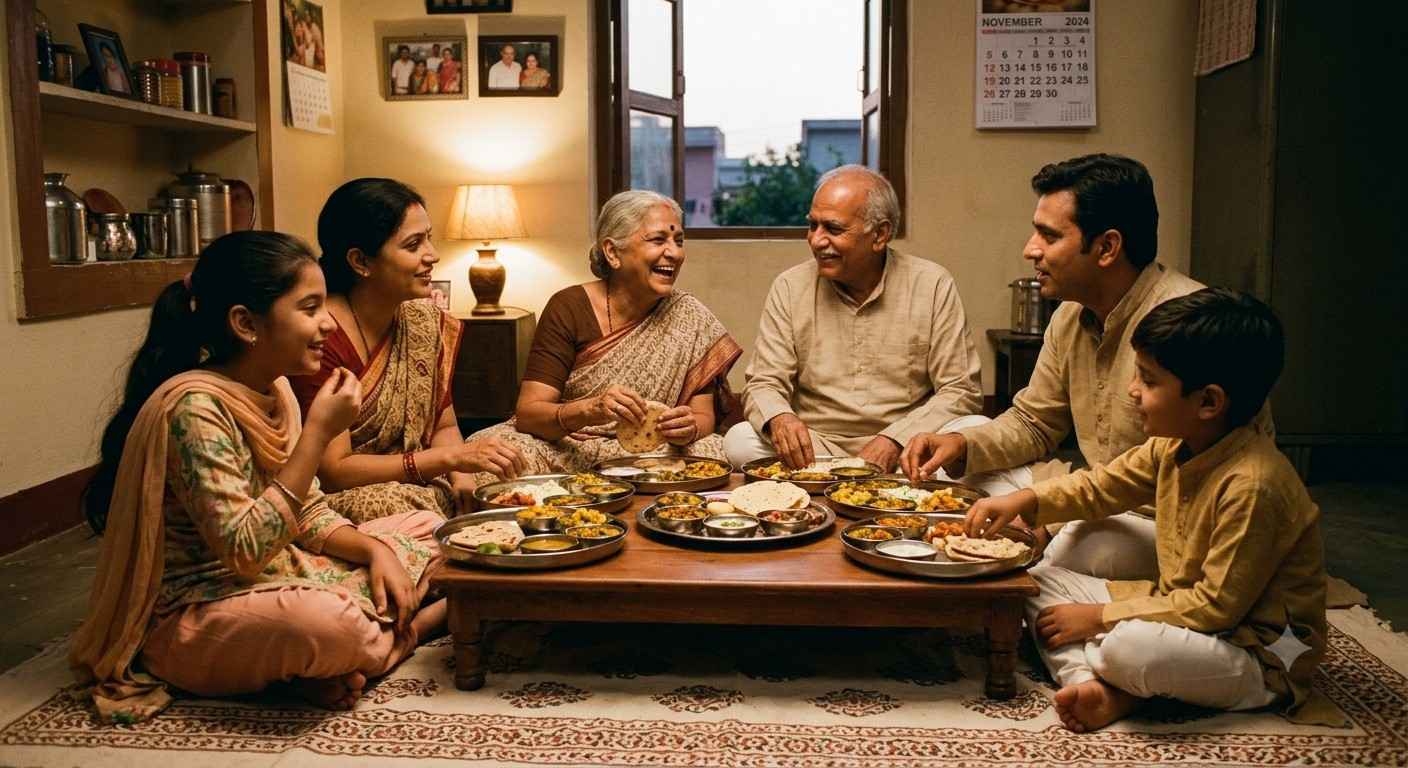
For most of human history, eating was a social act. The meal was not simply a delivery mechanism for calories — it was the primary occasion for family communication, community reinforcement, the passing of culture from one generation to the next, and the daily re-establishment of relationships.
What the Research Shows
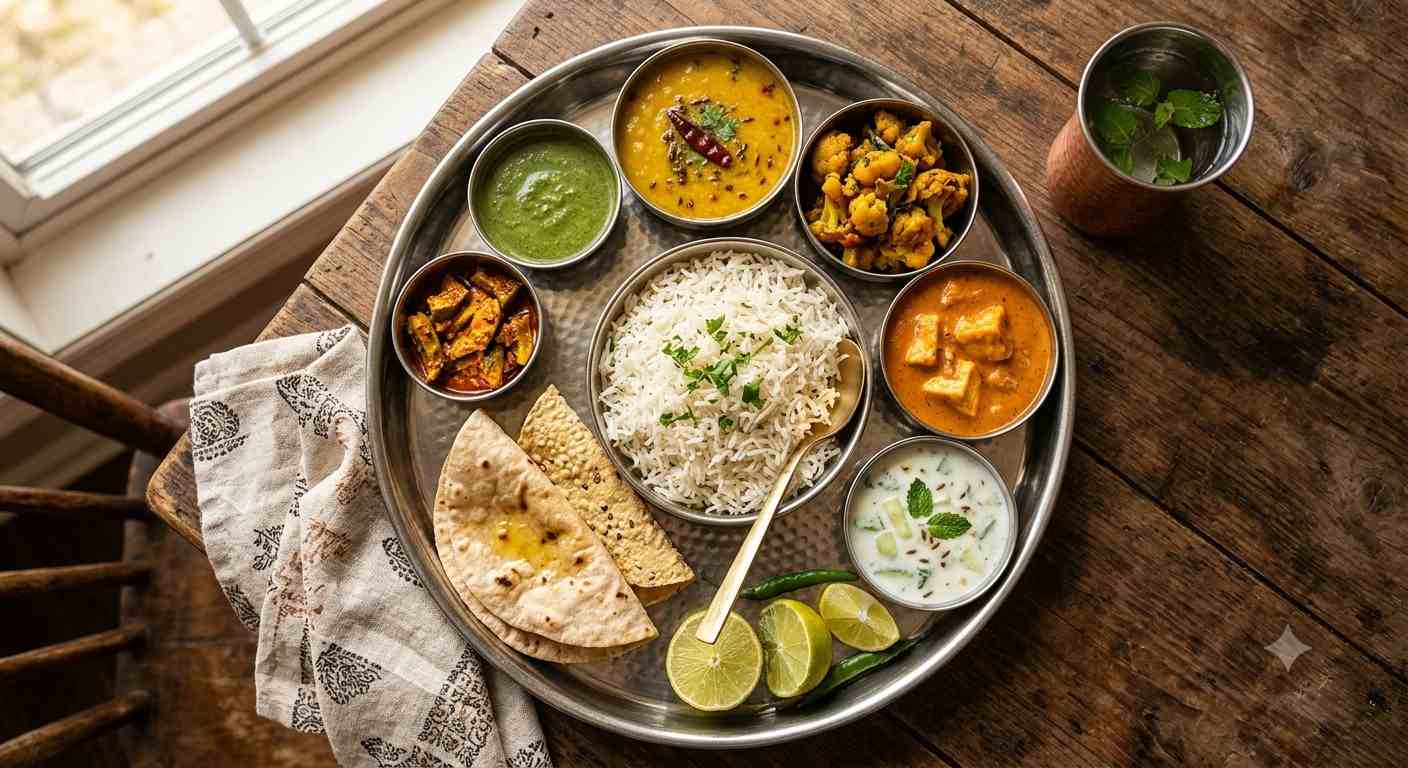
The research on shared meals is remarkable in both its breadth and its consistency. Families that eat together regularly — defined in most studies as five or more meals per week — show measurably better outcomes across a remarkable range of measures.
Children in families that eat together regularly:
- Have higher academic performance
- Show lower rates of substance abuse and risky behaviour
- Have better mental health outcomes and lower rates of depression
- Are less likely to develop eating disorders
- Have better vocabulary and communication skills
- Eat more nutritious food and less processed food
Adults who eat regularly with others:
- Report higher life satisfaction and greater sense of belonging
- Report higher life satisfaction and greater sense of belonging
- Are less likely to be obese
- Show lower rates of depression
The Indian Tradition of Eating Together
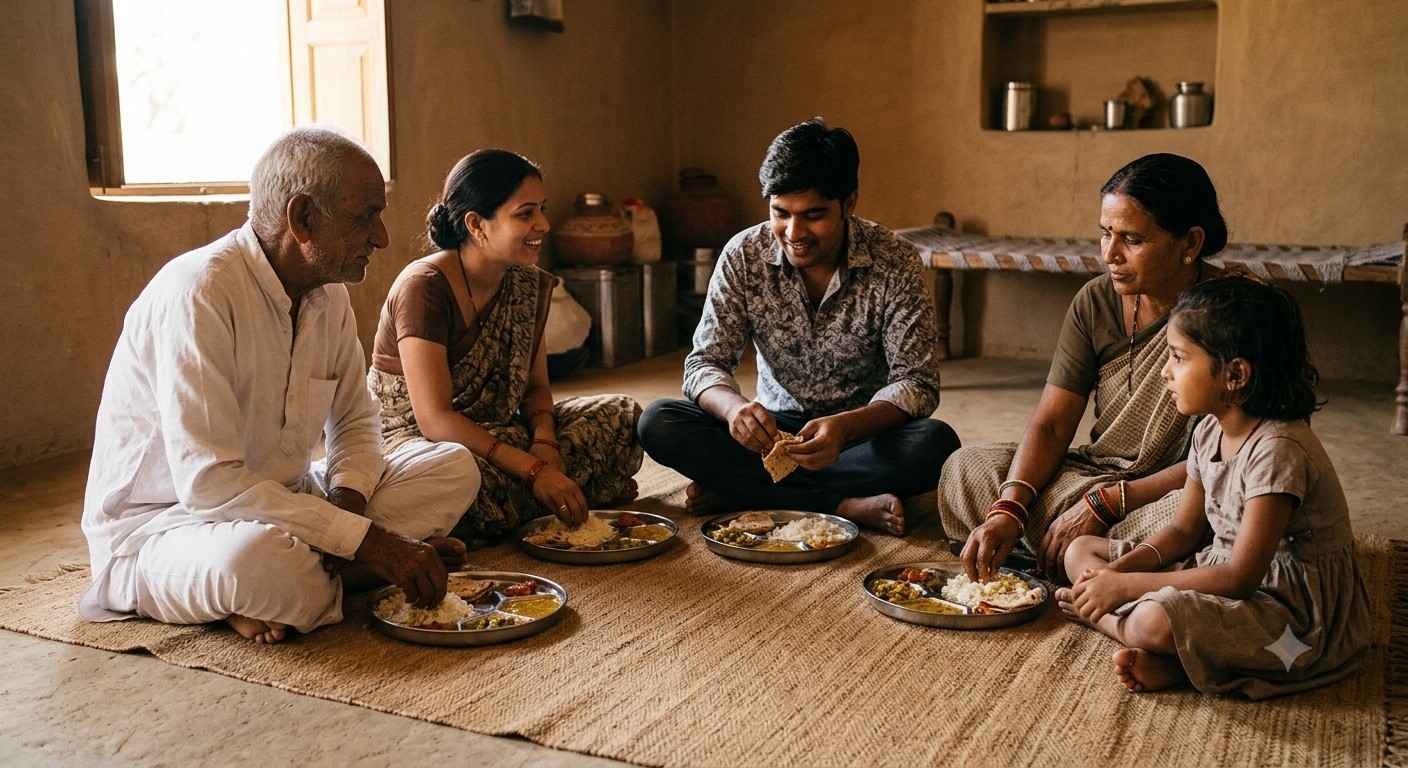
India has a deep and sophisticated tradition of shared eating. The thali — a round tray with multiple small portions of different dishes — is not just a serving format. It is a philosophy of abundance, variety, and sharing. Everyone at the table eats from the same preparations. The meal is a commons.
The tradition of eating on the floor — in many parts of India, sitting cross-legged on a mat — positions everyone at the same level, removing hierarchy from the meal. The host serves, the guests receive, the roles rotate. The meal is a practice of care as much as nourishment.
Festivals and religious occasions across India are almost universally organised around food — the preparation communal, the serving generous, the eating collective. The langar at a Gurdwara, the sadya at Onam, the iftar shared at Ramadan — these traditions understand what research is now quantifying: that shared eating binds people together in ways that almost nothing else can.
What Happens When We Stop Eating Together
The erosion of the shared meal has been gradual and largely invisible. Work schedules fragment the family's time. Screens provide individual entertainment that makes eating alone feel less lonely. Delivery apps make individual meals at individual times frictionless.
The result is that many households — even those where family members are physically present — now eat separately, at different times, in different rooms, with different screens.
What is lost in this fragmentation:
- Communication. The shared meal is one of the few daily occasions where conversation happens without agenda — not a scheduled discussion, not a managed interaction, but the organic exchange of a family moving through their day together. Research consistently shows that children who eat with their families know more about what's happening in each other's lives, and feel more comfortable bringing problems home.
- Food culture. Recipes, food knowledge, and eating traditions pass from generation to generation at the table. When meals are eaten separately or outsourced to delivery apps, this transmission stops. Children grow up without knowing how to cook the food of their culture, what its ingredients are, or what it means.
- Attentive eating. A meal eaten alone with a screen is almost always eaten faster, with less awareness of the food, and with less satisfaction than a meal eaten in conversation. The distraction of the screen or the absence of conversation means the meal is not really experienced. As discussed in our guide on mindful eating, attention is what makes eating satisfying.
- Belonging. The consistent, repeated experience of eating together creates a sense of being part of something — a family, a household, a community — that individual meals cannot produce. This belonging is one of the most powerful protective factors in human psychology.
The Practical Barriers

The barriers to shared meals in modern Indian households are real. Work schedules that don't align. Children with different school timings. The simple exhaustion of a long working day that makes the effort of a coordinated meal feel like too much. These barriers deserve honest acknowledgement. The answer is not to demand the impossible — a formal family dinner every night — but to find the shared meal that is possible.
One shared meal per day is enough. Research does not require elaborate dinner parties. A simple breakfast together — twenty minutes, before everyone leaves — produces measurable benefits. A Sunday lunch that everyone commits to. Whatever the household's schedule allows.
The meal doesn't need to be elaborate. A simple dal and rice eaten together, with conversation and without screens, is more valuable than an elaborate meal eaten in separate rooms with phones. The food is secondary to the togetherness.
The rule about screens matters. The specific mechanism through which shared meals produce their benefits appears to be the conversation they occasion. Screens prevent that conversation. A shared meal with phones on the table is not meaningfully different from eating separately.
Reclaiming the Shared Meal
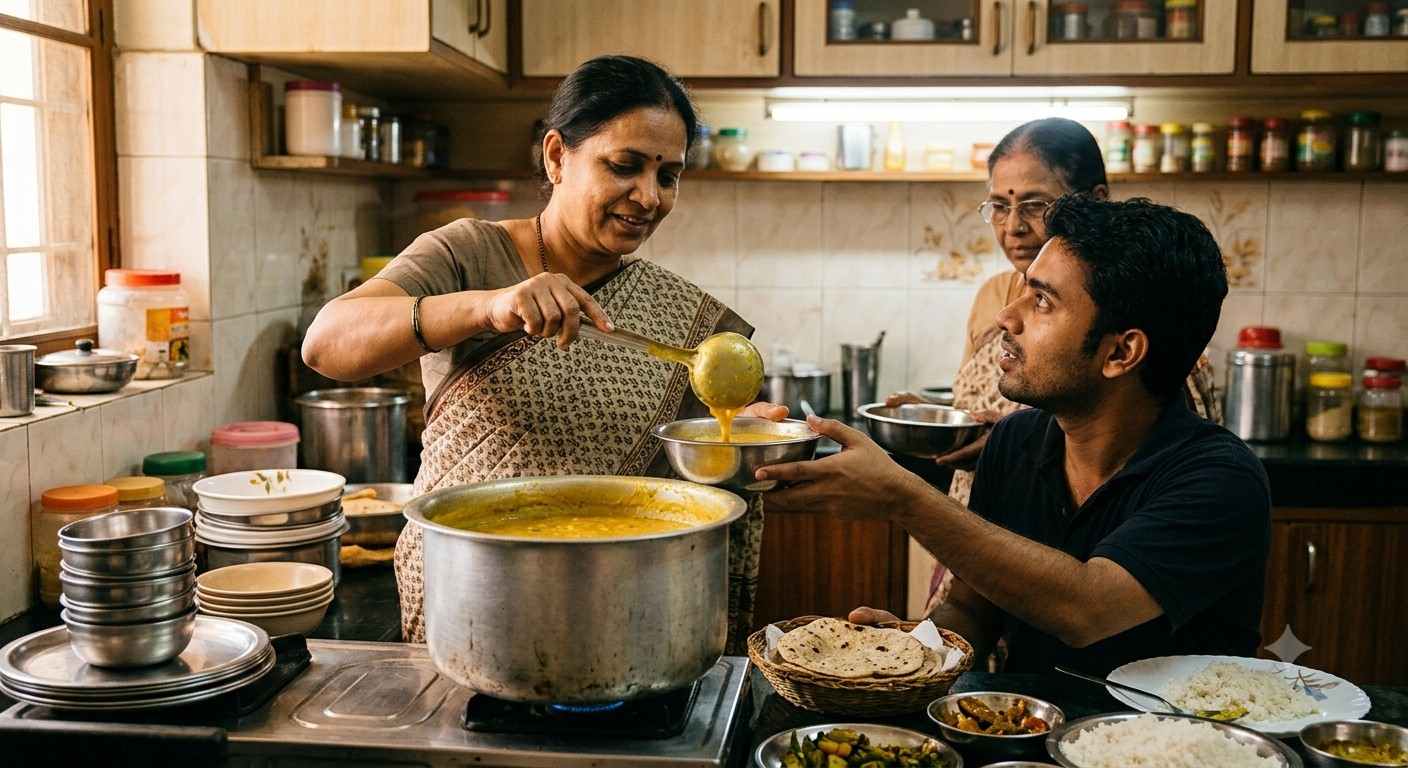
Reclaiming the shared meal doesn't require restructuring your life. It requires making one deliberate decision: that some meals, on some days, will be eaten together, with conversation, without screens. Start with one. One meal per week that everyone commits to. Then build from there if the schedule allows.
The tradition of eating together is one of the oldest and most deeply human things we do. It has been eroded by convenience and technology, but it has not been replaced. The research suggests it cannot be — that some of what happens at a shared table simply cannot happen any other way.
The shared meal is one of the oldest forms of intentional living. Read our guide on how eating with attention changes everything and how the same intentionality applies to how you dress and live.
“Disclaimer: This content was created with AI assistance and reviewed before publication. It is for informational purposes only and not professional medical, nutritional, legal, or financial advice”