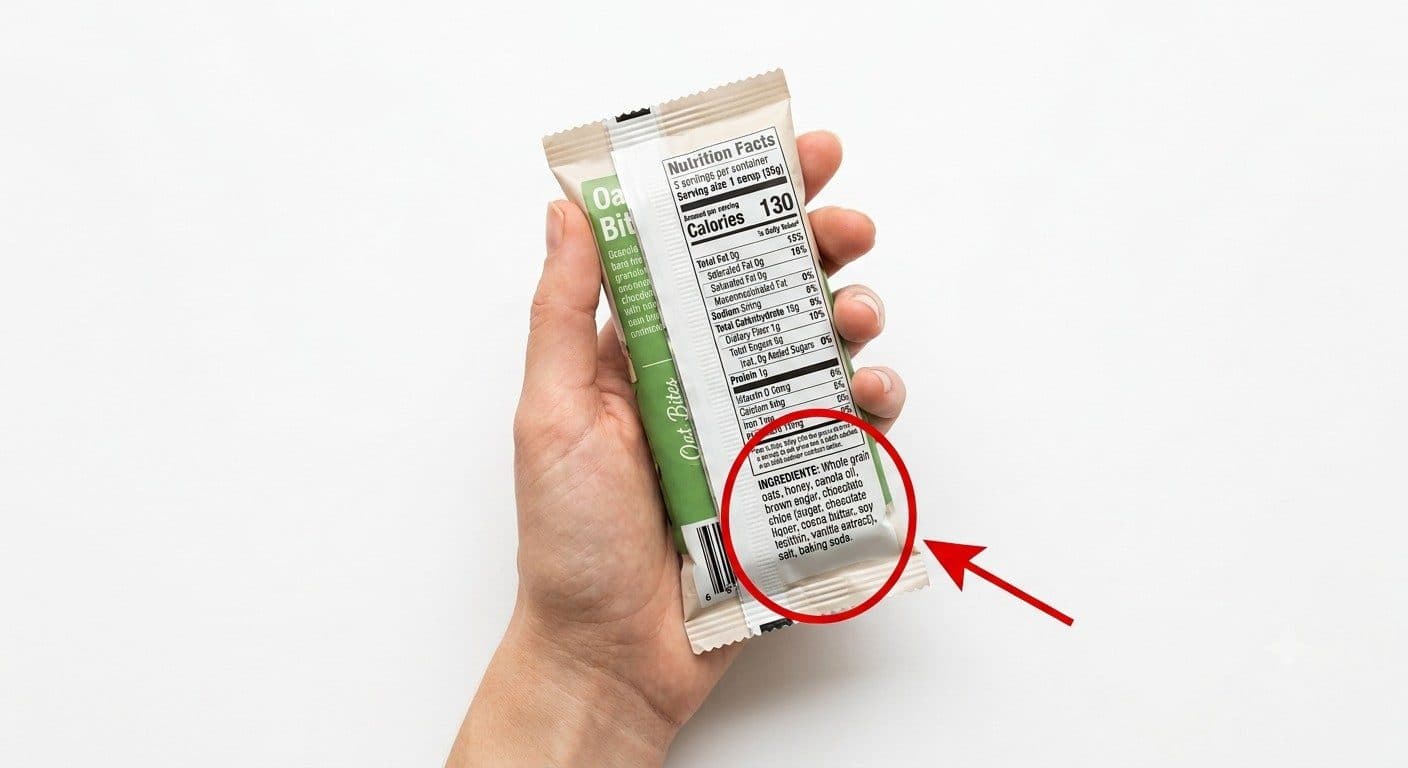
Most nutrition advice focuses on what to eat. Which foods, which nutrients, which combinations. And this matters — the composition of what you eat significantly affects your energy, your digestion, and your long-term health. But there's a layer beneath the what that most people never address. And it has a larger effect on how food makes you feel than most dietary changes do. It's how you eat. Specifically: whether you eat with your full attention or whether you eat while doing something else.
The Eating-Without-Attention Epidemic
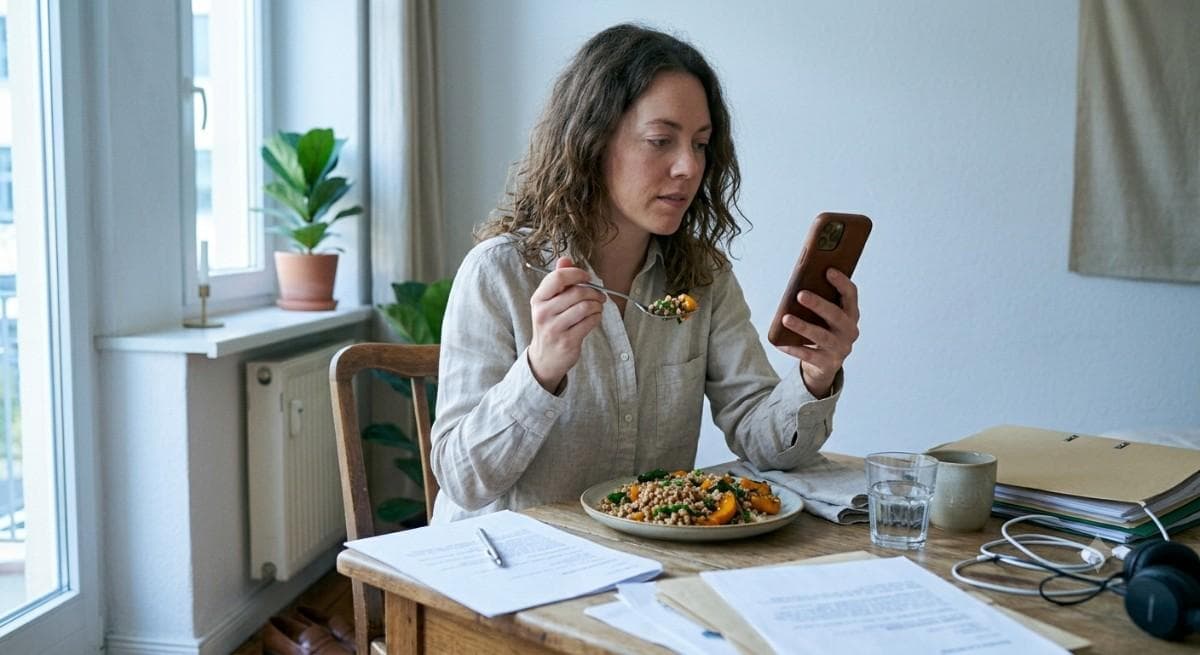
Think about the last few meals you ate. Were you:
- Eating while looking at your phone?
- Eating while watching something?
- Eating while working, reading, or scrolling?
- Eating standing up, in transit, or at your desk?
If any of these apply — and for most people, most of these apply to most meals — you were eating without attention. And this changes almost everything about how your body processes and responds to the food. This is not a modern moral failing. It's the logical consequence of how contemporary life is structured. Meals have been progressively deprioritised from a dedicated activity to a background function — something you do while the main event (work, content, communication) continues. The cost of this is larger than most people realise.
What Happens When You Eat Without Attention

Digestion begins in the brain.
The cephalic phase digestive response — a term for the suite of digestive processes that are triggered by the sight, smell, and anticipation of food — accounts for a meaningful portion of total digestive function. Saliva production, stomach acid secretion, enzyme release, and gut motility all begin before the first bite arrives in the stomach, triggered by sensory attention to the food. When you eat while distracted — eyes on a screen, attention directed elsewhere — this cephalic response is significantly reduced. Your digestive system receives food that it wasn't fully prepared to process. The result: slower digestion, more bloating, less efficient nutrient absorption, and more discomfort.
You eat faster and more.
Eating speed is regulated partly by attention to the act of eating. When attention is divided, the natural pacing cues — the sensation of each bite, the flavour, the texture — are bypassed. Studies consistently show that people eating while distracted eat faster, take larger bites, and consume 25–50% more calories than people eating with their full attention — from the same food, at the same hunger level. The satiety signals discussed in our guide on why you're always hungry after eating take 15–20 minutes to reach the brain. Eating fast while distracted means the entire meal is consumed before those signals arrive. Eating slowly with attention means the signals arrive before you've overeaten.
Food satisfaction is lower.
Pleasure from eating — which is a legitimate and important component of the experience — is almost entirely dependent on attention. The flavour, texture, and satisfaction of food perceived while distracted is dramatically lower than the same food eaten with attention. This creates a paradox: distracted eating produces less satisfaction while simultaneously producing more consumption. You eat more and enjoy it less.
The stress-digestion conflict.
The nervous system has two primary modes: sympathetic (active, alert, stress-responsive) and parasympathetic (rest, digest, restore). Digestion functions optimally in the parasympathetic state. Stress — including the mild, chronic stress of constant screen engagement — activates the sympathetic state and suppresses digestive function. Eating while in sympathetic activation — in front of a stressful email, during a difficult conversation, while watching upsetting news — produces measurably poorer digestive outcomes than the same food eaten in a calm state. The practice of eating with attention naturally produces a mild parasympathetic shift — a calming of the nervous system — that optimises digestive conditions.
The One Habit: Eat One Meal Per Day With Full Attention

The recommendation is not to completely restructure every eating experience. For most people with full-time jobs, families, and busy schedules, eating every meal in dedicated, distraction-free conditions isn't realistic. The recommendation is one meal per day, eaten with full attention. No phone. No screen. No reading. Just the food. This sounds simple to the point of being trivial. In practice, for most people, it requires a genuine effort for the first week — the pull to check the phone, to have something playing, to fill the silence is surprisingly strong. What most people notice within two weeks:
- That meal becomes the most satisfying eating experience of the day, despite often being the simplest food
- Hunger and fullness signals become clearer and more reliable
- Digestion from that meal feels noticeably better than from distracted meals
- The overall relationship with food across all meals shifts slightly — because the experience of eating with attention recalibrates what food satisfaction actually feels like
How to Do It
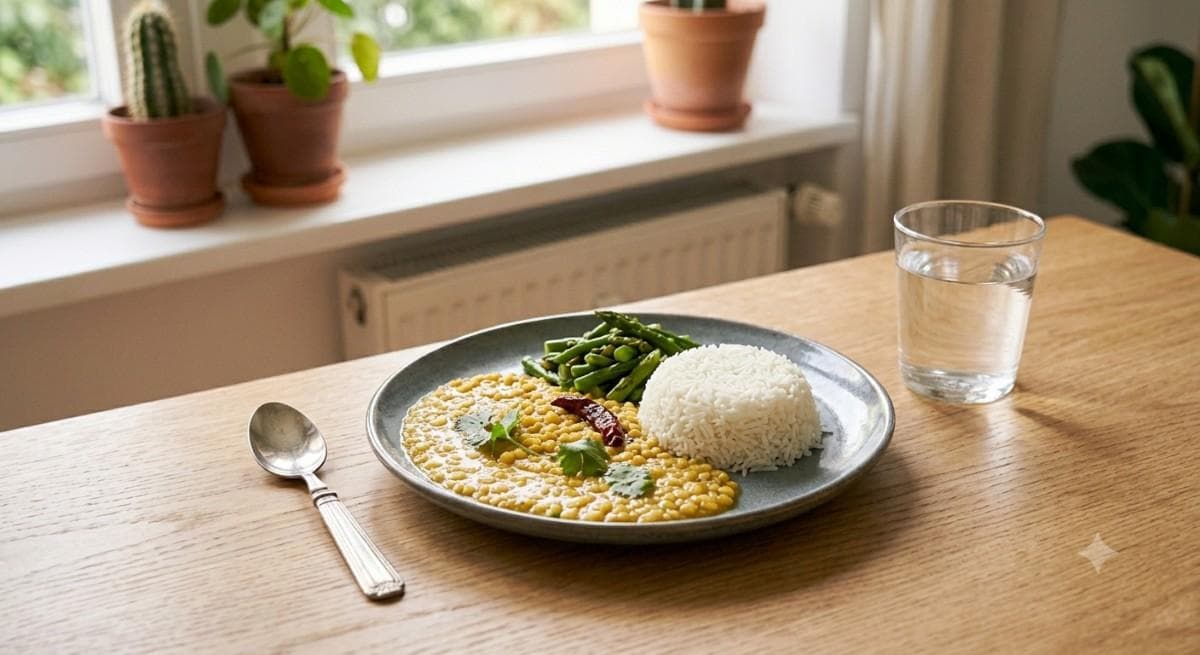
Choose the easiest meal to protect. For most people, this is lunch on working days — a break that can be taken away from a desk. Or breakfast, before the day's demands arrive. The meal that requires the least effort to make distraction-free is the best starting point. Sit down. Not at your desk. Not standing at the counter. Somewhere that signals a separation from work or screens. Take the first bite before picking up your phone. This single act — beginning to eat before any screen is involved — makes the transition to attentive eating significantly easier. The phone-at-meals habit is strongest in the transition moment. Once you've taken the first bite and placed attention on the food, the pull reduces. Eat slowly enough to taste each bite. Not ceremonially slowly — just at a pace where you're actually experiencing the food. Put your fork or hand down between bites if it helps. Chew fully. Notice what you're eating. Not analytically — you don't need to think about nutrients or macros. Simply notice the flavour, texture, and temperature of the food. This is the attention that activates the cephalic digestive response and produces genuine satisfaction. Let the meal take 15–20 minutes. This is the window in which satiety signals arrive. A meal that takes this long naturally produces better satiety than a meal inhaled in five minutes.
The Broader Principle

Eating with attention is an instance of a broader principle that runs through everything we explore at Arohm — the difference between doing something and doing something with intention. You can get dressed every morning automatically or you can choose with intention. You can end every day by defaulting to whatever fills the time or you can design the transition. You can eat every meal as a background activity or you can eat at least one meal as the main event. In each case, the activity is the same. The experience — and the outcomes — are entirely different. Attention isn't a grand gesture. It's a direction of focus, applied to ordinary moments. And the ordinary moments — the three meals, the getting dressed, the ending of the day — are where most of life actually happens.
Starting Tomorrow
Pick one meal. Put your phone face-down before you take the first bite. Eat the meal. That's the entire habit. Do it tomorrow. Then the day after. Within two weeks, you'll notice a difference — not because you changed what you ate, but because you changed how you were present for it.
“Disclaimer: This content was created with AI assistance and reviewed before publication. It is for informational purposes only and not professional medical, nutritional, legal, or financial advice”