At some point, most people have had the experience of deciding to change something significantly. A full lifestyle overhaul. A new exercise regime starting Monday. A dietary reset. A complete restructuring of how the day is spent. And most people have also had the experience of what happens next. The first week goes well. The second week encounters friction. By the third week, the old patterns have reasserted themselves, and the change that felt so certain has dissolved into a vague intention to try again sometime.
The Wrong Model of Change
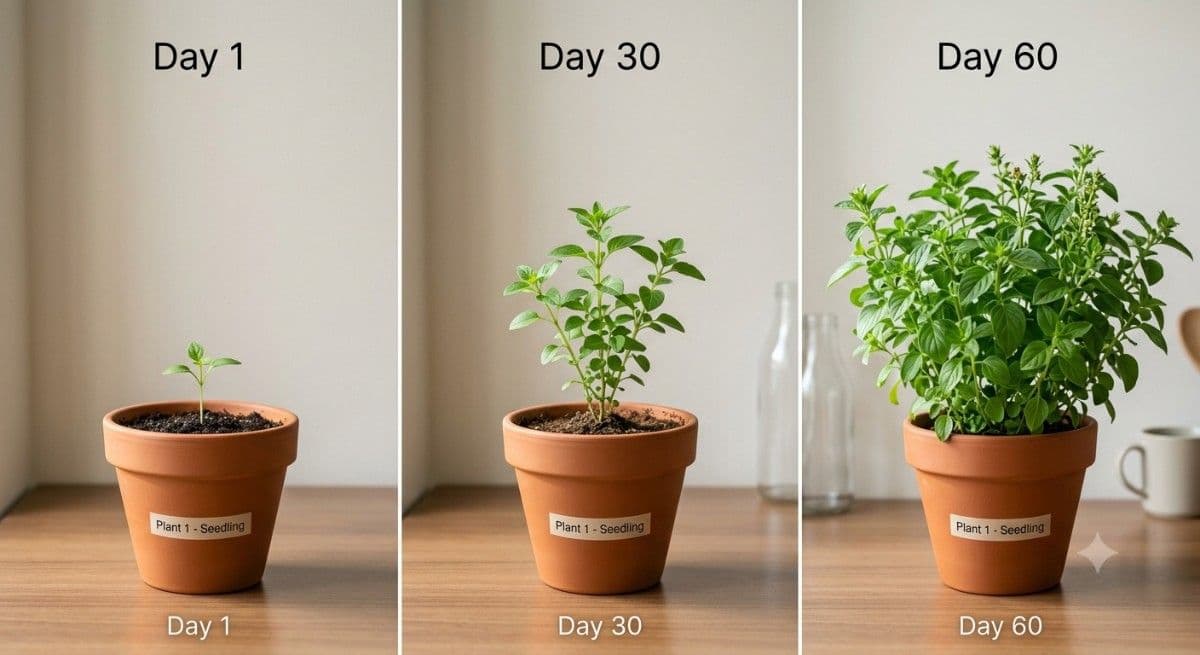
The dominant mental model of meaningful change looks something like this: you identify what needs to change, you make a strong decision, you apply significant effort, and the change happens. The bigger the effort, the bigger the change. This model has an intuitive appeal it maps onto how we think about physical effort (lift heavier, get stronger). But it doesn't describe how behavioural change works. Behavioural change is not responsive to intensity. It is responsive to repetition. A single large effort - running a marathon when you haven't been running, doing a three-day juice cleanse, reorganising your entire wardrobe in one afternoon produces a temporary state change but not a lasting one. The effort is unrepeatable, the body and mind snap back toward their established patterns, and the change doesn't hold. What produces lasting change is a different input entirely: a small action, taken consistently, over a sufficient period of time. Not impressive. Not dramatic. Reliable.
The Science of Habit Formation

Neuroscience has clarified why consistency produces change in ways that intensity doesn't. Repeated behaviours create and strengthen neural pathways the physical structures in the brain that make certain responses automatic. The more a behaviour is repeated, the more efficient and automatic its neural pathway becomes. This is the mechanism behind habit: a behaviour that has been repeated enough times to have a strong, efficient neural pathway requires minimal conscious effort or decision-making to execute. It simply happens triggered by context, executed automatically, requiring no motivation. The building of this pathway requires repetition across time. A behaviour performed once, even with great effort and conviction, creates minimal structural change in the brain. A behaviour performed daily for thirty to sixty days creates measurable changes in neural architecture - the beginning of a genuine habit. This is why the size of the action matters far less than its consistency. A two-minute action performed every day for sixty days has created more neural pathway change than a two-hour action performed once.
Compounding: The Return on Consistent Small Actions
The mathematician's concept of compound interest where returns accumulate not just on the original investment but on all previous returns describes how consistent habits produce results over time. A small daily action produces a small result on day one. On day two, it produces a small result that builds on the previous day's foundation. By day sixty, the accumulated effect is not sixty times the day-one result it is significantly larger than that, because each day's result rested on a slightly improved baseline. James Clear, whose work on habit formation has been widely validated by research, describes this as the 1% improvement principle: an improvement of 1% applied consistently over a year produces a 37-fold improvement - not 3.65-fold, not proportional to the effort, but exponentially greater because of compounding. a The reverse is also true. A 1% daily deterioration slightly later bedtime, a slightly less nutritious meal, a slightly shorter focus period compounds over a year into a dramatically worse baseline. The direction of the small daily action matters enormously over time.
Why Motivation Is the Wrong Foundation
Most people build their habits on motivation - the emotional state of wanting to do something. This produces a fundamental fragility, because motivation is a fluctuating state. It is high after a compelling article, a difficult health scare, or a new year. It is low on a tired Tuesday after a difficult day. A habit that depends on motivation will only be practised when motivation is present which is not consistently, which means the neural pathway isn't built, which means the habit doesn't become automatic, which means it always requires motivation. The escape from this cycle is building habits that don't depend on motivation. This is achieved through two mechanisms:
- Environment design. Making the desired behaviour the path of least resistance, regardless of motivation level. The running shoes by the bed. The notebook on the pillow. The phone in another room. The batch-cooked dal in the fridge. When the environment makes the right action easier than the wrong one, motivation becomes irrelevant - the behaviour happens because it's simply what's there.
- Identity alignment. Motivation asks "do I feel like doing this today?" Identity asks "is this what someone like me does?" The person who identifies as someone who walks every morning doesn't deliberate about whether to walk - they walk, because it's part of who they are. Building identity around behaviours - "I'm someone who cooks at home," "I'm someone who reads before bed," "I'm someone who wears natural fabric" produces consistency that motivation never can.
The Specific Habits Worth Building Consistently

- Sleep consistency. Going to sleep and waking at the same time even on weekends - is the single habit with the widest cascading effect on every other aspect of health and performance. It regulates cortisol, improves focus, stabilises mood, and supports the consolidation of every other habit being built.
- The daily walk. Twenty to thirty minutes of walking preferably without earphones, preferably outside reduces anxiety, improves mood, supports cardiovascular health, and creates the processing space discussed in our focus guide. The barrier to entry is minimal. The returns are disproportionate.
- The evening preparation. As explored in our evening reset guide, ten minutes of deliberate end-of-day preparation one priority written, clothes laid out, tomorrow considered produces a meaningfully better morning. Done every night for sixty days, it becomes entirely automatic - taking no decision-making energy and producing consistent returns.
- One meal cooked at home daily. As explored in our cooking at home guide, the health and financial returns from cooking even one meal at home per day are substantial. The habit, built gradually, removes the decision energy from the equation and makes home cooking the default rather than the effort.
- Intentional dressing. Choosing a small, coherent wardrobe and maintaining it reduces the daily friction of getting dressed to near zero. Once the wardrobe is right, the habit of dressing intentionally requires no ongoing effort - it's simply what happens each morning.
How to Actually Build a Consistent Habit

- Start smaller than feels meaningful. The impulse is to start with an action large enough to feel significant. The effective approach is to start with an action so small it cannot be failed a two-minute journal entry, a five-minute walk, one glass of warm water in the morning. The point is the repetition, not the magnitude. The action can grow once the repetition is established.
- Attach to an existing anchor. New habits attach most reliably to existing ones. "After I make my morning chai, I write one line in my notebook." "After I sit down to lunch, I put my phone face-down." The existing habit provides the cue. The new habit follows.
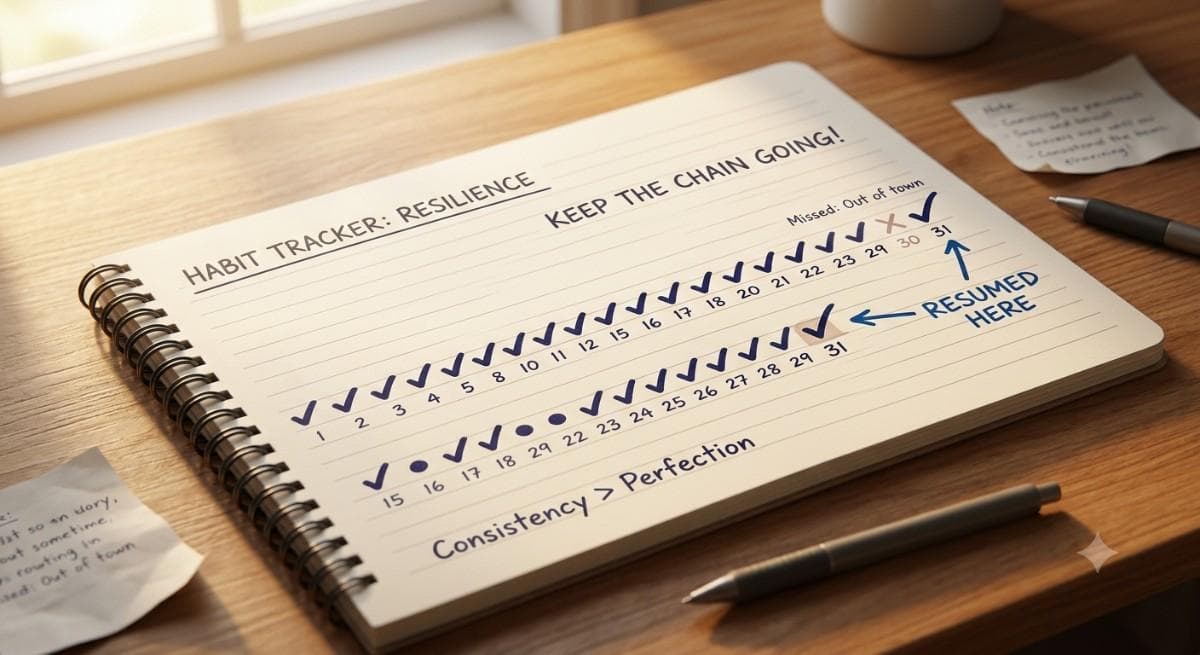
- Track simply. A visual record of consecutive days of a habit even a simple tick mark in a notebook creates a motivational feedback loop that supports consistency. Breaking the chain feels worse than not starting. This is the basis of the "don't break the chain" method and consistently appears in habit research as a low-effort consistency support.
- Expect and plan for failure. Missing one day is inevitable. The research is clear that missing one day does not meaningfully disrupt habit formation - what disrupts it is missing two days consecutively. The rule worth adopting: never miss twice. Miss a day, return the next day, continue.
The Long Game
The results of consistent small actions are almost invisible in the short term and dramatic in the long term. This is why most people underestimate them because the human mind is better at evaluating short-term outcomes than long-term ones. The person who walks every day looks the same after one week as they did before. After six months, they're different. After two years, they're unrecognisable to themselves in terms of cardiovascular health, mental wellbeing, and the naturalness with which the habit is performed. The person who reads for twenty minutes before bed looks the same after one week. After two years, they've read forty books they otherwise wouldn't have. The person who eats one home-cooked meal per day looks the same after one week. After two years, they've eaten approximately 700 meals that didn't contain excess sodium, refined oil, and hidden sugar. None of these actions feel significant in isolation. Together, compounded over time, they produce a life that looks and feels profoundly different from one built on occasional large efforts and long periods of inaction. Consistency is not glamorous. It is, however, the only reliable mechanism for lasting change. And once established, it requires less effort than the absence of it. Every guide on this site is about one thing: small, consistent choices that compound over time. Start with the evening that makes tomorrow better and the food that keeps your energy consistent every day.
“Disclaimer: This content was created with AI assistance and reviewed before publication. It is for informational purposes only and not professional medical, nutritional, legal, or financial advice”