For most of the last two decades, fast fashion won. It was cheap, it was available everywhere, and it looked decent in photographs. Synthetic blends flooded the market. Polyester became the default. A shirt that cost ₹399 seemed like a sensible choice. But something is shifting. Quietly, without much fanfare, a growing number of Indian men are moving back toward natural fabric — linen, cotton, hemp, and their blends. Not because of a trend, but because of a realisation that took most of them a few years of uncomfortable summers to arrive at.
The Climate Makes the Decision
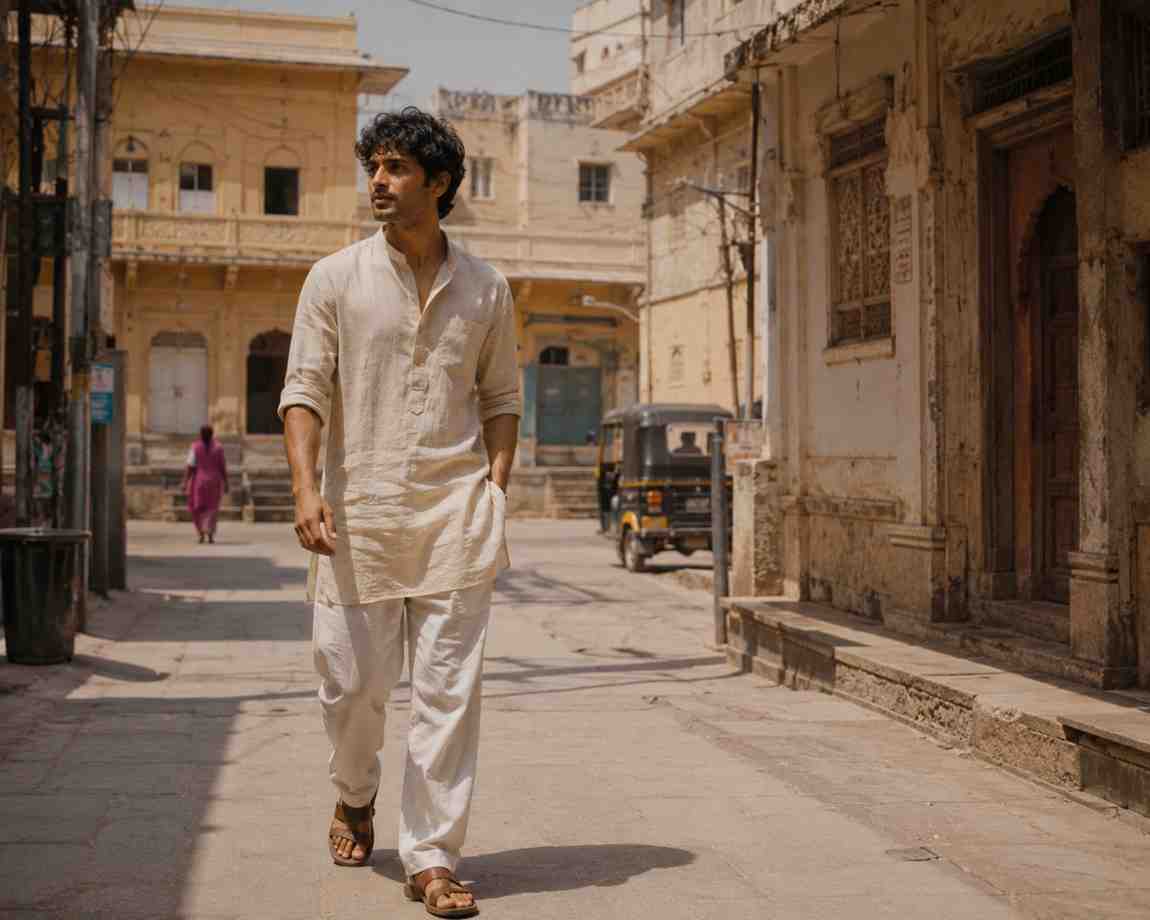
India has one of the most demanding climates for clothing in the world. Summers that push past 40°C. Humidity that makes even mild temperatures feel oppressive. A monsoon season that means constant moisture in the air. In this climate, synthetic fabric is genuinely uncomfortable. Polyester and its blends trap heat against the skin, restrict airflow, and hold onto moisture without releasing it. By mid-morning in an Indian summer, a synthetic shirt feels like a warm, damp layer you can't take off. Natural fabrics were the original answer to this problem — and they still are. Linen and hemp are breathable at a structural level, with fibres that allow air to move through the weave. Cotton wicks moisture away from the skin. These fabrics were worn across the subcontinent for thousands of years before synthetic alternatives existed, for the simple reason that they work. The return to natural fabric among Indian men isn't nostalgia. It's the recognition that what worked for centuries in this climate works now too — and that the synthetic shortcut was never actually an improvement.
The Kurta Knew What It Was Doing
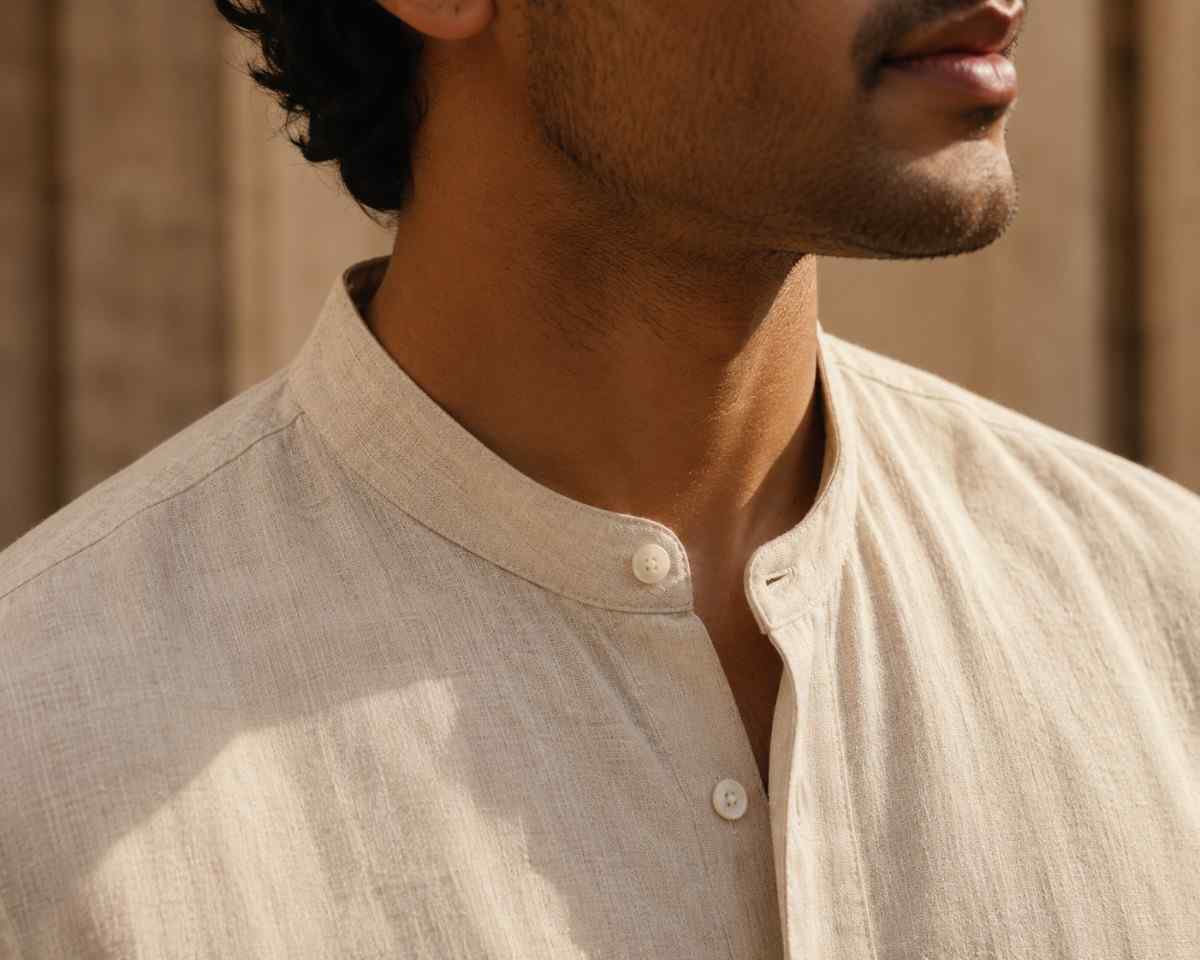
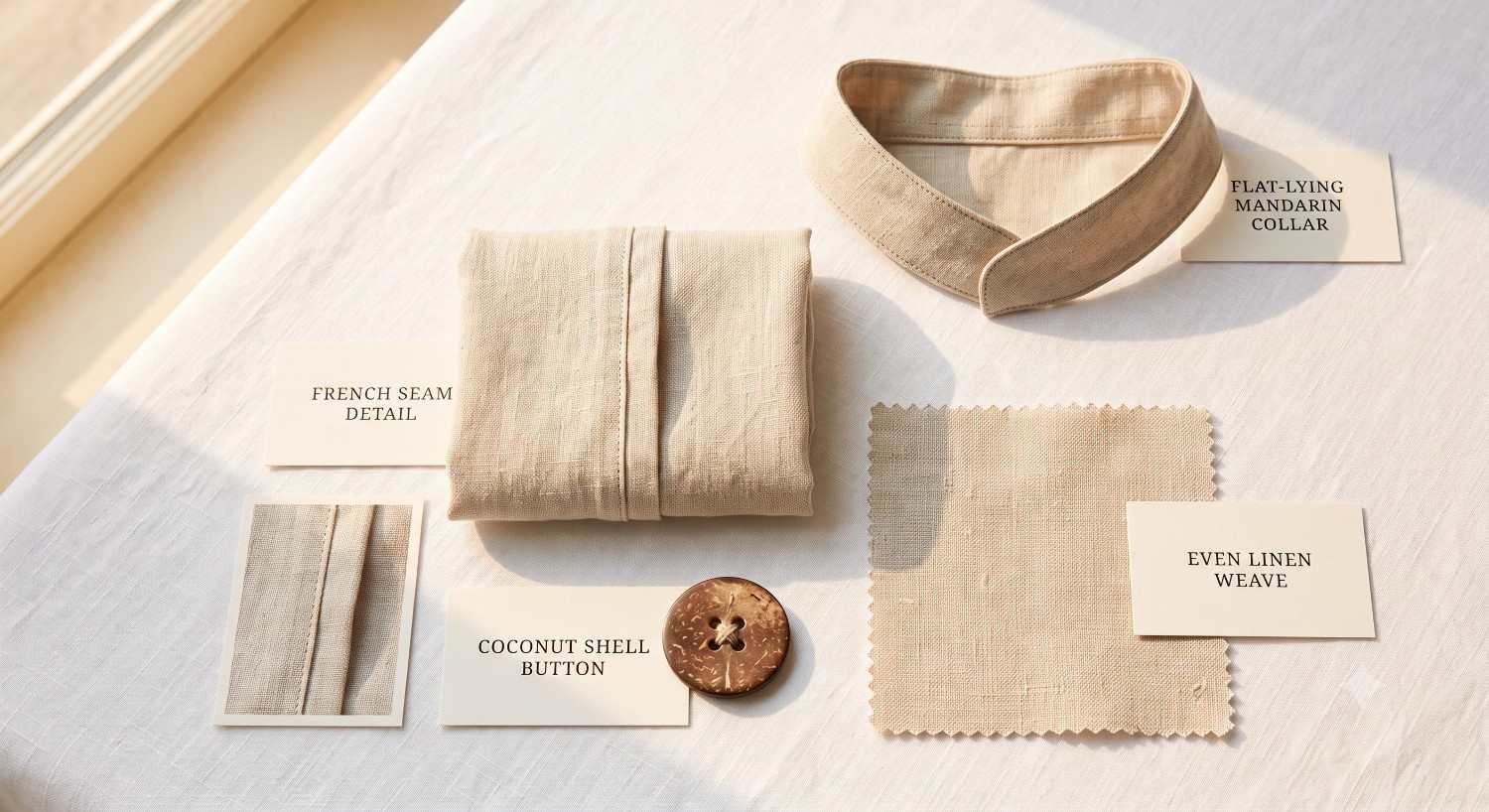
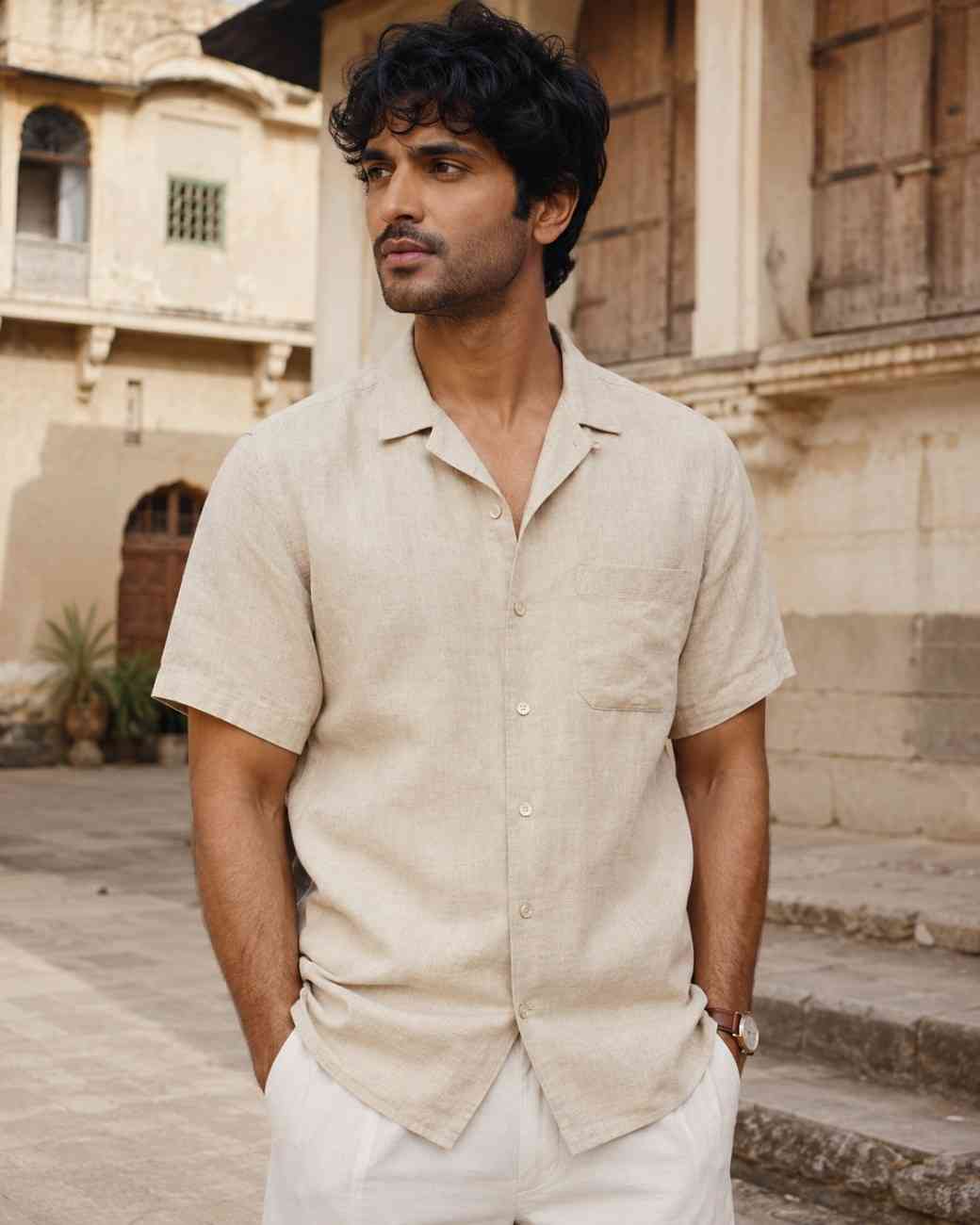
The traditional Indian kurta — typically made in cotton or linen — is one of the most intelligently designed garments for hot weather anywhere in the world. The loose silhouette allows air circulation around the body. The length protects the legs from sun. The fabric breathes. The mandarin collar, common in many traditional Indian shirt styles, evolved in part because a full Western collar traps heat around the neck — the one area where the body dissipates heat most efficiently. An open or minimal collar keeps that area free. These design choices weren't arbitrary. They were accumulated wisdom — generations of people dressing for the climate they actually lived in. Contemporary Indian menswear is increasingly taking this wisdom and translating it into modern cuts. The half-sleeve natural fabric shirt. The relaxed linen trouser. The open-collar summer shirt in hemp or cotton blend. These pieces carry the logic of traditional dressing inside a silhouette that works in a modern context.
What Younger Indian Men Are Choosing

The shift is most visible among men in their 20s and 30s — particularly in cities. The pattern tends to follow a similar arc: It starts with discomfort. A wardrobe of mostly synthetic shirts that feel fine in the morning and terrible by noon. The dawning realisation that what they're wearing is actively working against the climate they live in. Then discovery — usually linen first, because it's the most widely available natural fabric in Indian menswear. The first time a good linen shirt is worn on a hot day, the difference is immediate and physical. The second time, it's a choice. Then a gradual shift. Not an overnight wardrobe overhaul — but a slow migration toward natural fabric as synthetic pieces wear out and are replaced with intention. Fewer pieces. Better choices. A wardrobe that costs more per item but requires less of it.
The Sustainability Factor
There's a second reason for the shift — environmental awareness. India is one of the countries most directly affected by climate change. The connection between fast fashion's environmental cost and lived experience is becoming harder to ignore. Synthetic fabric production is energy-intensive and petroleum-dependent. Synthetic garments shed microplastics with every wash, eventually entering water systems. A polyester shirt takes hundreds of years to biodegrade. Natural fibres biodegrade completely. Hemp in particular is one of the most sustainable crops that can be grown — it requires minimal water compared to conventional cotton, no pesticides, and it actually improves soil health. Growing hemp absorbs more CO₂ per hectare than most trees. For Indian men who are thinking about these things — and increasingly they are — natural fabric isn't just the more comfortable choice. It's the more conscious one.
The Economic Shift
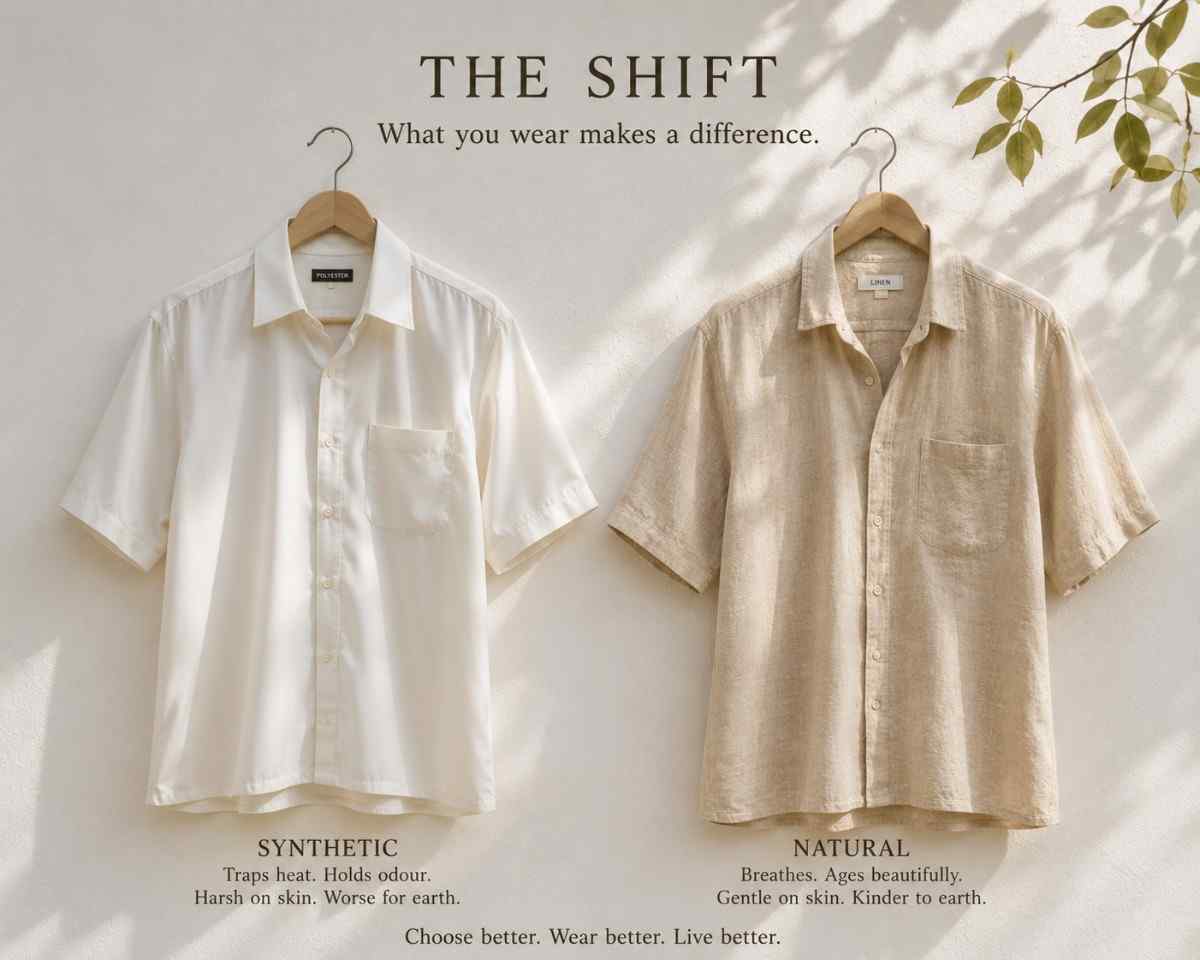
There's also a straightforward economic argument that's becoming clearer over time. A well-made natural fabric shirt costs more upfront than a synthetic equivalent. But it lasts longer — significantly longer. A good linen or hemp shirt, washed and cared for properly, can last five to eight years. A synthetic shirt at a third of the price typically degrades within eighteen months to two years. Calculated over time, the natural fabric shirt is cheaper. This is a calculation more Indian men are making — and it's changing what they're willing to s
What This Looks Like in Practice
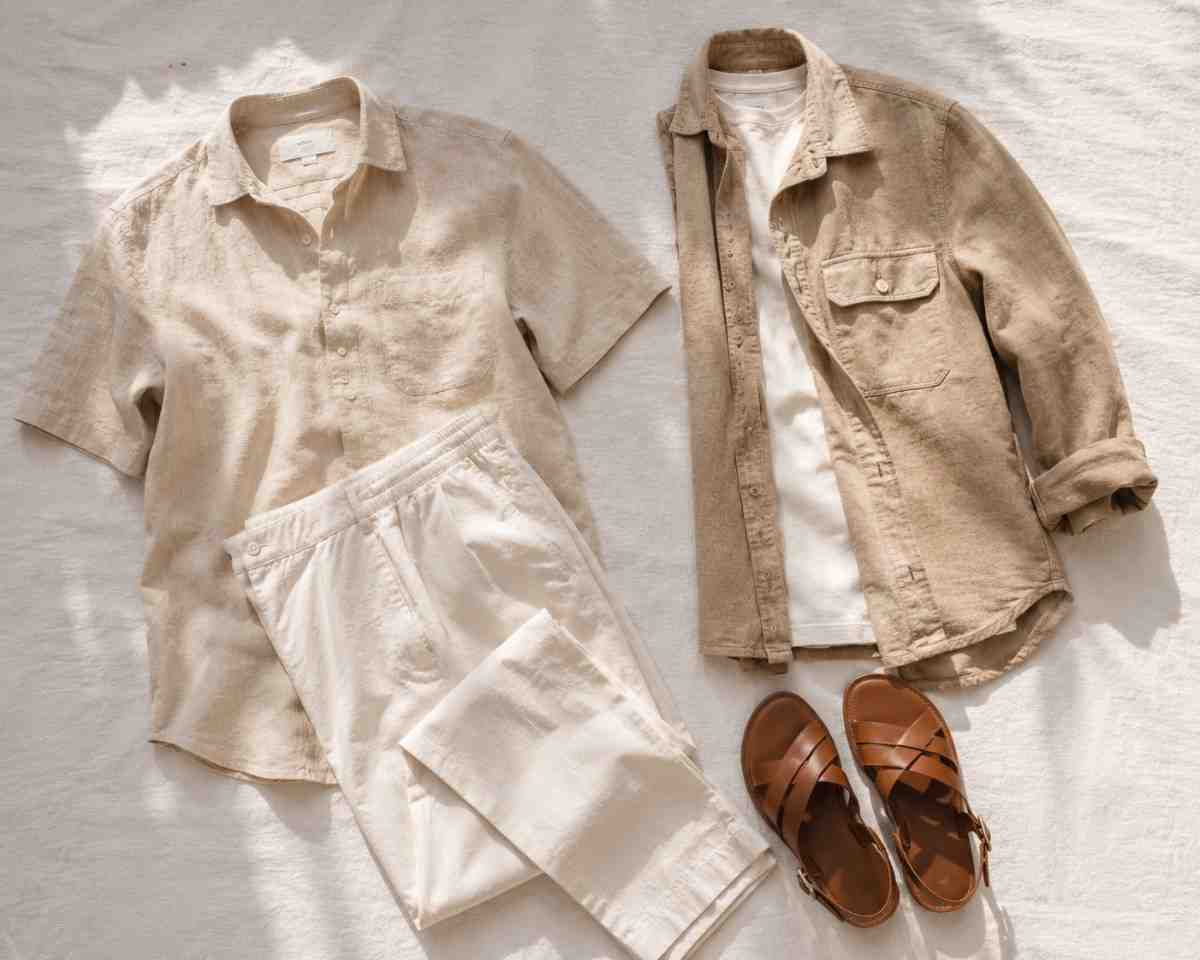
The men making this shift aren't building elaborate wardrobes. They're building smaller, better ones. The typical pattern:
- Two or three natural fabric shirts that rotate through the week
- A pair of linen or cotton trousers that work from work to weekend
- One well-made layering piece for cooler months
- Footwear that doesn't undermine the rest
That's it. A wardrobe that takes up less space, requires less decision-making, and feels genuinely good to wear every day in the climate they actually live in.
The Return That Isn't Really a Return
Calling this a return to natural fabric implies that Indian men ever fully left it. Many didn't — particularly in smaller cities and towns where synthetic fast fashion penetrated less deeply, and where traditional cotton and linen dressing remained the norm. What's happening in urban India now is a convergence. The men who moved away from natural fabric coming back to it. The men who never left it being joined by a new generation making the same choice. And a growing set of Indian clothing brands responding to that demand with natural fabric pieces designed for the way Indian men actually live. The climate made the case first. The comfort confirmed it. And the growing awareness of what you put on your body — and where it comes from — is making it permanent.
““Disclaimer: This content was created with AI assistance and reviewed before publication. It is for informational purposes only and not professional medical, nutritional, legal, or financial advice””