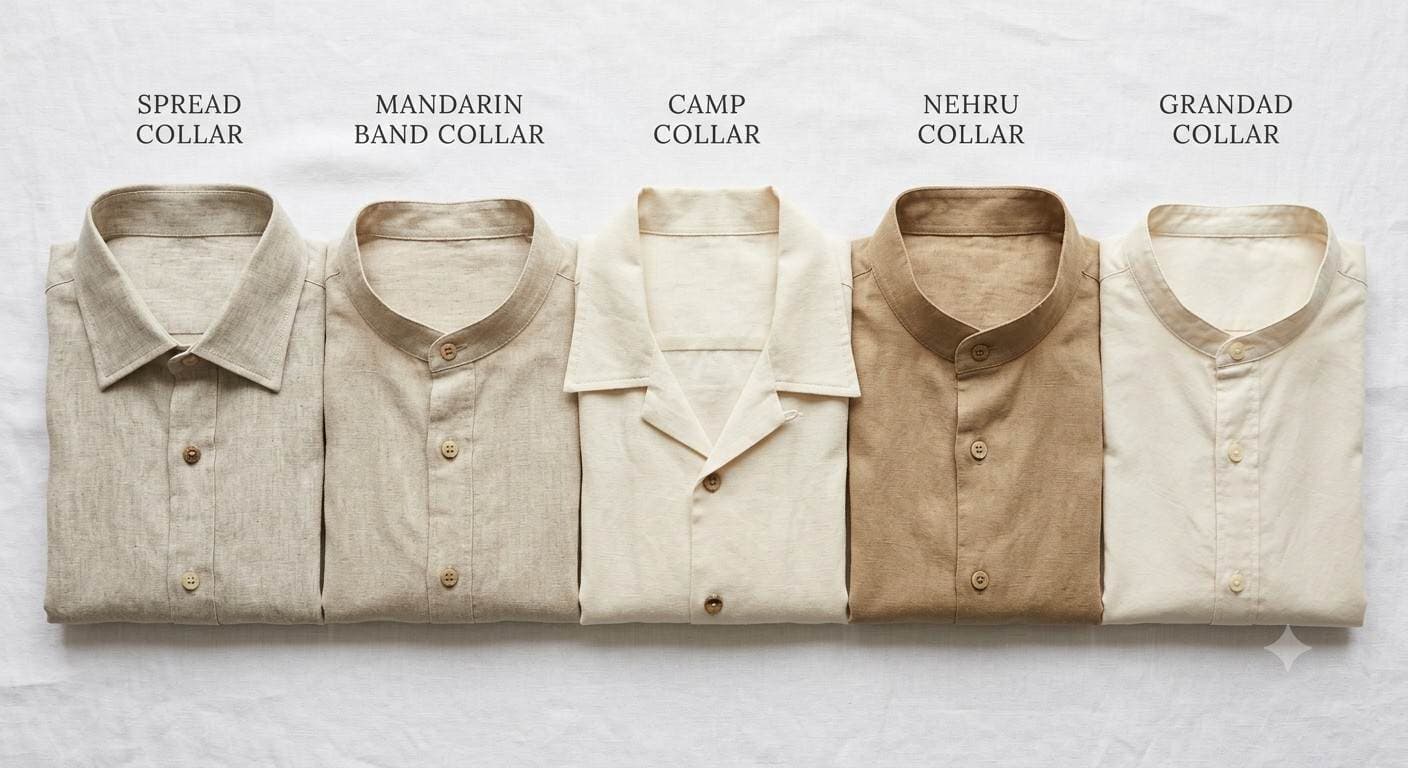
Of all the design elements on a shirt, the collar has the most influence on how the garment — and by extension, the person wearing it — looks and reads. It frames the face. It determines how the shirt works with or without a jacket. It communicates formality or ease. And it has a direct, often overlooked effect on comfort in heat.
The Full Spread / Classic Collar
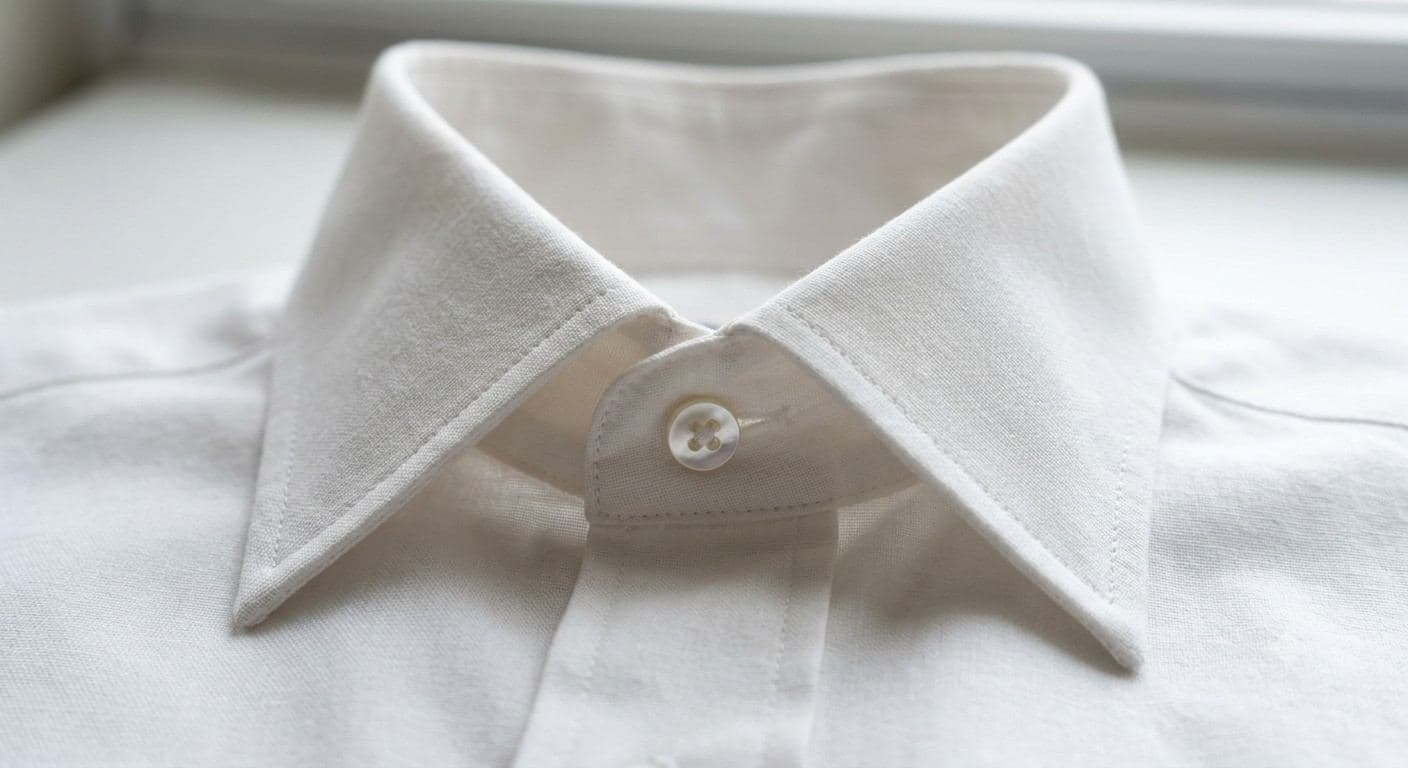
- What it looks like: The most familiar Western shirt collar two collar points separated by a gap that varies from moderate (traditional spread) to wide (cutaway). The points fold down and lay flat against the chest.
- What it communicates: Formal, professional, Western in origin. Works best with a tie the spread accommodates a tie knot between the points. Without a tie, the unbuttoned collar can look slightly unresolved.
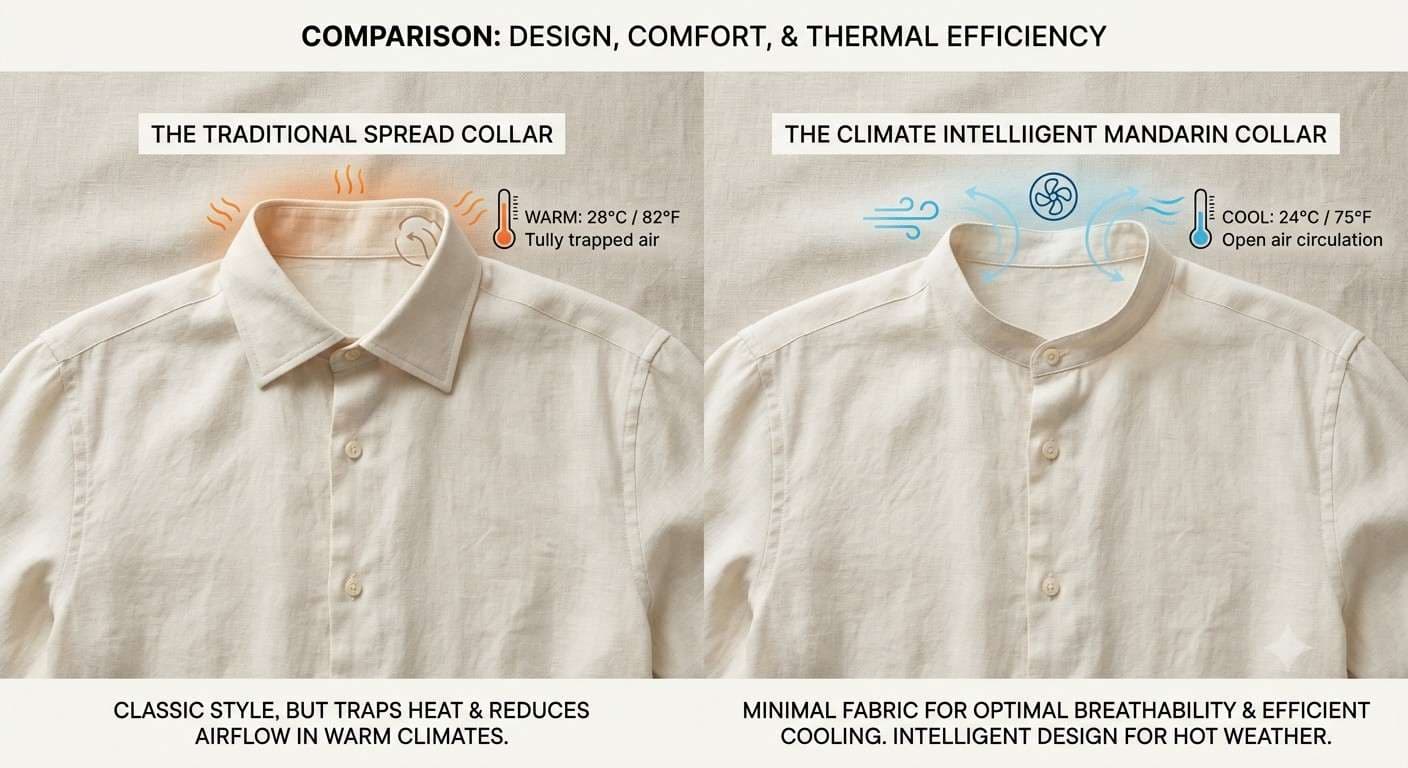
- Climate performance: Poor in heat. The fabric of the collar folds double around the neck, creating extra layers. Paired with a tie, this is four layers of fabric around the neck in an Indian summer a significant heat trap.
- Best for: Formal office environments, presentations, occasions requiring a tie. Less appropriate for everyday Indian wear in warm weather.
The Mandarin / Band Collar

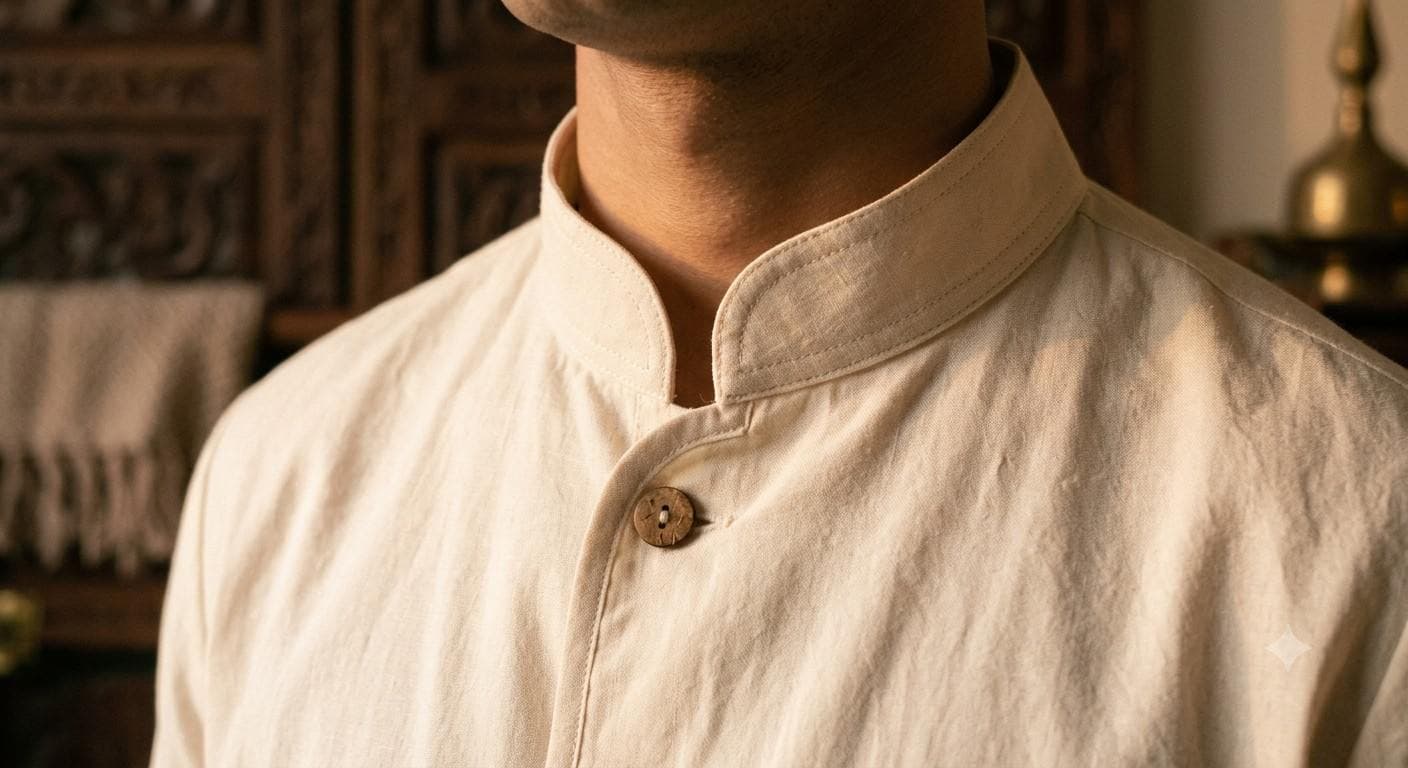
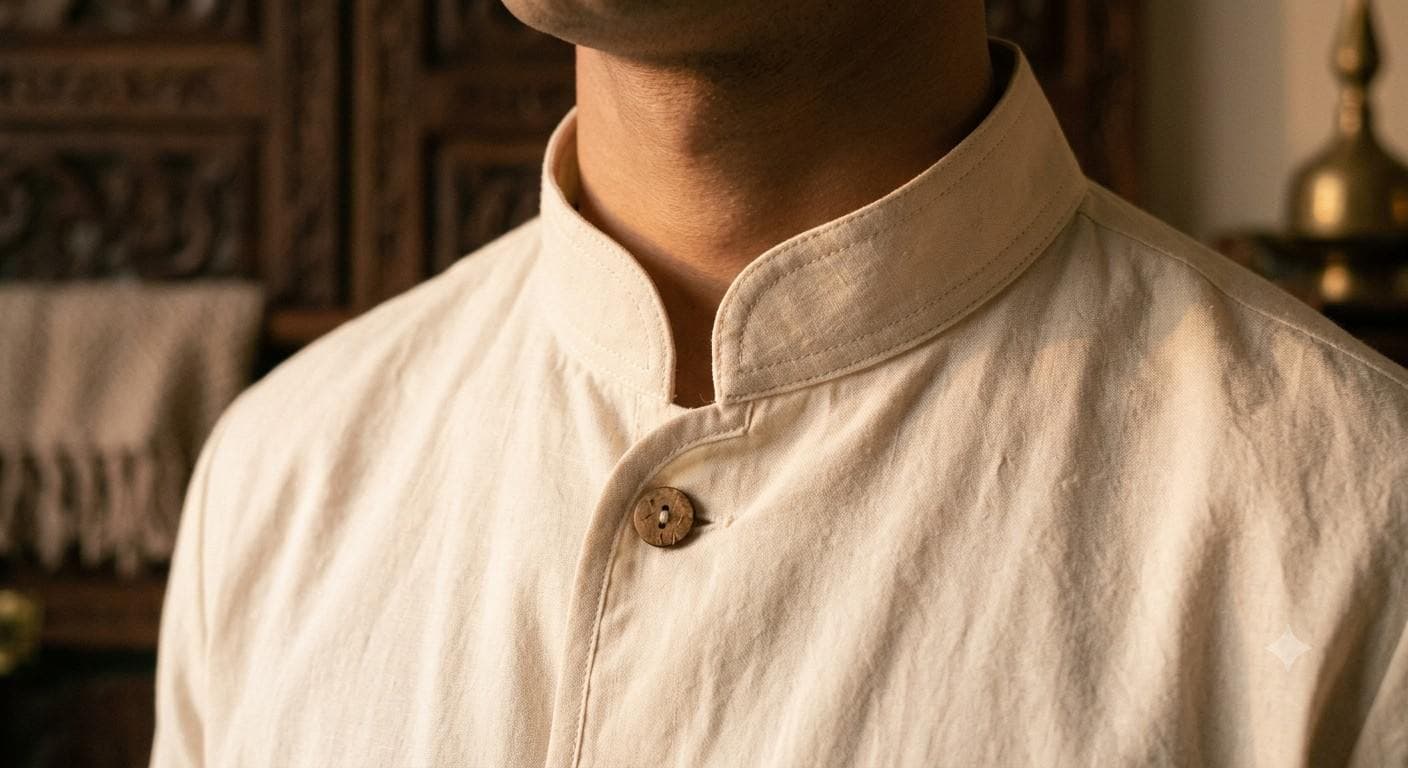
- What it looks like: A standing band of fabric, typically 2-4cm high, that encircles the neck without folding points. The collar closes at the front, usually with a button.
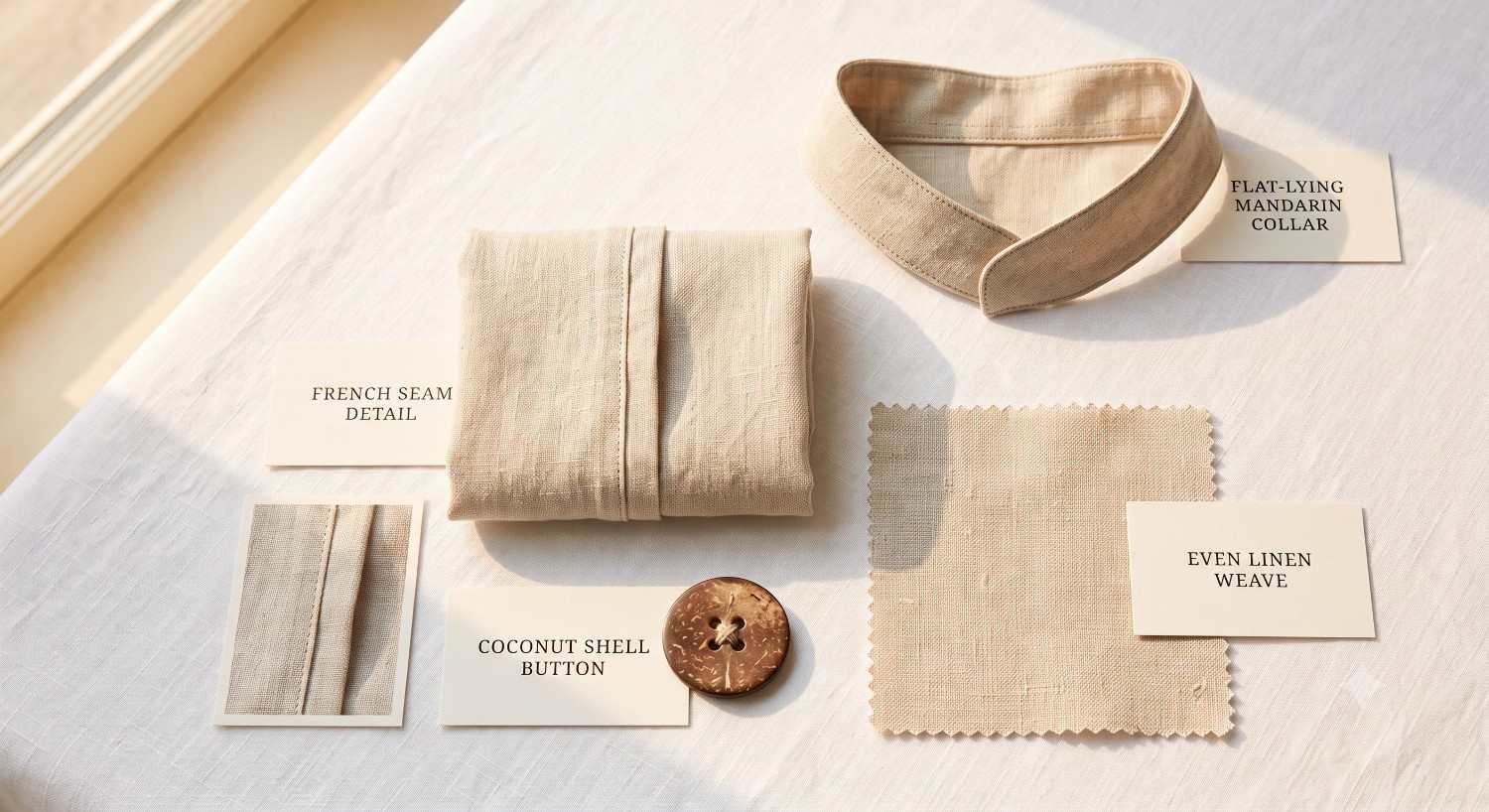
- What it communicates: Clean, minimal, modern. Associated with both traditional Indian dress (where it appears in various forms across regional clothing traditions) and contemporary minimal fashion. Neither formally Western nor traditionally Indian it occupies its own space.
- Climate performance: Excellent. The band collar uses significantly less fabric than a full collar. More importantly, it keeps the neck the body's primary heat dissipation zone largely unobstructed. In Indian heat, this is the most intelligent collar design.
- Best for: Everyday Indian wear, warm weather, casual to smart-casual occasions. The mandarin collar reads differently across cultures in India it carries a cultural resonance that a Western collar doesn't.
The Camp Collar / Cuban Collar / Open Collar
- What it looks like: A collar with points that fold flat and wide, often extending partway down the chest. The collar is designed to be worn open it doesn't typically button at the neck. Often seen on short-sleeve shirts.
- What it communicates: Relaxed, casual, warm-weather ease. Associated with resort wear, leisurewear, and the particular aesthetic of unhurried summer dressing. In Indian context, it connects to a certain relaxed coastal sensibility.
- Climate performance: Very good. The open design leaves the neck completely free. The wide fold keeps the collar flat and away from the skin.
- Best for: Casual occasions, warm weather, weekend dressing. Works exceptionally well in natural fabric linen and cotton in particular where the fabric's natural drape complements the collar's relaxed character.
The Nehru Collar
The Collarless / Grandad Collar
- What it looks like: A shirt with no collar just a simple, finished neckline, usually with a small band and one or two buttons. The most minimal collar option available.
- What it communicates: Casual, relaxed, slightly bohemian. In India, this style connects to traditional kurta aesthetics many traditional kurtas have a minimal neckline without a formal collar structure.
- Climate performance: Excellent. The complete absence of extra collar fabric maximises airflow around the neck.
- Best for: Casual everyday wear, layering under an open jacket or overshirt, warm weather. Can look underdressed in contexts that require formality.
The Collar and the Face
One practical consideration beyond occasion and climate: how the collar frames the face. Wider spread collars with low points draw the eye outward can make rounder faces appear wider than flattering.
Higher, more upright collars the mandarin and Nehru draw the eye upward and elongate the neck, generally working well across face shapes.
The open camp collar with its wide flat points draws the eye down and outward - creating visual width at the chest, which can be either desirable or not depending on the body. None of these are rigid rules. But understanding how a collar directs the eye makes the difference between a shirt that looks right and one that always feels slightly off.
The collar is one design detail among many that separates a shirt that works from one that doesn't. Read our full guide on what quality actually looks like in clothing and how living simply connects to how you dress.
“Disclaimer: This content was created with AI assistance and reviewed before publication. It is for informational purposes only and not professional medical, nutritional, legal, or financial advice ”