
You've met this person. They seem to move through life at a different pace. Deadlines arrive and they're not scrambling. Difficult conversations happen and they're not reactive. Things go wrong and they respond rather than panic. The temptation is to attribute this to personality — to assume that some people are simply built calmer, that their nervous systems are different, that they don't feel the same pressures everyone else feels. This is almost always wrong. The calmest, most centred people are almost always the most disciplined. Not disciplined in the sense of rigid self-denial — but disciplined in the sense of consistent small decisions that, accumulated over time, remove most of the chaos that makes other people reactive. Their calm is not a given. It's constructed.
Where Calm Actually Comes From

Anxiety and reactivity — the opposites of calm — have identifiable causes. Understanding them reveals where calm is actually built. Unpreparedness. The most reliable producer of stress is the experience of being surprised by something that could have been anticipated. The meeting you forgot to prepare for. The deadline that crept up. The situation that required a decision you hadn't thought through. Disciplined people are rarely surprised by the predictable. They prepare. Not obsessively — but consistently. They know what's coming tomorrow before they sleep. They've thought through the conversation before it happens. This preparation doesn't eliminate difficulty, but it removes the compounding stress of being caught unprepared. Physical depletion. Poor sleep, inadequate nutrition, and the absence of movement are the physiological foundation of reactivity. A chronically tired, under-nourished, sedentary person has a lower threshold for everything — irritability, anxiety, overwhelm. The same situation that a well-rested, well-fed person handles calmly can overwhelm someone in a depleted state. The calm people you admire are almost always people who protect their sleep, eat in ways that sustain their energy, and move their bodies regularly. Not as grand health aspirations — as daily maintenance. The foundation of their calm is physiological. Accumulated decisions. Every unmade decision — the email you haven't replied to, the task you've been avoiding, the conversation you're dreading — sits in the background of your mind as a low-level stressor. Psychologists call this the Zeigarnik effect: the mind keeps incomplete tasks in active memory, producing persistent, background anxiety. Disciplined people close loops. They make decisions. They reply, address, resolve, or deliberately set aside. This is not about being constantly productive — it's about not carrying things that can be put down. Environmental chaos. As explored in our guide on owning less, the physical environment has a direct effect on mental state. A cluttered, disorganised environment maintains low-level cognitive load. The calm that comes from a clean, ordered space is not aesthetic — it's neurological.
The Habits That Build Calm
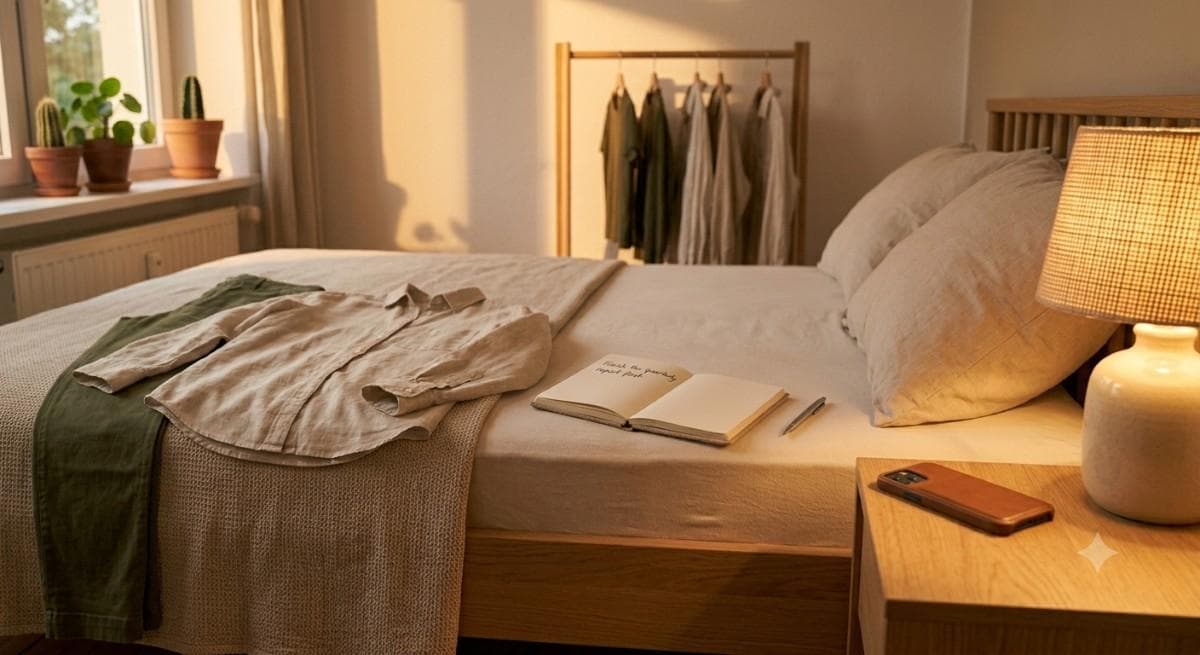
Calm is not maintained by trying to be calm in difficult moments. It's built through consistent habits that reduce the frequency and intensity of difficult moments — and develop the capacity to respond well when they occur anyway. The prepared night. The evening reset — a consistent routine of preparing for the next day — is one of the most powerful calm-building habits available. When you know what you're wearing tomorrow, what your priority is, and what's in the diary, the morning begins from a position of readiness rather than scramble. The scrambling morning is a factory for reactivity. The prepared morning produces calm before the day has properly started. Full guide to the evening reset here. The protected morning. The first thirty minutes of the day, before external demands arrive, sets the neurological tone for everything that follows. The person who starts their day reacting to notifications — other people's urgencies arriving before their own intentions are formed — will carry that reactive orientation throughout the day. The person who begins the day in their own pace, with their own first thoughts, has established a baseline of calm that is genuinely harder to disturb. Eating for stability. The connection between what you eat and how you feel emotionally is direct and often underestimated. Blood sugar instability — produced by the high-refined-carbohydrate, low-protein pattern most people eat — produces mood instability. The irritability, low frustration tolerance, and emotional reactivity that follow a blood sugar crash are not character flaws. They're physiological states. Eating for stable blood sugar is eating for emotional stability. Single-tasking. Multitasking — moving rapidly between tasks, having multiple things demanding attention simultaneously — is one of the most reliable ways to produce cognitive overwhelm. The mind that is always splitting its attention is always slightly underpowered for every task it's attempting. Single-tasking — giving one thing full attention before moving to the next — produces a sense of control and competence that is itself calming. The work is done better, the experience of doing it is less stressful, and the completion of tasks creates momentum. The deliberate wardrobe. This may seem peripheral to calm, but it isn't. The quality of the first decisions you make in the morning — including what to wear — sets a pattern. A morning that begins with clarity and ease (because the clothes are already chosen, because the wardrobe is coherent, because the process is simple) is a morning that starts with small experiences of competence. These accumulate. Conversely, a morning that begins with the low-level friction of "nothing to wear" — as explored in our five-minute wardrobe fix — starts with a small experience of chaos. These accumulate too. The regular walk. Walking — specifically walking without a destination, without earphones, without a purpose beyond the movement itself — is one of the most consistently well-evidenced interventions for reducing anxiety and increasing subjective calm. The bilateral movement of walking activates the same neurological processes as EMDR therapy. The absence of stimulation allows the default mode network to process accumulated experiences. Walking is free, requires no equipment, and produces measurable neurological effects within 10 minutes.
Calm Under Pressure
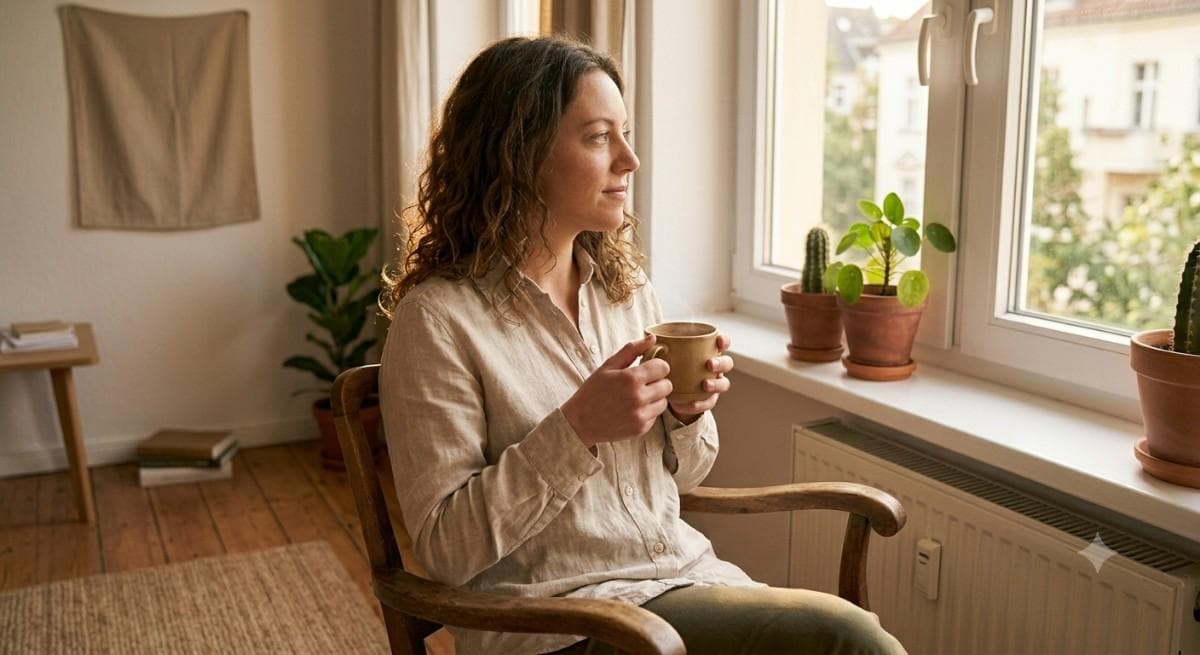
The habits above build a baseline of calm — a resting state that is less easily disturbed. But truly calm people also have a capacity to return to calm quickly when something does disturb them. This capacity is also built, not given. Breathing as an intervention. The breath is the only autonomic function that is also under voluntary control. Deliberately slowing and deepening the breath activates the parasympathetic nervous system within 60–90 seconds. This is physiological, not metaphysical. When a situation produces a stress response — heart rate rising, thoughts accelerating, the urge to react — a period of slow, deep breathing literally changes the neurological state before a response is made. The pause before response. Reactive behaviour — saying something regrettable, making a decision in anger, escalating a situation — almost always happens in the gap between stimulus and response. Expanding that gap — by pausing, breathing, and choosing a response rather than producing one automatically — is the practice of calm under pressure. The pause is a skill. It gets easier with practice. Perspective at speed. Calm people tend to quickly and automatically ask a question that most people don't: will this matter in a week? In a month? Most situations that feel urgent and overwhelming in the moment are neither significant nor unusual in any meaningful timeframe. This reframe doesn't minimise genuine difficulty — it correctly calibrates the response to proportionate rather than maximal.
The Discipline Nobody Talks About

Most discussions of discipline focus on the things you make yourself do. The early alarm. The difficult conversation. The deferred gratification. But there's an equally important discipline in what you choose not to do. Not checking the phone in the first hour of the morning. Not consuming news that produces anxiety without producing action. Not engaging with the conflict that isn't worth engaging. Not saying yes to the obligation that doesn't deserve your energy. This negative discipline — the consistent choice of what to leave out of your life — is where much of the calm that people admire is actually built. The most centred people are not those who do the most. They're those who've built systems that reduce unnecessary chaos, protect their physical and mental resources, and leave them with the capacity to be genuinely present for what actually matters. That's not a personality type. It's a set of practices. And practices can be adopted by anyone.
“Disclaimer: This content was created with AI assistance and reviewed before publication. It is for informational purposes only and not professional medical, nutritional, legal, or financial advice”