Your great-grandmother didn't have a nutritionist. She didn't need one. She ate what was growing in the fields around her, what the season offered, what the climate required. Without knowing the words phytonutrients, antioxidants, or immune support, she was eating in a way that provided all three — because the seasonal foods that grew in her environment were precisely the foods her body needed in that season. This is not coincidence. It is the accumulated intelligence of ecological adaptation, refined over thousands of years of human life in specific climates and landscapes. Seasonal eating is not a dietary trend. It is the original way of eating — and for most of human history, the only way. The argument for returning to it is not nostalgic. It is nutritional, ecological, and practical.
Why Seasonal Food Is Nutritionally Superior
Produce that is grown and eaten in season contains significantly higher concentrations of vitamins, minerals, and phytonutrients than the same produce grown out of season or transported long distances.
- The reason is simple: fruits and vegetables develop their nutrient content through the natural growing process — exposure to sunlight, temperature variation, and the biological signals of their native growing season. Produce harvested at peak ripeness and eaten shortly afterward contains the full complement of nutrients it developed through this process. Out-of-season produce is typically grown in controlled environments, harvested early to withstand long-distance transport, and stored for extended periods before sale. The nutritional content at the point of consumption is measurably lower than seasonal equivalents. Studies comparing seasonal and out-of-season produce consistently find 20-40% lower concentrations of key nutrients in out-of-season varieties.
- Cost reflects this reality. Seasonal produce is almost always cheaper than out-of-season alternatives — because it requires no artificial growing conditions, no extended storage, and no long-distance transport. Eating seasonally is both nutritionally optimal and economically sensible.
The Ayurvedic Principle — Eating for Your Environment

- The traditional Indian approach to food — rooted in Ayurvedic understanding — was always seasonal and local. The concept of ritucharya (seasonal regimen) in Ayurveda provides a detailed framework for how diet should shift with each season to support the body's changing needs.
- The underlying principle is that the body's constitution and requirements change with the seasons, and that the natural foods available in each season are precisely those that support the body through that season's specific challenges.
- This is not mysticism. It is observation accumulated over thousands of years — the recognition that mangoes appear in the heat of summer when the body needs their cooling, hydrating properties; that root vegetables come in winter when the body needs their warming, sustaining energy; that light, bitter greens arrive in spring when the body needs to cleanse after the heaviness of winter eating.
- Modern nutritional science largely confirms these traditional observations. The specific phytonutrients in seasonal produce align with the immune, digestive, and metabolic needs of the season in which they grow.
India's Four Eating Seasons
Summer (March–June)
The body's needs: Cooling, hydration, protection from heat. The digestive fire (agni) is naturally lower in intense heat — lighter, easier-to-digest foods are appropriate.
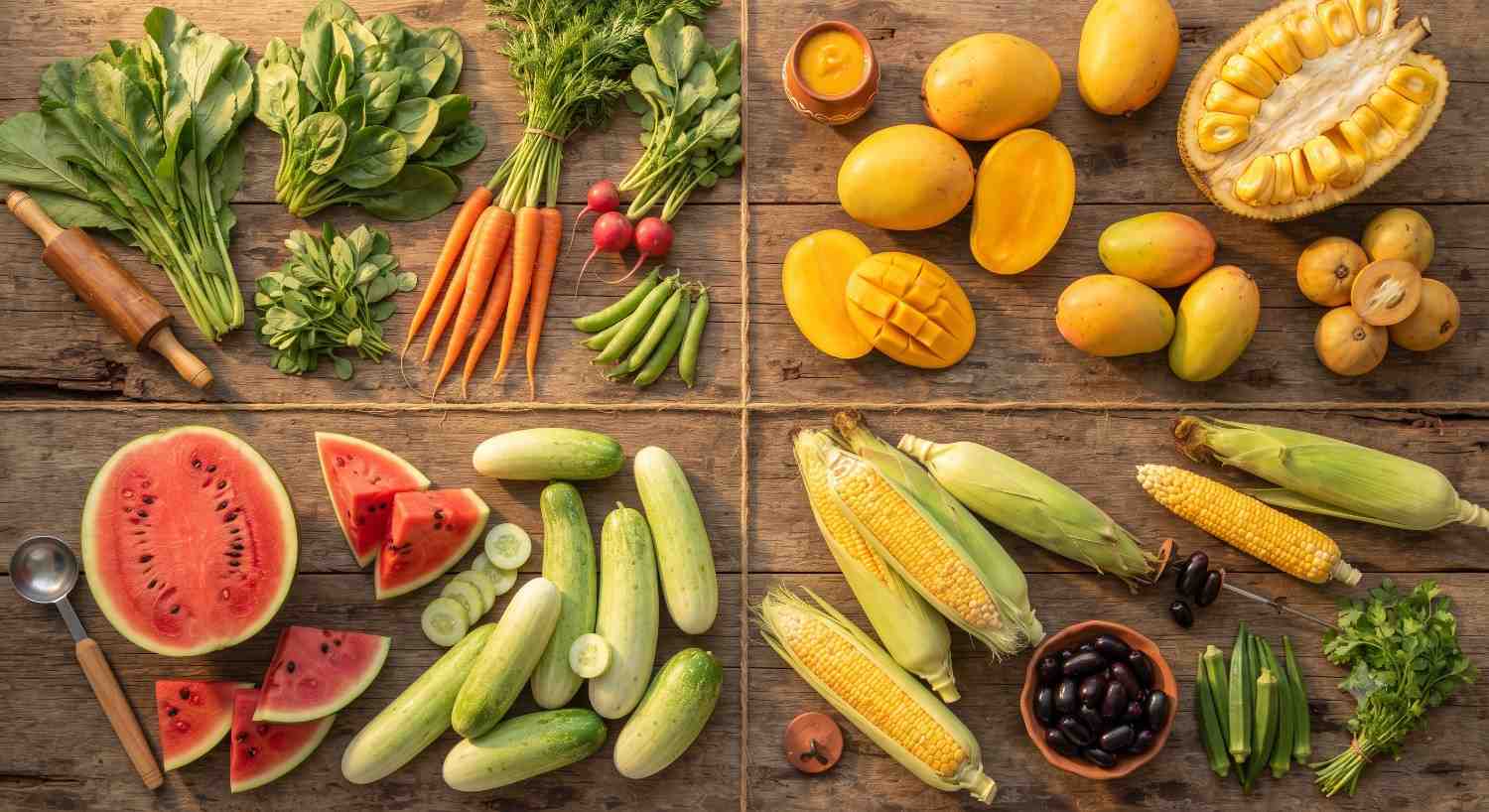
- What to eat: Raw mango (kachha aam) — cooling, rich in vitamin C, supports digestion and immunity in heat. Watermelon and muskmelon — exceptionally hydrating, electrolyte-rich, naturally cooling. Cucumber — over 95% water, cooling and anti-inflammatory. Kokum — a traditional cooling drink used across coastal India, rich in antioxidants. Coconut water — the most effective natural electrolyte replacement. Light dals — moong dal is particularly appropriate for summer as it is the easiest to digest.
- What to reduce: Heavy, oily preparations, excessive red meat, very spicy food — all of which generate additional internal heat.
Monsoon (July–September)
- The body's needs: Immune support, digestive strengthening, protection against waterborne illness. The monsoon is traditionally the season of lowest digestive capacity and highest vulnerability to infection.
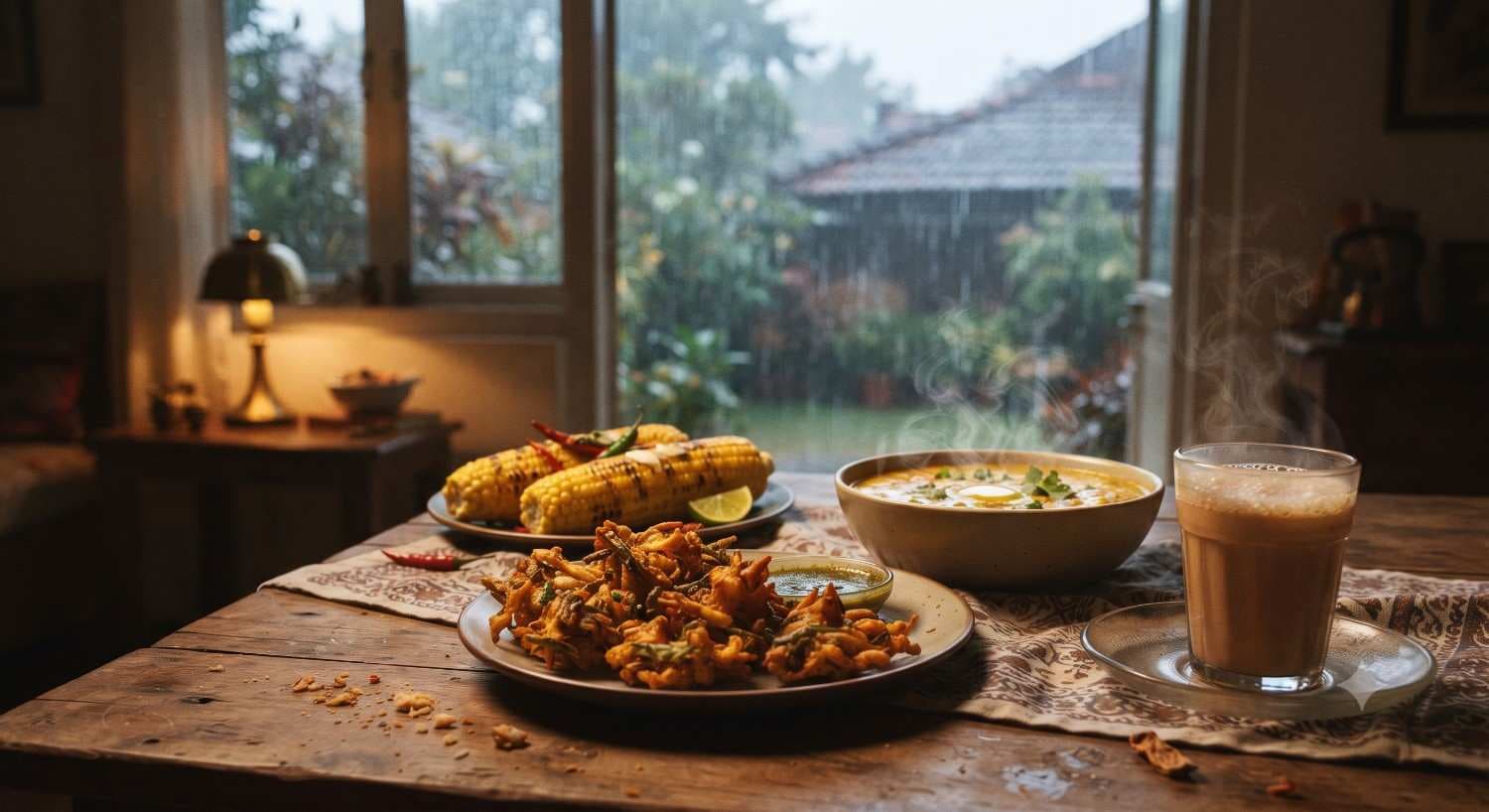
- What to eat: Ginger — warming and antibacterial, excellent for the digestive system during monsoon. Garlic — antiviral and antifungal, particularly valuable during monsoon months. Turmeric — anti-inflammatory and immune-supporting; the traditional haldi doodh is especially appropriate in this season. Cooked vegetables over raw — cooking kills waterborne pathogens and is easier on a monsoon-weakened digestive system. Ridge gourd, bitter gourd, cluster beans — traditional monsoon vegetables that support liver function and immunity.
- What to reduce: Raw leafy greens (higher contamination risk in monsoon), heavy fried food, street food from uncertain sources.
Post-Monsoon / Autumn (October–November)
- The body's needs: Rebuilding after monsoon. Digestive fire begins to strengthen. A transitional season where the body is moving from the lightness of monsoon eating toward the more sustaining foods of winter.
- What to eat: Pomegranate — rich in antioxidants, supports immunity as seasons shift. Sweet potato — warming, nutritious, easy to digest. Pumpkin and squash — available in abundance, rich in beta-carotene and fibre. Amla (Indian gooseberry) - the richest natural source of vitamin C, traditionally consumed in autumn as immune preparation for winter. Fresh turmeric available fresh in autumn, more potent than dried.
Winter (December-February)
- The body's needs: Warmth, sustained energy, immune support during cold and dry conditions. Digestive capacity (agni) is at its strongest in winter - the body can process heavier, more sustaining food.
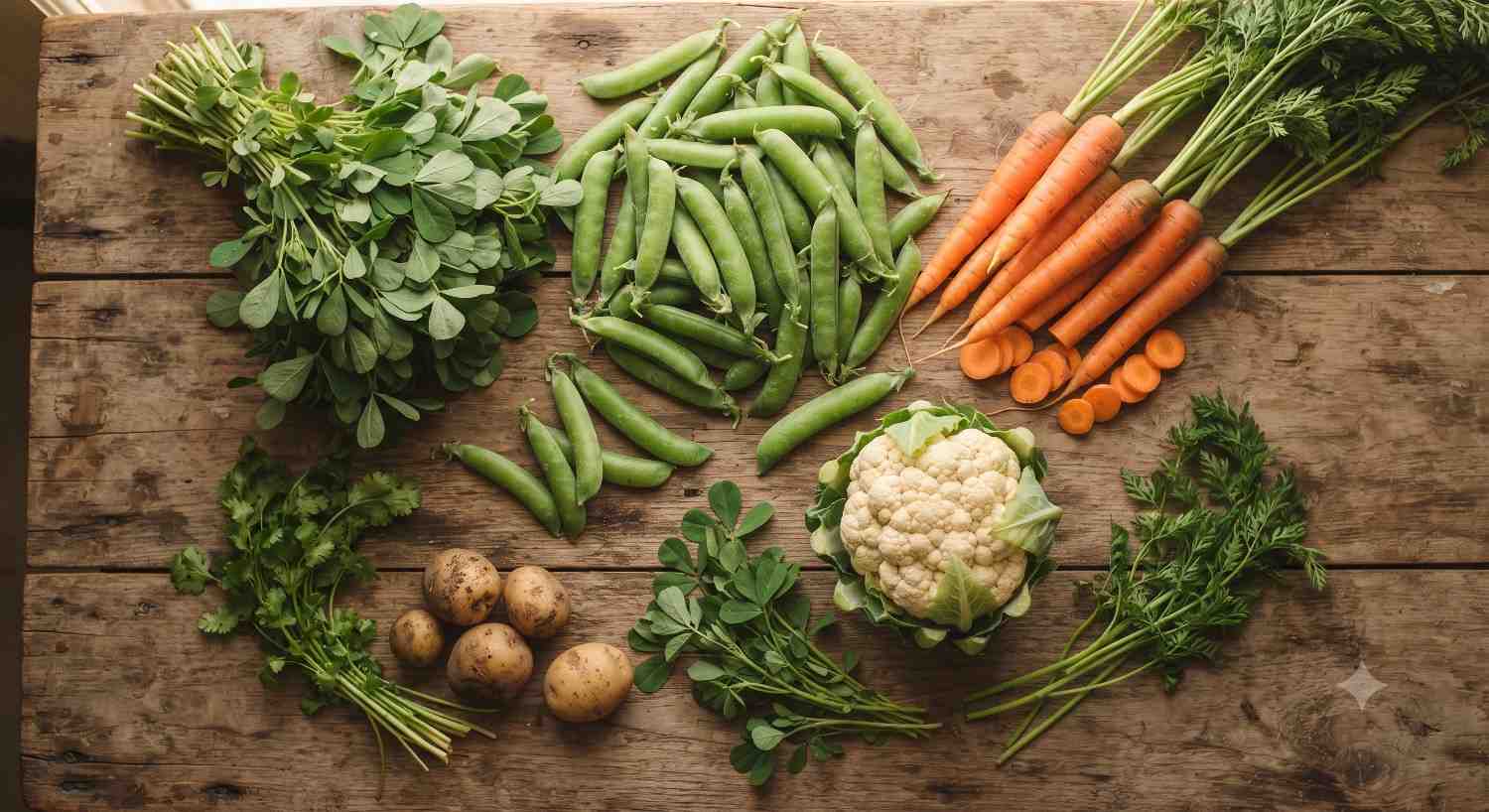
- What to eat: Til (sesame) - warming, rich in calcium and healthy fats, traditionally consumed in winter across India. Jaggery (gur) - warming sweetener rich in iron and minerals, appropriate in small quantities in winter. Green leafy vegetables - spinach, methi, sarson at their peak quality and nutrition in Indian winters. Carrots sweet, warming, rich in beta-carotene. Bajra and jowar rotis - heavier grains appropriate for winter's increased digestive capacity. Desi ghee traditionally increased in winter for its warming and nourishing properties.
How to Eat Seasonally in Practice
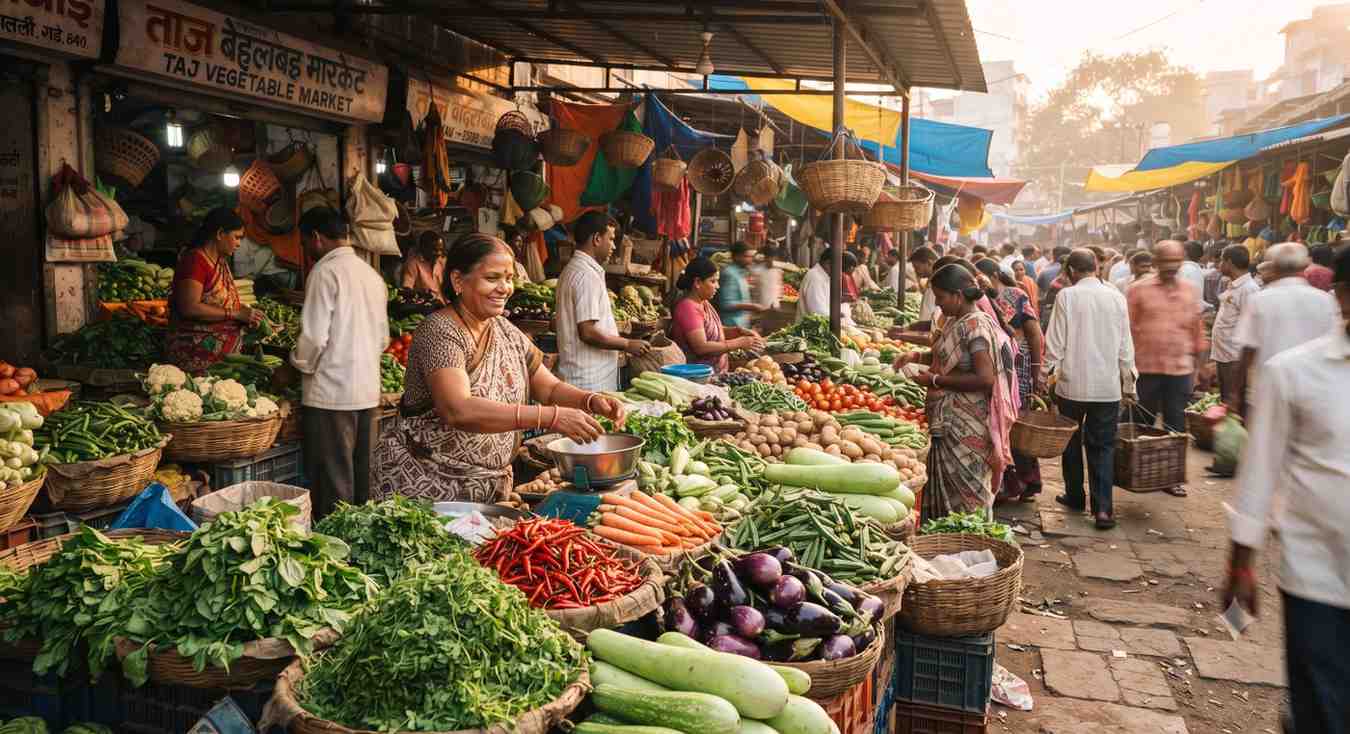
Eating seasonally does not require access to organic markets or specialty stores. It requires only a small shift in how you shop. Buy what's abundant. In any Indian market or vegetable shop, the produce that is in season is the produce that is most abundant, most prominently displayed, and cheapest. Use this as your guide — if it's everywhere and cheap, it's seasonal. Follow what changes. Notice when mangoes appear and disappear. When fresh methi arrives. When tomatoes become expensive. These market signals are seasonal signals. Cook what you buy, not what you planned. Most people plan meals in advance and then buy the ingredients. Seasonal eating inverts this: you buy what is excellent and seasonal, then decide what to cook. This requires flexibility in cooking — which is the same flexibility that comes from knowing a few meals by heart, as explored in our earlier cooking guide. Preserve the peak. When a seasonal food is at its best and cheapest, preserve some for when it isn't. Raw mango pickle made in summer. Amla dried or pickled in autumn. Tamarind stored from its peak season. Traditional Indian preservation methods — pickling, drying, fermenting — are seasonal eating extended through time.
The Ecological Argument

There is a second reason to eat seasonally that goes beyond personal nutrition. Seasonal eating is local eating — food grown nearby, in its natural season, without the energy inputs of artificial growing conditions or long-distance refrigerated transport.
The environmental footprint of seasonal, local produce is a fraction of that of out-of-season equivalents. In a country with India's agricultural diversity and regional food culture, seasonal eating also supports local farmers, regional food systems, and the diversity of cultivation that makes Indian agriculture resilient.
Eating what grows near you, when it grows, is the most ecologically responsible food choice available — and it is also, as it turns out, the most nutritionally beneficial one. Traditional wisdom and modern ecology arrive at the same conclusion.
“Disclaimer: This content was created with AI assistance and reviewed before publication. It is for informational purposes only and not professional medical, nutritional, legal, or financial advice”